

You face real risks when you store flammable liquids at work. Essential flammable cabinet safety protocols for workplace hazard prevention help you lower these risks. If you ignore these essential flammable cabinet safety protocols for workplace hazard prevention, you raise the chance of a fire. Over 4,500 workplace fires are caused by improperly stored flammable materials. You must follow essential flammable cabinet safety protocols for workplace hazard prevention every time you handle flammable liquids. These protocols protect your team and support chemical risk reduction. Always use essential flammable cabinet safety protocols for workplace hazard prevention when you store flammable liquids. Proper steps keep flammable materials safe and help you avoid accidents.
Essential Flammable Cabinet Safety Protocols for Workplace Hazard Prevention
Choosing Cabinets for Flammable Liquid Safety
You need to select the right cabinet for storing flammable liquids. The design and build quality of a flammable liquids cabinet matter. Look for double-walled steel construction with an insulating air space. This feature helps protect against heat and fire. Cabinets must have proper latching mechanisms to keep doors secure. You should check for venting options and consult local regulations before making a decision. Grounding the cabinet reduces static electricity risks. Seismic brackets prevent tipping during earthquakes. Always separate materials by their hazmat classifications. Cabinets must be lockable for added security.
Tip: Use only approved containers and portable tanks for storage and handling of flammable liquids. Refer to Safety Data Sheets for information on each flammable liquid.
You must store flammable liquids in adequately rated cabinets if more than 10 gallons are present. Keep flammable liquids in closed containers when not in use. Ensure vent holes on cabinets are sealed unless venting is required.
Cabinet Ratings and Compliance Standards
You must follow strict standards when choosing a flammable liquids cabinet. Regulatory agencies like OSHA and NFPA set requirements for cabinet construction and performance. The most important standards include OSHA 1910.106, NFPA 30, and the Uniform Fire Code. These standards cover the design, construction, and capacity of storage cabinets. You need to check that your cabinet meets these codes.
Here is a table showing key cabinet criteria:
| Criteria | Description |
|---|---|
| Maximum total storage capacity | 120 gallons (455 L) |
| Minimum steel thickness | 18 gauge (0.048″) |
| Construction | Double wall with 1 1/2″ airspace |
| Joints | All joints welded, riveted, brazed, or equal |
| Locking mechanism | 3-point, non-sparking locking mechanism |
| Spill sump | Leak-tight spill sump at least 2″ deep |
| Vents | Two 2″ vents with flame arrester baffle and plugs |
| Grounding | Grounding wire connection on the lower outside |
| Self-closing doors | Fusible link (212 degrees F) required |
| Markings | Manufacturer name, address, model number, maximum capacity |
| Label | “Flammables-Keep Fire Away” label with 2″ letters |
| Instruction sheet | Legible markings, factory identification |
| Load testing | 72 hours at maximum capacity |
| Fire exposure test | 10 minutes at 1300 degrees F |
| Hinges | Continuous piano hinges |
| Shelf capacity | At least 350 lbs. |
You must ensure your cabinet displays clear labeling. Storage cabinets should have a “Flammable – Keep Fire Away” label. Regulatory agencies require sturdy shelves and a 3-point lock. You must store only necessary amounts of flammable liquids in closed metal containers.
National and international standards also govern flammable liquid safety. NFPA 30 provides safeguards for storage, handling, and use of flammable and combustible liquids. NFPA 1 advances fire and life safety for the public and first responders. The International Fire Code presents minimum safety guidelines for new and existing buildings. OSHA regulations enforce federal rules on flammable liquids, including specific volume limits for storage cabinets.
Proper Location and Placement
You must place your flammable liquids cabinet in a safe location. Never store cabinets near exits, stairways, or safe exit areas. Regulations require at least 50 feet between cabinets and any source of ignition. Cabinets must not obstruct pathways or egress routes. This placement ensures quick evacuation during emergencies.
Here is a table showing recommended distances:
| Regulation | Distance Requirement |
|---|---|
| 29 CFR 1910.106(d)(5)(I) | Prohibits storage near exits, stairways, or safe exit areas |
| 29 CFR 1926.152(f)(3) | Requires at least 50 feet from any source of ignition |
You must keep storage cabinets away from high-traffic areas. Cabinets should not block emergency exits or fire equipment. You need to ensure that cabinets do not create obstacles in evacuation routes. Proper placement improves emergency response times and keeps your workplace safe.
Note: Flammable storage cabinets should never be placed in egress routes. Cabinets must not obstruct pathways to facilitate quick evacuation during emergencies.
You must follow these protocols every time you store flammable liquids. The right cabinet, proper ratings, and safe placement protect your team and reduce risks.
Proper Loading and Organization of Flammable Materials
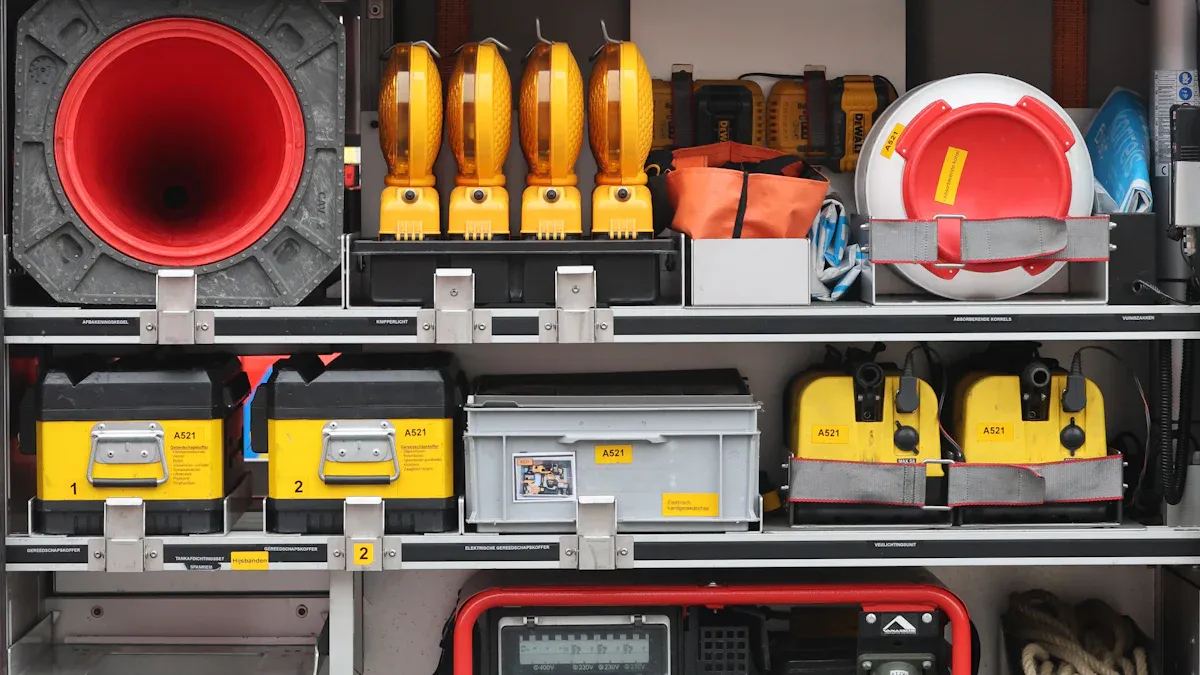
Safe Arrangement and Separation of Flammable Containers
When loading your flammable cabinet, you must keep safety as your top priority. Arrange flammable containers so that incompatible chemicals stay apart. Never place acids with bases or flammable liquids with oxidizers. Use only approved chemical storage cabinets for flammable liquid storage. Always choose the right containers for each substance. Lift all containers off the ground and avoid placing them above eye level. This prevents spills and makes it easier to handle emergencies. You should also use secondary containment trays to catch leaks or drips from flammable vapours.
Here is a table showing how improper arrangement can increase risks:
| Hazard Type | Description |
|---|---|
| Fire Hazard | Flammable materials can ignite if exposed to heat, sparks, or open flames. |
| Explosion Risk | Flammable vapours can build up and cause explosions in confined spaces. |
| Health Hazard | Flammable vapours can irritate your skin and lungs. |
| Chemical Reactions | Storing incompatible chemicals together can cause violent reactions. |
Do’s and Don’ts for Flammable Storage
You must follow strict rules when loading your flammable cabinet. Here are some important do’s and don’ts:
Do:
- Store chemicals in a secure location inside your cabinet.
- Label all hazardous materials clearly.
- Elevate containers on shelves, not on the floor.
- Use only cabinets designed for flammable liquid storage.
- Train all employees on proper safety protocols.
Don’t:
- Do not use the wrong storage container or original packaging for long-term storage.
- Never place flammable liquids near heat sources or open flames.
- Avoid poor housekeeping, such as clutter or uncleaned spills.
- Do not store incompatible substances together.
- Never use combustible shelves or racks in your flammable cabinet.
Tip: According to the National Fire Protection Association, improper storage of flammable liquids causes thousands of injuries and billions in property damage each year.
Labeling and Inventory for Flammable Safety
You must label every container in your flammable cabinet. Use a color-coded system to show hazards, such as red for flammable materials. Labels should include hazard information, PPE guidance, and a hazard ranking from 0 to 4. This helps everyone understand the risks and handle materials safely. Accurate inventory tracking prevents overstocking and ensures you meet safety regulations. It also helps you manage flammable vapours and maintain safe conditions in your cabinet.
Note: Good inventory management enhances safety and keeps your workplace organized.
When loading your flammable cabinet, always check labels and update your inventory list. This keeps your flammable liquid storage safe and compliant.
Preventing Ignition Sources Near Flammable Cabinets
Electrical Safety and Flammable Cabinets
You must pay close attention to electrical safety when you store flammable materials. Electrical malfunctions can turn a cabinet into a dangerous spot for flammable liquid fires. Short circuits, overheating components, arc faults, and aging wiring all increase the risk of fire. The table below shows how these problems can threaten your cabinet and what you can do for prevention.
| Type of Malfunction | Description | Risk Level | Prevention Measures |
|---|---|---|---|
| Short Circuits | Electrical current bypasses normal path due to insulation failure or wire contact | High | Regular insulation testing, proper wire management, moisture control |
| Overheating Components | Transformers, breakers, and conductors exceed thermal limits | High | Thermal imaging inspections, adequate ventilation, load balancing |
| Arc Faults | Electrical discharge between conductors creates extreme heat (>3,000°C) | Critical | Arc-fault circuit interrupters (AFCIs), connection tightening, vibration reduction |
| Aging Wiring & Insulation | Material degradation over 20-30 years increases resistance and brittleness | Medium-High | Infrared thermography, preventive replacement programs |
Electrical enclosures in a cabinet can trap heat and fuel a fire. You should only use explosion-proof electrical equipment near flammable cabinets. This equipment helps prevent ignition by stopping sparks or heat from starting a fire.
Controlling Heat, Sparks, and Open Flames
You must keep all sources of ignition away from your cabinet. Sparks, open flames, and heat can easily ignite flammable vapors. Store all flammable materials in proper containers. Make sure your cabinet has good ventilation. Keep a safe distance between your cabinet and any work that creates sparks or flames. This includes welding, grinding, or using torches. You should never allow smoking near a flammable cabinet.
Tip: Always check your cabinet area for hidden sources of ignition before starting any work.
Safe Use of Tools and Equipment Around Flammable Materials
You need to use tools and equipment safely near your cabinet. Choose non-sparking tools when you work with flammable materials. Inspect all tools for damage before use. Do not use power tools that can create sparks near your cabinet. Keep all portable heaters and hot equipment away from flammable storage. You should train your team to spot and remove sources of ignition. This helps you prevent ignition and keeps your workplace safe.
Note: Good safety habits around your cabinet protect you from flammable liquid fires and support your overall prevention plan.
Handling Flammable Liquids: Access and Safety Protocols
Employee Training for Flammable Liquid Safety
You need strong training programs to keep your workplace safe when handling flammable liquids. Training helps you understand cabinet safety, proper handling, and storage rules. You learn how to respond to spills and use fire extinguishers. OSHA Flammable and Combustible Liquids Awareness Training builds a safety culture and teaches you about hazards, storage, and handling techniques. You must review safety data sheets and safety data sheet information during training. Refresher training should happen every three years, but larger businesses may need it every six months. If your company changes its policies, you should get extra training.
| Training Type | Topics Covered |
|---|---|
| Employee Training | Emergency evacuation, Use of portable fire extinguishers, Spill response procedures, Handling practices, Area limitations, Ventilation systems, Housekeeping procedures, Special concerns |
| Supervisor Training | Training responsibilities, Supervisory responsibilities, Fire control procedures, Hot work supervision, Housekeeping requirements, Transfer requirements, Recordkeeping requirements |
- Training covers OSHA and NFPA compliant safety practices.
- You learn about flammable liquid hazards, vapors, and ignition sources.
- You gain skills for proper handling and transfer techniques.
- Training improves your awareness of spill management.
Personal Protective Equipment (PPE) for Handling Flammable Materials
You must wear PPE when handling flammable liquids. PPE protects you from risks that cannot be removed by other methods. Flame resistant and arc-rated garments help reduce injuries from thermal hazards. PPE creates a barrier between you and hazardous exposure. You lower your risk of burns and other injuries when you use PPE. You should check safety data sheets to find out which PPE you need for each flammable liquid.
PPE is designed to protect workers from risks that cannot be eliminated by other means, creating an additional barrier between the worker and hazardous exposure, thereby reducing the risk of injury.
Effective PPE programs help mitigate impacts of unexpected short-term thermal hazards. Flame resistant (FR) and arc-rated (AR) garments are crucial as they reduce the severity of injuries from thermal events, which can lead to severe burns even from a distance.
Restricted Access and Safety Signage
You must restrict access to cabinet storage areas. Only trained and authorized personnel should handle flammable liquids. Cabinets need fire doors and rated separation walls to prevent fire spread. You should conduct regular inspections to check cabinets, spill containment, and ventilation systems. Cabinets must store flammables away from aisles, exits, and heat sources. You need to use approved cabinets built per NFPA 30 and limit quantities to OSHA/NFPA thresholds.
| Procedure | Description |
|---|---|
| Use fire doors and rated separation walls | To prevent the spread of fire. |
| Conduct regular inspections | Ensure cabinets, spill containment, and ventilation systems are functioning properly. |
| Limit quantities | Adhere to OSHA/NFPA thresholds for safety. |
| Use approved cabinets | Store flammables in cabinets built per NFPA 30. |
| Maintain separation | Keep flammables away from ignition sources and incompatible substances. |
| Ensure ventilation | Control temperature and air flow in storage areas. |
| Provide fire protection systems | Regular inspections and emergency planning are essential. |
- Restrict access to authorized personnel only.
- Store flammables in designated cabinets and label them.
- Control access to storage areas.
- Keep chemical storage areas away from aisles, exits, and heat sources.
Safety signage helps you communicate hazards and restrictions. Signs prevent unauthorized access to cabinets. Locking cabinets is a best practice for keeping flammable liquids secure.
Spill Prevention and Response for Flammable Materials

Spill Containment and Flammable Liquid Safety
You must keep your cabinet organized to prevent spills of flammable chemicals. Most spills happen because of equipment failures, human error, natural events, or transportation incidents. The table below shows the most common causes of chemical spills in the workplace:
| Cause | Description |
|---|---|
| Equipment Failures | Old, outdated, or faulty equipment is more likely to experience leaks, especially under high pressure. |
| Human Error | Mishandling containers, mislabeling chemicals, or forgetting proper storage protocols can lead to spills. |
| Natural Events | Floods, storms, and earthquakes can compromise chemical containers and amplify spills. |
| Transportation Incidents | Spills often occur during the loading, unloading, and movement of chemicals, especially with large vessels. |
You can lower the risk of flammable spills by checking your cabinet and storage area often. Always use secondary containment trays inside your cabinet to catch leaks from flammable liquids. Keep chemicals in approved containers and never overfill your cabinet. Good spill prevention strategies help you avoid slip-and-fall hazards, prevent cross-contamination, and reduce employee exposure to dangerous chemicals.
Emergency Procedures for Flammable Spills
You need to know what to do if a spill happens in your cabinet. Emergency procedures keep you and your team safe. First, alert everyone nearby and stop the source of the spill if you can do so safely. Evacuate the area if the spill is large or if there is a risk of fire. Use the emergency procedures posted near your cabinet. Always wear the right protective gear before you try to clean up flammable chemicals. Report all chemical spills to your supervisor right away. Quick action can stop spills from spreading and causing more harm.
Tip: Practice emergency procedures with your team so everyone knows what to do during a chemical spill.
Cleanup Supplies and Readiness
You must keep cleanup supplies close to your cabinet. Stock your storage area with absorbent pads, neutralizing agents, and chemical-resistant gloves. Make sure you have enough supplies for the types of flammable chemicals you store. Place a spill kit near every cabinet that holds flammable liquids. Check your supplies often and replace them when needed. Good readiness helps you limit damage to floors and machinery, reduce injury-related downtime, and support safety compliance. When you keep your cabinet prepared, you protect your team and your workplace from the dangers of chemical spills.
Regular Inspection and Maintenance of Flammable Cabinets
Routine Safety Checks for Flammable Cabinets
You need to check your flammable cabinet often to keep your workplace safe. Regular inspections help you find problems before they become big hazards. You should look for leaks, rust, or broken parts on your cabinet. Make sure the doors close tightly and the labels are easy to read. Check that the cabinet is not too full and that all flammable containers are in good shape.
- Routine safety checks for flammable cabinets should be scheduled based on workplace needs and local regulations.
- Inspections may be required on a monthly, quarterly, or annual basis.
- Regular inspections help in identifying potential issues before they escalate.
If you find any problems, fix them right away. This keeps your flammable cabinet ready to protect you from fire.
Maintenance Schedules and Recordkeeping
You should set a clear schedule for flammable cabinet maintenance. Write down each time you inspect or repair your cabinet. Good recordkeeping helps you track when you last checked your cabinet and what you fixed. Use a simple table to log your inspections:
| Date | Inspector Name | Issues Found | Actions Taken |
|---|---|---|---|
| 2024-02-01 | J. Smith | None | N/A |
| 2024-03-01 | L. Brown | Rust on hinge | Replaced hinge |
Keep your records in a safe place near your flammable cabinet. This helps you show that you follow safety rules and keeps your storage area organized.
Common Inspection Mistakes to Avoid
Many people make mistakes when checking their flammable cabinet. You might forget to check the back or bottom of the cabinet. Some people miss small leaks or ignore faded labels. Do not skip checking the locking system or the spill sump. Always look for signs of damage inside and outside the cabinet. Never rush your inspection. Take your time to make sure your flammable cabinet can protect you from fire.
Tip: Regular inspections and maintenance of flammable cabinets are essential to ensure that their safety features are functioning correctly. This proactive approach helps to identify and address minor issues before they escalate into significant hazards, thereby reducing the risk of cabinet failures and enhancing overall safety in the lab.
You play a key role in keeping your workplace safe. Remember these flammable liquid safety tips:
- Store flammable materials in approved cabinets.
- Check your flammable storage often.
- Keep all flammable items away from heat and fire.
Consistent safety habits protect you and your team. Start using essential flammable cabinet protocols today to lower risks.
FAQ
What is a flammable cabinet?
A flammable cabinet is a special storage unit. You use it to keep flammable liquids safe. The cabinet protects you from fire hazards. It has strong steel walls and secure locks.
How often should you inspect your flammable cabinet?
You should check your cabinet at least once a month. Some workplaces need weekly checks. Regular inspections help you find leaks, rust, or damage early.
Tip: Set a reminder on your calendar for inspections.
Can you store other chemicals in a flammable cabinet?
You should only store flammable liquids in a flammable cabinet. Do not mix acids, bases, or oxidizers with flammables. Mixing chemicals can cause dangerous reactions.
What should you do if you spill a flammable liquid?
Stay calm. Alert others nearby. Wear protective gear. Use a spill kit to clean up the liquid. Report the spill to your supervisor right away.
- Never touch flammable spills with bare hands.
- Always follow your workplace emergency plan.


