
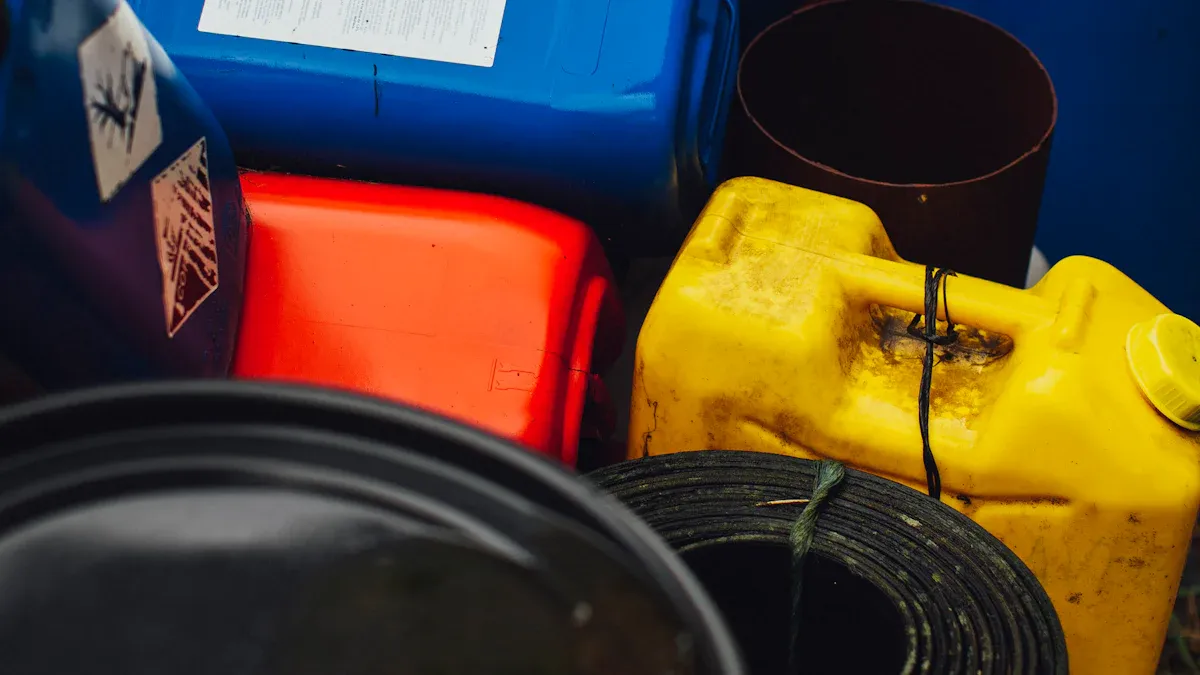
You play a key role in keeping your workplace safe when storing flammable materials. Flammable cabinets help protect you from fire risks that can appear in commercial or laboratory settings. You must always follow safety steps to reduce danger.
- Improper storage of flammable liquids can turn a cabinet into a hazard.
- Even a single spark or heat source may start a fire.
- Mixing ignition sources with flammable liquids often leads to disasters.
You need to limit the quantity of flammable materials, use approved cabinets, and inspect storage areas often. Following Best Practices for Flammable Cabinet Storage: Organization keeps your team safe.
Best Practices for Flammable Cabinet Storage: Organization and Capacity

Defining Safe Storage Capacity
You need to know the safe capacity of your flammable safety cabinets before loading your flammable cabinet. Safe capacity depends on the type of chemical, the size of containers, and the cabinet’s design. You must check the chemical’s flash point and boiling point. These properties help you decide how much you can store in each cabinet. Regulations limit the amount of flammable liquids cabinet can hold. For Category 1, 2, or 3 flammable chemicals, you cannot exceed 60 gallons. For Category 4 chemicals, the maximum is 120 gallons.
Here is a quick reference table for maximum storage capacity:
| Category of Flammable Liquids | Maximum Storage Capacity |
|---|---|
| Category 1, 2, or 3 | 60 gallons |
| Category 4 | 120 gallons |
You must always follow best practices for flammable cabinet storage: organization. You should never overfill a cabinet. Overloading increases fire risk and makes proper chemical storage difficult. When loading your flammable cabinet, keep containers upright and avoid stacking. You must return chemicals to the cabinet after use. Only keep what you need for active tasks outside the cabinet.
- Safe storage capacity depends on:
- Chemical flash point and boiling point
- Maximum allowable quantities (60 gallons for Category 1, 2, or 3; 120 gallons for Category 4)
- Cabinet design and labeling
You protect your team by following best practices and keeping capacity within safe limits.
Regulatory Standards for Flammable Safety Cabinets
You must follow strict regulatory standards when loading your flammable cabinet. OSHA and NFPA set rules for flammable safety cabinets. These rules help you maintain safety and compliance. You must use cabinets for chemicals with a flashpoint at or below 199.4 °F (93 °C). Cabinets must be UL 1275 rated or FM Class #6050 approved. You must mark cabinets with clear warnings like “Flammable Storage” or “Flammable – Keep Fire away.” Cabinets must stay in good condition, with no holes and doors that close fully.
Here is a summary of key regulations:
| Regulation/Requirement | Description |
|---|---|
| Flashpoint Limit | Cabinets must store liquids with a flashpoint at or below 199.4 °F (93 °C). |
| Storage Capacity | Maximum 60 gallons for flammable liquids in labs without fire suppression. |
| Cabinet Rating | Cabinets must meet UL 1275 or FM Class #6050 standards. |
| Labeling | Cabinets must display clear safety warnings. |
| Condition of Cabinets | Cabinets must be intact and doors must close without gaps. |
| Location Restrictions | Cabinets must not block egress routes. |
| Compatibility | Cabinets must segregate incompatible chemicals. |
You must remove combustible materials from cabinets. You must not stack flammable containers. You must store chemicals upright. You must tightly cap flammable corrosives and use secondary containers. You must return chemicals to cabinets after use. You must limit flammable liquids outside cabinets to active use only.
International standards may differ. In the U.S., OSHA 1910.106 and NFPA 30 apply. NFPA requires metal cabinets. The Uniform Fire Code requires self-closing cabinets. In Canada, you may need a ULC listing, which involves stricter fire testing.
Manufacturer Guidelines and Labeling
You must read and follow manufacturer guidelines for flammable safety cabinets. Manufacturers provide instructions for loading your flammable cabinet and maintaining compliance. You must check the cabinet’s labeling. Cabinets are marked with safety warnings and capacity limits. You must follow these labels to ensure proper chemical storage and organization.
Manufacturers may offer venting options. Federal regulations do not require ventilation for flammable safety cabinets. NFPA Code 30 advises against venting unless local codes or company policies require it. You must check your local regulations and company policies before venting a cabinet.
You must ensure cabinets comply with NFPA 30 or the International Fire Code. Compliance helps you separate incompatible chemicals and control maximum allowable quantities. You must use cabinets in laboratories, factories, warehouses, construction sites, and garages. You must always check safety data sheets and safety data sheet information for each chemical before loading your flammable cabinet.
Tip: Always check the cabinet’s labeling and safety data sheets before storing chemicals. This helps you maintain compliance and safety.
You must follow best practices for flammable cabinet storage: organization. You must keep cabinets organized, labeled, and within safe capacity limits. You protect your workplace by following best practices and maintaining compliance.
Risks of Exceeding Capacity and Fire Hazards
You must understand the dangers that come with overfilling a flammable cabinet. When you exceed the safe storage capacity, you create serious hazards. Overfilling restricts airflow inside the cabinet. This causes temperatures to rise. Higher temperatures can lead to ignition and increase the risk of fire. You also face a greater chance of chemical spills. Spills can spread flammable liquids and make cleanup harder. If you store too many containers, you make it difficult to access them safely. You may knock over bottles or damage seals, which can cause leaks.
Both OSHA and NFPA set strict limits for the amount of flammable liquids you can store in a cabinet. You must follow these rules to prevent concentrated hazards. If you ignore these limits, you risk creating a dangerous situation. Too much flammable liquid in one cabinet can lead to fire or even explosion. You must always check the cabinet’s labeling and follow the manufacturer’s guidelines.
You also need to pay attention to venting and placement. Vented cabinets can allow external heat to enter. This raises internal temperatures and increases the risk of ignition. You must seal vents to keep the cabinet fire-resistant. If you place multiple cabinets together, you must follow placement guidelines. Too many cabinets in one area can increase fire hazards.
Here is a table that shows key risk factors:
| Risk Factor | Description |
|---|---|
| Increased Risk | Vented cabinets can allow external heat to enter, raising internal temperatures and increasing the risk of ignition. |
| Manufacturer’s Seals | Vents should be sealed to maintain fire-resistant properties, preventing potential hazards. |
| Placement Guidelines | Multiple cabinets should adhere to safety guidelines to minimize fire risks, such as limiting the number of cabinets in one area. |
⚠️ Tip: Never exceed the cabinet’s capacity. You protect yourself and your team from fire, explosion, and chemical hazards by following safe storage limits.
You must stay alert to signs of overfilling. If you see containers stacked or crowded, you need to reorganize the cabinet. If you notice leaks or damaged seals, you must fix them right away. You keep your workplace safe by following best practices and staying within capacity limits.
Organizing Flammable Safety Cabinets for Maximum Safety
Segregating Chemicals by Compatibility
You must organize chemicals in your cabinet by compatibility. This step prevents dangerous reactions and keeps your storage area safe. Start by grouping chemicals according to hazard class. Always separate oxidizing chemicals from flammable and combustible materials. Place large amounts of oxidizers in a dedicated steel cabinet. Use trays with high sides or secondary containment to keep incompatible chemicals apart. Label each section of your cabinet with hazard class labels so everyone understands the segregation system.
If you fail to segregate incompatible chemicals, you risk fires, explosions, toxic gas release, and violent reactions. You protect your team by keeping chemicals separated.
- Store chemicals by hazard class.
- Use physical barriers like trays.
- Label cabinet sections clearly.
- Separate oxidizers from flammables.
Labeling, Inventory, and Storage Signage
You need a clear labeling and inventory system for your cabinet. Proper signage helps you track chemicals and prevents mistakes. Use hazard class labels and storage signs on the cabinet. Choose an inventory management system that fits your needs. Many labs use online tools to track chemicals and storage locations.
| System Name | Description | Link |
|---|---|---|
| Chemtracker 4 | Track inventory online for all hazardous chemicals. | Chemtracker 4 |
| UFC Feature | Manage chemical limits by location and control zone. | Environmental Regulatory Reporting Management |
| CHEMATIX™ | Central feature for chemical tracking and inventory management. | CHEMATIX™ Inventory Management Module |
| Labguru | Manage chemical inventory with storage and inventory modules. | Labguru |
Tip: Keep your inventory updated. This helps you organize chemicals and prevents overfilling your cabinet.
Arranging Containers for Accessibility and Spill Prevention
You must arrange containers in your cabinet for easy access and spill prevention. Place containers upright and avoid stacking them too high. Stack drums no higher than two units to keep them stable. Make sure your cabinet has a liquid-tight spill sump to capture leaks. Secure lids tightly on all containers to prevent spills. Keep the cabinet clean and organized so you can find chemicals quickly. Do not store combustibles inside or on top of the cabinet.
| Method | Description |
|---|---|
| Proper stacking of drums | Stack drums no higher than two units for stability and safety compliance. |
| Spill containment | Use a liquid-tight spill sump to capture leaks and spills. |
| Organization | Keep the cabinet clean and organized for easy access and spill prevention. |
| Secure lids | Tighten lids on all containers to prevent leaks. |
| Avoid combustibles | Do not store combustibles inside or on top of the cabinet. |
| Compliance with standards | Follow safety standards for storage and handling of flammable liquids. |
You keep your storage area safe when you organize chemicals, label your cabinet, and arrange containers properly.
Using Shelving, Spill Trays, and Storage Accessories
You can make your flammable safety cabinet safer and more organized by using shelving, spill trays, and storage accessories. Shelving helps you separate chemicals and prevents containers from tipping over. Adjustable shelves let you fit different container sizes. You can move shelves to create space for tall bottles or drums. Metal shelves resist corrosion and support heavy loads.
Spill trays catch leaks and spills before they spread. You place trays under containers that might leak. Spill trays keep liquids contained and make cleanup easier. You protect your cabinet and workplace from dangerous spills. Choose trays made from chemical-resistant materials. You can remove trays for cleaning.
Storage accessories help you organize your cabinet. You use bins, racks, and dividers to keep chemicals apart. Bins hold small bottles and prevent them from rolling. Racks keep containers upright. Dividers create sections for different hazard classes. You label accessories to show where each chemical belongs.
Tip: Always check that shelves and trays fit your cabinet. Loose accessories can cause accidents.
Here is a table that shows common accessories and their benefits:
| Accessory | Purpose | Benefit |
|---|---|---|
| Adjustable Shelves | Separate containers | Prevent tipping and spills |
| Spill Trays | Catch leaks and spills | Easy cleanup |
| Bins/Racks | Hold bottles upright | Improve organization |
| Dividers | Create sections | Segregate hazard classes |
You improve safety when you use the right accessories. You keep chemicals organized and reduce fire risks. You make inspections easier and help your team find chemicals quickly. You protect your workplace by using shelving, spill trays, and storage accessories in your flammable cabinet.
Maintenance and Inspection for Fire Safety

Regular Inspection Checklist for Storage Cabinets
You need to inspect your flammable safety cabinets often to keep your workplace safe. Inspections help you spot problems before they cause fire or chemical spills. Set a regular schedule for checks. Most workplaces inspect cabinets monthly. Some choose quarterly or annual checks based on their needs.
| Inspection Frequency | Description |
|---|---|
| Monthly | Required for many workplaces to ensure compliance and safety. |
| Quarterly | May be suitable depending on specific workplace needs. |
| Annually | Minimum requirement in some cases, but not ideal for all environments. |
Use a checklist to guide your inspection. Look for damage, rust, and proper labeling. Make sure doors and seals work. Check ventilation openings and grounding connections. Review training documentation and certifications. Confirm that safety devices function. Inspect for spills, leaks, and correct labeling of chemicals. Keep access and egress clear. Verify that required PPE is available. Document your findings and assign corrective actions.
| Inspection Area | Checklist Items |
|---|---|
| Retention Requirements | Are retention requirements met? |
| Training Documentation | Is training documentation current? |
| Certifications/Licenses | Are certifications/licenses valid? |
| Physical Condition | Is equipment in good condition? |
| Safety Devices | Are safety devices functional? |
| Labeling and Signage | Is labeling and signage correct? |
| Housekeeping | Is housekeeping adequate? |
| Access and Egress | Are access and egress clear? |
| Required PPE | Is required PPE available? |
| Compliance Verification | Are regulatory requirements met? |
| Permits and Approvals | Are permits and approvals current? |
| Procedures | Are procedures being followed? |
| Monitoring Systems | Are monitoring systems adequate? |
| Corrective Action Process | Is the corrective action process effective? |
| Hazard Assessment | Are hazards identified and documented? |
| Control Measures | Are control measures effective? |
| New Hazards | Have any new hazards been identified? |
| Recent Incidents | Have recent incidents been reviewed? |
| Findings and Corrective Actions | Are all findings documented? |
| Priority Levels | Are priority levels assigned? |
| Root Cause Analysis | Is root cause analysis needed? |
| Corrective Actions Assigned | Are corrective actions assigned? |
| Follow-up Verification | Is follow-up verification scheduled? |
| Overall Status | What is the overall status? |
| Summary Notes | Are summary notes provided? |
Tip: Train your team to follow inspection procedures and document every spill or hazard.
Cleaning, Spill Management, and Fire Prevention
You must clean your flammable safety cabinets often. Cleaning prevents the buildup of flammable vapours and chemicals. Address spills right away. Only trained staff should clean chemical spills. Wear protective gear like goggles, gloves, and aprons. Use a respirator if vapours are present. Never pour waste chemicals down the drain. Seal waste in proper containers. Report any spill of 1 gallon or more to your safety officer.
- Clean cabinets regularly to prevent fire risks.
- Contain spills quickly to stop flammable vapours from spreading.
- Use spill trays and containment systems for safety.
- Make sure exhaust systems work to remove vapours.
- Keep chemicals organized to avoid spills.
Prompt spill containment lowers the chance of ignition sources touching flammable liquids. Regular cleaning and spill management reduce fire hazards and keep your workplace safe.
Ventilation Considerations for Flammable Storage
You must understand ventilation rules for flammable safety cabinets. NFPA does not require ventilation for fire protection. Ventilation can increase fire risks by letting heat enter and exposing flammable vapours. If you vent a cabinet, direct openings outdoors and do not weaken the cabinet’s performance. Federal rules do not mandate ventilation, but local laws may differ. Always check with local authorities.
Proper ventilation helps air circulate and removes vapours. It prevents overheating and moisture buildup. Ventilated cabinets can reduce flammable vapours and protect chemicals from corrosion. Good ventilation can extend the life of your chemicals and storage cabinet. You must balance safety and fire prevention with local requirements.
Note: Ventilation is not always needed. Make sure you follow local safety codes and keep flammable vapours under control.
Staff Training, Documentation, and Recordkeeping
You play a vital role in keeping your workplace safe when you handle flammable materials. Proper training helps you understand how to use safety cabinets and respond to emergencies. You must learn how to store chemicals, use fire extinguishers, and follow evacuation plans. Supervisors need extra training to oversee safety precautions and keep records.
Here is a table that shows the most effective training programs for staff and supervisors:
| Training Type | Key Components |
|---|---|
| Employee Training | Emergency evacuation, use of fire extinguishers, spill response, handling practices, area limitations, ventilation, housekeeping, special concerns. |
| Supervisor Training | Training responsibilities, supervision of safety precautions, fire control, housekeeping, transfer requirements, recordkeeping. |
You must follow safe practices every day.
- Use and store flammable liquids in ventilated areas.
- Use approved containers and safety cabinets.
- Store chemicals away from exits and ignition sources.
- Dispense only what you need for each task.
- Wear personal protective equipment (PPE).
You need to keep accurate records to meet safety rules. OSHA requires you to document chemical inventories, inspections, and employee training. You must label every chemical container with its identity, hazard warnings, and manufacturer’s information. Keep an inventory of all hazardous chemicals and provide Material Safety Data Sheets (MSDS) for each one.
Tip: Keep your records organized and easy to find. Inspectors may ask to see your documentation at any time.
You must train employees on safe chemical handling and storage practices. This reduces exposure risks and helps prevent accidents. Employers are responsible for making sure everyone receives proper training and understands how to use flammable safety cabinets.
You protect your team and workplace by following training programs, keeping records, and documenting every step. Organized documentation and regular training help you stay compliant and safe.
Common Storage Mistakes to Avoid in Flammable Safety Cabinets
Overfilling and Exceeding Storage Limits
You create a serious hazard when you overfill a flammable safety cabinet. Too many containers block airflow and raise the temperature inside the cabinet. This increases the risk of fire and explosion. You must always check the cabinet’s capacity label before adding more chemicals. If you see bottles stacked or crowded, you need to reorganize the storage area. Overfilling makes it hard to reach containers safely. You may knock over bottles and cause spills. You protect your team by keeping the cabinet within safe limits.
⚠️ Never ignore the maximum capacity. Staying within limits prevents accidents and keeps your workplace safe.
Storing Incompatible or Prohibited Materials
You must separate chemicals by compatibility. Mixing incompatible materials can cause dangerous reactions. Some chemicals release toxic gases or create heat when combined. You must never store strong corrosive chemicals with flammable liquids. Safety regulations prohibit this practice because it increases the risk of fire and explosion.
| Prohibited Materials | Reason for Prohibition |
|---|---|
| Strong corrosive chemicals | Should not be stored with flammable and combustible chemicals. |
You must check safety data sheets for each chemical. Always use clear labels and signs to show where each hazard class belongs. You keep your storage area safe by following these rules.
Ignoring Damaged, Expired, or Leaking Containers
You must inspect containers often. Damaged, expired, or leaking containers create a high risk of fire and explosion. If you see a cracked bottle or a leaking drum, you must remove it right away. Expired chemicals may become unstable and react with other materials. Leaks spread flammable vapors and make cleanup harder. You must use spill trays and secondary containment to manage leaks. Always wear protective gear when handling damaged containers.
- Remove damaged containers immediately.
- Check expiration dates during every inspection.
- Clean up leaks as soon as you find them.
You protect your workplace by staying alert and fixing problems quickly. Regular inspections and proper storage practices help prevent accidents.
Neglecting Routine Inspections and Maintenance
You put your workplace at risk when you neglect routine inspections and maintenance of flammable safety cabinets. Regular checks help you spot problems early and keep your storage area safe. If you skip inspections, you may miss signs of damage, leaks, or faulty equipment. These issues can lead to dangerous situations.
You need to understand what happens when you ignore maintenance. Problems build up over time. Fire suppression systems may not work when you need them most. Alarms can fail to alert you during an emergency. Electrical equipment inside or near the cabinet may break down and spark a fire. Combustible materials can pile up and increase the risk of ignition.
Here are some risks you face when you neglect routine inspections:
- Fire suppression and detection systems may fail to operate correctly.
- Poorly maintained electrical equipment can increase the risk of a fire starting.
- Malfunctioning alarms can delay fire detection and response.
- Accumulation of combustible materials raises the chance of ignition.
- Legal liabilities may arise if negligence contributes to fire damage or injuries.
⚠️ Tip: You protect your team and your facility by setting a regular inspection schedule and following it every time.
You must check cabinets for rust, dents, and broken seals. Look for signs of leaks or spills. Make sure labels are clear and up to date. Test alarms and fire suppression systems to confirm they work. Remove any clutter or combustible materials from the area.
You also need to keep records of every inspection and maintenance task. Accurate documentation shows you follow safety rules and helps you stay compliant with fire protection standards. If you neglect these steps, you risk fines, injuries, and costly damage.
You keep your workplace safe by making inspections and maintenance a priority. Routine checks help you catch hazards before they become emergencies.
You protect your workplace when you follow clear steps for flammable cabinet storage. Always seal containers tightly and clean spills right away. Check doors and latches often to keep cabinets safe. Avoid storing flammable liquids in escape routes or break areas. Regular inspections and staff training help you prevent fire hazards. You improve safety by keeping shelves in good condition and using proper storage methods. Stay alert and keep records to maintain safety every day.
Remember, continuous safety training and vigilance keep your team safe and prevent fire risks.
FAQ
How often should you inspect your flammable safety cabinet?
You should inspect your cabinet every month. Look for damage, leaks, and clear labels. Check doors and seals. Keep records of each inspection.
What is the maximum amount of flammable liquid you can store in a cabinet?
You can store up to 60 gallons of Category 1, 2, or 3 flammable liquids. For Category 4, the limit is 120 gallons.
| Category | Maximum Gallons |
|---|---|
| 1, 2, 3 | 60 |
| 4 | 120 |
Can you store other chemicals with flammable liquids?
You should not store incompatible chemicals with flammable liquids. Keep corrosives, oxidizers, and acids in separate cabinets. Always check safety data sheets.
What should you do if you find a leaking container?
Remove the leaking container right away. Wear protective gear. Clean the spill using proper tools. Report the incident to your safety officer.
Do flammable safety cabinets need ventilation?
Most cabinets do not need ventilation. Ventilation can increase fire risks. Check local codes and company policies before venting your cabinet.


