

You need to follow strict rules when you use a flammable storage cabinet. These rules protect your safety and help you avoid big problems at work. If you do not meet flammable cabinet requirements, you can face fines, fire risks, or even work stoppages. The table below shows some possible consequences:
| Consequence Type | Description |
|---|---|
| Fines | Non-compliance with OSHA or NFPA rules can result in costly fines. |
| Fire Risks | Improper storage increases the chance of a fire, risking lives and property. |
| Work Stoppages | Operations may be halted until safety concerns are resolved. |
| Legal Issues | Non-compliance can lead to legal trouble if an incident occurs. |
| Insurance Problems | Insurance claims may be denied if storage practices are not compliant. |
Navigating Flammable Storage Cabinet Requirements: A Compliance Checklist helps you avoid these risks.
Navigating Flammable Storage Cabinet Requirements: A Compliance Checklist
Understanding Regulatory Requirements
You must understand the main agencies and rules that set the requirements for hazardous materials storage. Navigating flammable storage cabinet requirements: a compliance checklist starts with knowing which organizations create the standards. In the United States, several agencies and codes guide you:
- OSHA (Occupational Safety and Health Administration) sets requirements for flammable storage cabinets under OSHA 1910.106.
- NFPA (National Fire Protection Association) gives guidelines in NFPA 30 for the design and construction of cabinets.
- The Uniform Fire Code (UFC) applies in many areas and focuses on self-closing doors for cabinets.
- Local rules may also require you to follow UFC 79.202.
These requirements help you keep hazardous materials safe and lower the risk of fire. NFPA 30 explains how to build cabinets and how much you can store. UFC 79.202 says you must use self-closing doors. You need to check all these requirements before you buy or use a flammable storage cabinet.
You must also know the most common requirements for hazardous materials in labs and factories. The table below shows some of these requirements:
| Requirement Type | Description |
|---|---|
| Cabinet Design and Construction | Cabinets must be made from strong materials, usually metal, to ensure safety. |
| Capacity Limits | Maximum storage: 60 gallons for Categories 1-3, 120 gallons for Category 4 flammable liquids. |
| Labeling Requirements | Cabinets must be labeled with ‘Flammable – Keep Fire Away’ for hazard awareness. |
| Location Guidelines | Cabinets should be placed away from ignition sources, keeping at least 3 meters of clearance. |
| Inspection Procedures | Regular inspections are required to check for damage and ensure compliance with safety standards. |
| Employee Training | OSHA requires training for employees who handle hazardous materials to ensure safety awareness. |
You must follow these requirements to meet flammable cabinet requirements and keep your workplace safe.
Required Documentation and Recordkeeping
You need to keep good records to show you meet all requirements for hazardous materials storage. Navigating flammable storage cabinet requirements: a compliance checklist means you must document how you store and handle hazardous materials. If you vent a cabinet, you must follow the manufacturer’s instructions and NFPA 30. Ventilation must use non-combustible pipes and supply air safely.
You should also keep records of the types and amounts of hazardous materials you store. The table below shows the limits for different container types:
| Container Type | Cat 1 | Cat 2 | Cat 3 | Cat 4 |
|---|---|---|---|---|
| Glass or approved plastic | 1 pint | 1 quart | 1 gallon | 1 gallon |
| Metal (non-DOT drum) | 1 gallon | 5 gallons | 5 gallons | 5 gallons |
| Safety cans | 2 gallons | 5 gallons | 5 gallons | 5 gallons |
| Metal drums (DOT spec) | 60 gallons | 60 gallons | 60 gallons | 60 gallons |
| Approved portable tanks | 660 gallons | 660 gallons | 660 gallons | 660 gallons |
You must store flammable liquids in a cabinet if you have more than 10 gallons. You should keep all hazardous materials not in use inside the cabinet. You must seal vent holes unless venting is needed. Good recordkeeping helps you prove compliance during inspections and keeps your workplace safe.
Authority Inspections and Audits
Regulatory authorities check your cabinets to make sure you follow all requirements for hazardous materials. Navigating flammable storage cabinet requirements: a compliance checklist means you must prepare for these inspections. Inspections should happen at least once a month. During these checks, you must look for damage, make sure ventilation works, and confirm that locks are working.
Common violations found during inspections include:
- Storing gasoline cans, propane cylinders, or gas-powered equipment inside the cabinet.
- Placing hazardous materials within 36 inches of heat sources like water heaters or furnaces.
You must avoid these mistakes to meet flammable cabinet requirements. Regular audits help you find problems early and fix them before they become safety risks. Keeping up with inspections and audits is a key part of compliance and helps protect everyone from hazardous materials.
Navigating flammable storage cabinet requirements: a compliance checklist gives you a clear path to follow. You must understand the rules, keep good records, and prepare for inspections. This approach helps you meet all requirements for hazardous materials and keeps your workplace safe.
Flammable Cabinet Requirements for Selection and Construction
Approved Cabinet Types and Standards (UL 1275, FM #6050)
You must select a flammable storage cabinet that meets strict standards. UL 1275 and FM #6050 are two main standards for flammable and combustible liquids. Both require a cabinet to pass a 10-minute fire test at 2,000°F. The internal temperature must stay below 325°F. The table below shows the requirements:
| Standard | Fire Test Requirement | Internal Temperature Limit |
|---|---|---|
| UL 1275 | 10-minute, 2,000°F | Below 325°F |
| FM 6050 | 10-minute, 2,000°F | Below 325°F |
You need to check the cabinet label for these standards. Cabinets that meet these standards protect you from fire and help you comply with safety rules for flammable and combustible liquids.
Capacity Limits for Flammable Liquids
You must follow strict limits for storing flammable liquids in your cabinet. OSHA and NFPA set these limits to reduce fire risks. The table below shows the maximum capacity:
| Category of Liquid | Maximum Capacity per Cabinet |
|---|---|
| Category 1, 2, 3 | ≤ 60 gallons |
| Category 4 | ≤ 120 gallons |
According to OSHA regulations, “Not more than 60 gallons of Category 1, 2, or 3 flammable liquids, nor more than 120 gallons of Category 4 flammable liquids may be stored in a storage cabinet.”
You must never exceed these limits. Storing too much increases the risk of fire and violates rules for flammable and combustible liquids.
Material Specifications and Fire Resistance Ratings
You need to choose cabinets made from strong materials. Double-walled steel is common for flammable and combustible liquids. Cabinets must have proper latching mechanisms and sealed vent holes unless venting is required. Fire resistance ratings matter for safety. The table below shows two types:
| Fire Rating Type | Duration | Compliance Standards | Safety Implications |
|---|---|---|---|
| Type 30 | 30 mins | EN 14470-1, FM Global, UL/ULC, OSHA, NFPA | Basic protection for flammable materials |
| Type 90 | 90 mins | EN 14470-1, FM Global, UL/ULC, OSHA, NFPA | Enhanced protection, crucial for safe evacuation and firefighting responses |
You must ground your cabinet to prevent static electricity. In earthquake-prone areas, use seismic bracket kits to secure cabinets. These steps help you store flammable and combustible liquids safely and reduce fire hazards.
Ventilation and Grounding Requirements
You must pay close attention to ventilation and grounding when you store flammable liquids. These steps help you prevent fire and keep your workplace safe. Many people think that adding ventilation to a flammable storage cabinet always makes it safer. This is not true. You should never remove the inner or outer vent plugs on your cabinet unless Environmental Health and Safety (EHS) gives you approval. Venting a cabinet or connecting it to a vent duct without EHS approval can create new hazards. It may even increase the risk of fire instead of reducing it.
Tip: Always check with your EHS department before making changes to your cabinet’s ventilation.
You must also make sure your cabinet is UL listed or FM approved. These labels show that the cabinet meets strict safety standards for flammable liquids. Cabinets without these approvals may not protect you during a fire.
Grounding is another important part of fire prevention. If you dispense flammable liquids from inside the cabinet, you must connect the cabinet to a dedicated static ground. Do not use a regular receptacle ground. A proper ground helps stop static electricity from building up. Static can cause sparks, which can start a fire if flammable liquids are present.
Here are some key points to remember:
- Never remove vent plugs or add ventilation without EHS approval.
- Only use cabinets that are UL listed or FM approved.
- Connect cabinets to a dedicated static ground if you dispense flammable liquids inside.
- Keep cabinets away from heat or ignition sources to lower the chance of fire.
You must follow these steps every time you store flammable liquids. Good ventilation and grounding practices help you avoid fire and protect everyone in your workplace.
Flammable Cabinet Safety in Placement and Installation
Safe Location Criteria and Distance from Ignition Sources
You must choose the right spot for your flammable storage cabinet to lower fire risk. Always keep the cabinet away from welding areas, electrical panels, and open flames. For most workplaces, you should place the cabinet at least 3 meters from any ignition source. If you store large amounts of flammable liquids, increase this distance to 4 meters or more. When you store very large quantities, keep all ignition sources, including smoking materials, at least 15.2 meters (50 feet) away. You need to know how much you are storing to follow these rules for safe storage.
Here are some common mistakes that can put your safety at risk:
| Common Mistakes | Description |
|---|---|
| Improper placement near ignition sources | Cabinets should be kept at least 3 meters away from potential ignition sources like welding areas, electrical panels, and open flames to minimize fire risk. |
| Blocking escape routes | Cabinets must not obstruct corridors or doorways to ensure safe evacuation during emergencies. |
| Failing to ensure proper ventilation | Vent bungs should remain sealed unless a proper ventilation system is in place, as open vents can compromise fire safety. |
Accessibility and Emergency Exits
You must place your cabinet where you can reach it quickly but also keep it out of the way of emergency exits. Never block hallways, doors, or escape routes with your cabinet. This helps everyone get out fast if there is a fire. Good placement and installation requirements also mean you should keep a clear path to fire extinguishers and alarms. Safe storage depends on easy access and clear exits.
Grounding to Prevent Static Electricity
You need to ground your flammable storage cabinet to stop static electricity from causing a fire. When you transfer flammable liquids, connect both the dispensing and receiving containers with a bonding cable. Make sure all connections are metal-to-metal.
To prevent static electricity when using flammable storage cabinets, it is essential to bond and ground containers properly. This involves connecting the dispensing and receiving containers with a bonding cable and ensuring that all connections are metal-to-metal. Additionally, it is crucial to discharge any static charge by touching the ground before transferring flammable materials. Following these procedures helps eliminate the risk of static sparks that could ignite flammable vapors.
Always touch the ground before you start to discharge any static charge. These steps help you keep your workplace safe and lower fire risk. Good grounding is a key part of flammable cabinet safety and safe storage.
Labeling and Signage Requirements for Flammable Cabinets

Required Warning Labels and Wording
You must use the correct warning labels on your flammable storage cabinets. These labels help everyone in your workplace understand the danger and act safely. OSHA and NFPA require a clear warning. The label must say:
| Labeling Requirement |
|---|
| FLAMMABLE—KEEP FIRE AWAY |
This warning tells you and your coworkers that the cabinet holds materials that can catch fire easily. You should never ignore this label. It helps prevent accidents and keeps you aware of the risk. If you see this label, you know you must keep all sources of fire away from the cabinet. You also remind others to stay alert and follow safety rules.
Visibility, Placement, and Language Standards
You need to place warning labels where everyone can see them. Good placement makes sure you notice the label before you get close to the cabinet. Use these strategies to improve safety:
| Placement Strategy | Description |
|---|---|
| Eye Level | Keep labels at eye level for maximum visibility. |
| Natural Line of Sight | Position labels in the worker’s natural line of sight. |
| Proximity to Hazard | Place labels close to the ignition or fuel source. |
| Height for Indoors | Position labels 4–5 ft above the floor indoors. |
| Height for Outdoors | Aim for 5–6 ft outdoors to avoid obstructions. |
| Secondary Labels | Use secondary labels at access points for overhead hazards. |
| Multilingual Content | Place English on top, Spanish below in equal size for bilingual labels. |
You should always check that nothing blocks the label. Indoors, keep the label 4 to 5 feet above the floor. Outdoors, raise the label to 5 or 6 feet so nothing covers it. If you have workers who speak Spanish, use bilingual labels. Put English on top and Spanish below, both in large, clear letters. This helps everyone understand the fire risk. When you follow these rules, you make your workplace safer and help stop fire accidents before they start.
Inspection and Maintenance for Flammable Cabinet Safety
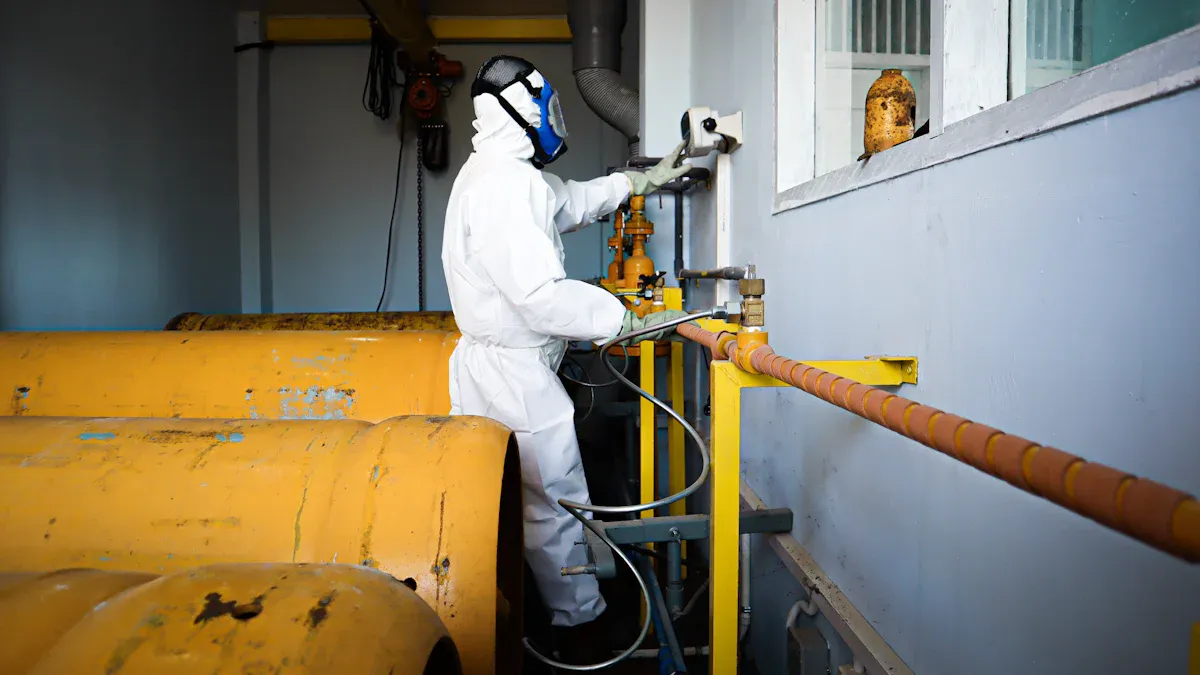
Routine Inspection Checklist
You need to inspect your flammable storage cabinets on a regular schedule. This helps you spot problems before they become serious. The importance of flammable cabinet inspections cannot be overstated. Use this checklist to guide your flammable cabinet inspection:
- Learn the rules for safety standards like OSHA 1926.152 and NFPA 30.
- Set a schedule for inspections. Do this every month or every quarter.
- Look at the outside of the cabinet. Check for dents, rust, or missing labels.
- Test the doors and seals. Make sure they close tightly and the latches work.
- Check the ventilation openings. They should be clear and working.
- Open the cabinet. Look for spills, leaks, or wrong labels on containers.
- Confirm that grounding connections are secure if your cabinet needs them.
- Write down what you find and how you fix any problems.
- Teach your team how to do inspections and why they matter.
Tip: Training your team helps everyone understand their role in keeping the workplace safe.
Maintenance Procedures and Self-Closing Doors
You should check your flammable storage cabinets every week. This includes testing self-closing doors. Make sure the doors close by themselves and latch without help. If you find a problem, fix it right away. Regular maintenance keeps your cabinets working and helps prevent fire hazards. You protect your team and your building when you keep up with these checks. Never skip a weekly inspection. Your attention to safety can save lives.
Recordkeeping for Inspections and Maintenance
Good records show that you care about safety. You should keep logs of every inspection and maintenance task. Store important documents in one place. Here are some best practices:
- Track chemical inventories with details like amounts, locations, and who is responsible.
- Write down inspection results and what you did to fix any issues.
- Keep training records for all staff who handle flammable materials.
You can use a table to organize your records:
| Key Documentation Items |
|---|
| Material Safety Data Sheets (MSDS) for flammable materials |
| Inspection logs for flammable storage cabinets |
| Training records for staff members |
| Permits and licenses for storing flammable materials |
Keeping good records helps you pass audits and shows you follow safety rules. You make your workplace safer for everyone.
Employee Training on Flammable Cabinet Requirements
Training Content and Frequency
You need to train every employee who handles flammable liquids. This training helps your team understand how to use flammable storage cabinets the right way. You should cover important topics in each session. The table below shows what you must include:
| Requirement | Details |
|---|---|
| Door Overlap | Must have a rabbeted overlap of not less than 1 inch. |
| Door Latches | Must be equipped with latches and hinges that hold during fire tests. |
| Cabinet Labeling | Must be labeled in clear letters ‘Flammable—Keep Fire Away.’ |
| Maximum Capacity | Not more than 60 gallons of Category 1, 2, or 3 liquids, or 120 gallons of Category 4 liquids. |
You should also teach your team to follow NFPA 30 for safe storage and handling. Remind them to check the International Fire Code and ask local authorities about extra rules. These steps help everyone understand how to keep the workplace safe.
You must give new hire training to every employee who will handle flammable liquids. The table below shows when to train:
| Training Type | Frequency |
|---|---|
| New hire training | Required for all new employees handling flammable liquids |
You should also hold refresher sessions to remind your team about safe practices.
Documentation of Training
You need to keep good records of all training sessions. Write down who attended, what you taught, and when you held the session. Keep these records in a safe place. You should also document any inspections, problems you found, and how you fixed them. This helps you show that you follow all rules during audits.
Make sure your records include:
- Dates of training sessions
- Names of employees trained
- Topics covered, such as OSHA rules and emergency steps
- Results of inspections and actions taken
You should review your records often. This helps you keep your team focused on safety and ready for emergencies.
Common Compliance Mistakes and How to Avoid Them
Overlooked Requirements and Improper Storage
You can make mistakes with flammable storage cabinets if you do not follow all the rules. Many people store flammable liquids too close to heat sources or in direct sunlight. This increases fire risk and puts everyone in danger. You might also use the wrong containers. Reusing non-approved containers can cause leaks and make ignition more likely. Clutter near flammable cabinets is another common problem. Combustible materials left nearby can make a fire spread faster.
Here are the most frequent mistakes you should avoid:
- Storing flammable liquids near heat sources, machinery, or sunlight.
- Using containers that are not approved for flammable liquids.
- Allowing clutter or combustible materials near cabinets.
- Exceeding the allowed quantity of flammable materials.
- Not training employees on proper handling and emergency steps.
To prevent improper storage, you must follow guidelines for cabinet placement and construction. Choose storage rooms with non-combustible, liquid-tight construction. Use fire-resistant materials and make sure there is enough ventilation. Select storage locations away from traffic routes and break areas. Always use proper handling and dispensing methods. These steps help you protect your team and improve safety.
Tip: Check your storage area often. Remove clutter and make sure all containers are approved.
Inadequate Recordkeeping and Training
You need to keep good records and train your team regularly. Poor recordkeeping can lead to missed inspections and unsafe conditions. If you do not document training, you cannot prove compliance during audits. This can cause trouble for your business.
Use these strategies to improve your recordkeeping and training:
- Keep detailed records of all training, inspections, and incidents.
- Implement stricter reporting practices for chemical inventories and safety checks.
When you train your team, teach them about flammable cabinet requirements and emergency procedures. Review training records often and update them as needed. Good training and recordkeeping help you avoid the consequences of ignoring flammable cabinet requirements. You create a safer workplace and protect everyone from harm.
You have learned the key steps for flammable storage cabinet compliance. Review rules, keep records, and inspect your cabinets often. Teach your team how to handle flammable materials. Regular checks help you spot problems early. Make safety your top goal. Stay alert and update your practices as rules change. Commit to ongoing improvement and protect your workplace every day.
FAQ
What liquids must you store in a flammable storage cabinet?
You must store any liquid with a flash point below 200°F in a flammable storage cabinet. This includes gasoline, acetone, and many solvents. Always check the Safety Data Sheet (SDS) for the flash point.
How often should you inspect your flammable storage cabinet?
You should inspect your cabinet at least once a month. Some workplaces check every week. Regular inspections help you find problems early and keep your workplace safe.
Can you store other chemicals with flammable liquids?
Never store acids, bases, or oxidizers with flammable liquids. Mixing these chemicals can cause dangerous reactions. Always keep incompatible chemicals in separate cabinets.
What should you do if a cabinet label is missing or damaged?
Replace missing or damaged labels right away. Use a label that says “FLAMMABLE—KEEP FIRE AWAY.” Clear labels help everyone stay safe and follow the rules.


