

You need proper flammable storage to maintain fire safety and protect your surroundings. Many incidents happen because people store flammable chemicals incorrectly.
- 128 recorded incidents occurred from 2012 to 2015.
- 65% took place in universities.
- Chemical spills made up 45% of hazards, and fires caused 21%.
Scientific research shows that Enflammable Materials Management: The Science Behind Proper Storage Solutions lowers fire safety risks. The right storage methods prevent fire, explosion, and health hazards. You protect people, property, and the environment by using approved cabinets and labeling.
| Risk Type | Description |
|---|---|
| Fire Hazard | Flammable materials can ignite easily and threaten safety. |
| Explosion Risk | Vapors in confined spaces may cause severe damage. |
| Health Hazard | Exposure leads to respiratory issues and skin irritation. |
The Science Behind Flammable Materials and Fire

What Makes Flammable Chemicals Hazardous?
You face serious risks when you handle flammable chemicals. These materials can catch fire easily and spread flames quickly. Their chemical properties make them dangerous in many settings, including homes, schools, and workplaces. Some flammable chemicals ignite at very low temperatures. Others react with air or water and cause explosions.
Here is a table that shows why different types of flammable chemicals are hazardous:
| Property Type | Flash Point Range | Description |
|---|---|---|
| Flammable Liquids | Below 100°F | Easily ignited and present serious fire hazards. |
| Combustible Liquids | 100°F to 200°F | Less dangerous than flammable liquids but still pose fire risks. |
| Flammable Solids | Below 212°F | Finely divided solids that can ignite when dispersed in air. |
| Oxidizers | N/A | Chemicals that can cause or enhance the combustion of other materials. |
| Pyrophoric Chemicals | N/A | Substances that ignite spontaneously in air. |
| Water-Reactive Chemicals | N/A | Chemicals that react violently with water, potentially causing fires. |
You must understand these properties to store flammable chemicals safely. If you ignore these facts, you increase the risk of fire, explosion, and injury.
Key Scientific Factors: Flash Point, Ignition Temperature, and Vapor Pressure
You need to know three important scientific factors when you work with flammable chemicals: flash point, ignition temperature, and vapor pressure.
- Flash point is the lowest temperature at which a liquid gives off enough vapor to ignite in the presence of an ignition source.
- Ignition temperature is the temperature at which a substance can spontaneously ignite without an external ignition source.
- Vapor pressure tells you how easily a substance can evaporate and form flammable vapors.
Flammable chemicals with a low flash point can catch fire at room temperature. High vapor pressure means the chemical turns into vapor quickly, which increases the chance of fire. If the temperature in your storage area rises above the flash point, the risk of fire grows. You must keep flammable chemicals below their flash point and away from ignition sources.
Tip: Always check the safety data sheet for each chemical. This sheet lists the flash point, ignition temperature, and vapor pressure. You can use this information to choose the right storage solution.
Real-World Fire Risks of Improper Storage
You may think a small mistake will not cause a big problem, but improper storage of flammable chemicals leads to real disasters. Many workplaces store flammable chemicals like hand sanitizers, aerosol sprays, and alcohol-based cleaners in unsafe ways. These items can ignite quickly if you do not store them correctly.
Here are some common mistakes and their consequences:
- Improper Storage Locations: Storing flammable chemicals near heat sources increases fire risks.
- Using the Wrong Containers: Reusing non-approved containers can lead to leaks and ignition hazards.
- Poor Housekeeping and Clutter: Cluttered storage areas with combustible materials heighten fire risk.
A swimming pool supply store once experienced a destructive fire because of improper chemical storage. This incident shows how one mistake can threaten an entire community. According to the National Fire Protection Association, fires involving flammable or combustible liquids cause about 454 civilian deaths, 3,910 injuries, and $1.5 billion in property damage every year.
You can prevent these tragedies by following safe storage practices for flammable chemicals. Always use approved containers, keep chemicals away from heat, and maintain a clean storage area.
Classification and Management of Flammable Chemicals
Flammable vs. Combustible: Understanding the Difference
You need to know the difference between flammable and combustible chemicals to keep your workplace safe. Flammable chemicals ignite easily at room temperature. Combustible chemicals require higher temperatures to catch fire. This difference affects how you handle and store these chemicals. The table below shows the main differences:
| Type | Definition | Flash Point Range |
|---|---|---|
| Combustible | Materials that can burn in air under certain conditions. | Above 60°C (140°F) but below 93.3°C (200°F) |
| Flammable | Materials that ignite easily at ambient temperatures. | Below 37.8°C (100°F) |
You must always check the flash point when you work with flammable chemicals or combustible liquids. This helps you follow the right storage requirements and avoid accidents.
Categories and Examples of Flammable Materials
You will find many types of flammable chemicals in labs, factories, and even at home. Each category has unique characteristics of flammable chemicals. Some chemicals evaporate quickly and form dangerous vapors. Others burn slowly but still pose risks. Here are common categories and examples:
| Category | Example |
|---|---|
| 1 | Diethyl Ether |
| 1 | Heptane |
| 1 | Ligroin |
| 1 | Pentane |
| 1 | Petroleum Ether |
| 2 | Acetone |
| 2 | Benzene |
| 2 | Ethanol |
| 2 | Isopropyl Alcohol |
| 2 | Toluene |
| 3 | Camphor Oil |
| 3 | Diesel Fuel |
| 3 | Naphtha |
| 3 | Pine Tar |
| 4 | Aniline |
| 4 | Benzyl Alcohol |
| 4 | Glycerin |
| 4 | Vegetable Oils |
You must recognize these chemicals and understand their hazards. This knowledge helps you choose the right flammable chemical storage and meet all storage requirements.
How Classification Impacts Storage Solutions
You must follow strict rules for flammable chemical storage. The classification of flammable chemicals tells you what kind of storage you need. For example, fire-rated storage is mandatory for certain amounts of flammable liquids. Safety measures depend on the classification of each chemical. You must control temperature, manage ignition sources, provide proper ventilation, and keep incompatible chemicals apart.
- Temperature control
- Ignition source management
- Proper ventilation
- Segregation of incompatible materials
You can prevent disasters by following these steps. Incidents in paint and body shops show that poor storage practices can lead to fires and explosions. You protect yourself and others when you follow the right classification and storage requirements for all flammable and combustible chemicals.
Enflammable Materials Management: The Science Behind Proper Storage Solutions
Approved Storage Containers and Cabinets
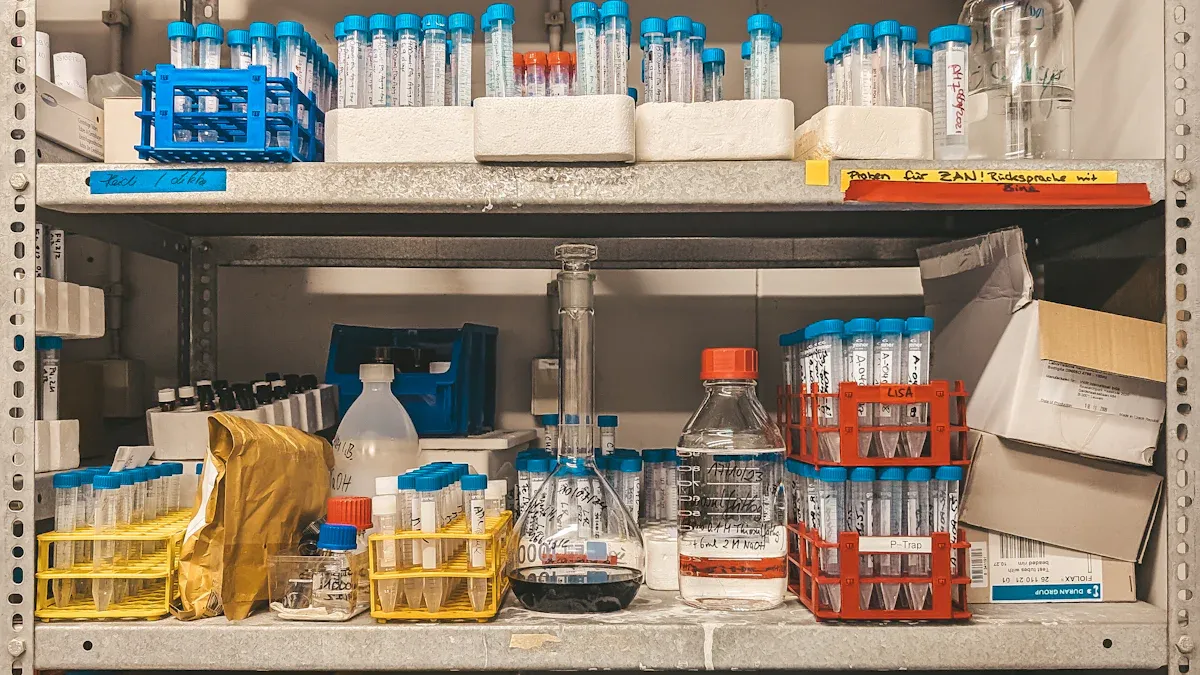
You need to choose the right containers and cabinets for flammable chemicals. This step is a key part of enflammable materials management: the science behind proper storage solutions. You must follow scientific criteria to keep your chemicals safe. The table below shows what you should look for when you select storage containers and cabinets:
| Criteria | Description |
|---|---|
| Chemical Capacity | Pick containers that match the amount of flammable liquid you need to store. Follow OSHA and NFPA rules. |
| Design Compliance | Make sure cabinets meet local laws and have approval from your area’s safety authority. |
| Area Limit | Do not let the storage cabinet area go over 140m². |
| Vertical Stacking | Never stack cabinets on top of each other. |
| Overflow Features | Use cabinets with overflow grooves. These grooves must hold at least 10% of the total volume or the largest container, whichever is more. |
You must use containers made for flammable chemicals. These containers stop leaks and spills. Cabinets with fire-resistant walls protect you if a fire starts. You should never use regular cabinets for flammable chemicals. Always check for safety labels and approval marks.
Tip: Store only the smallest amount of flammable liquid you need. This practice lowers fire risk and makes your workplace safer.
Ventilation, Temperature Control, and Fire Suppression
You must control the air and temperature in your storage area. Good ventilation removes flammable vapors from the air. This step is important because vapors can catch fire easily. You need a system that changes the air at least six times every hour. This rule comes from OSHA and helps keep you safe.
Climate-controlled storage keeps the temperature below the flash point of your flammable chemicals. This step stops the chemicals from reaching a temperature where they can ignite. You should always check the temperature in your storage room. If the room gets too hot, the risk of fire goes up.
| Safety Feature | How It Helps You Stay Safe |
|---|---|
| Ventilation | Removes flammable vapors and lowers fire risk. |
| Temperature Control | Keeps chemicals below their flash point so they do not ignite. |
| Fire Suppression | Puts out fires quickly and stops them from spreading. |
You need a fire suppression system in your storage area. Some cabinets come with built-in fire protection. These systems can put out fires fast and stop them from spreading. The FireFlex Icaf system is one example. It works well for Class B fires, which include flammable liquids. You must follow NFPA 30 and NFPA 11 rules to make sure your fire suppression system works right.
Segregation, Safe Distancing, and Inventory Management
You must keep flammable chemicals apart from other chemicals. This step is a big part of enflammable materials management: the science behind proper storage solutions. You can use fire-rated walls or special barriers to separate chemicals. You should also use secondary containment systems to catch spills.
- Use physical barriers to keep incompatible chemicals apart.
- Organize chemicals by hazard class. This makes training and emergency response easier.
- Try advanced methods like matrix-based segregation for chemicals that need special care.
- Use technology like Warehouse Management Systems to track chemicals and keep them safe.
- Train your staff so they know how to store chemicals and what to do in an emergency.
You should always keep flammable chemicals away from escape routes. Store only what you need and keep extra chemicals in special storage areas. Replace flammable chemicals with less flammable ones if you can. Make sure everyone knows how to handle chemicals and what to do if something goes wrong.
Identifying materials that ignite easily and burn with high intensity helps you improve fire safety. If you restrict these materials, you lower the risk of a big fire.
You need to check your inventory often. This step helps you know what chemicals you have and where you keep them. Good inventory management is a key part of enflammable materials management: the science behind proper storage solutions. You keep your workplace safe when you follow these steps.
Practical Examples of Flammable Storage Setups
You need to see how real-world storage setups keep you safe when you handle flammable chemicals. Many laboratories and industrial facilities use special rooms, cabinets, and racks to store these chemicals. Each setup uses science and strict procedures to lower fire risks.
Here is a table that shows common storage setups, their features, and the safety measures you must follow:
| Storage Setup Type | Key Features | Safety Measures |
|---|---|---|
| Storage Rooms | Non-combustible, liquid-tight construction, fire-resistant materials | Mechanical or gravity ventilation, clearly marked aisles for safe movement |
| Safety Storage Cabinets | Robust construction, versatile applications for various hazardous materials | Compliance with OSHA, NFPA, and TRGS 510 standards for fire ratings and spill containment |
| Chemical Storage Racks | Designed for secondary spill containment | Must be used with safety cabinets and proper handling procedures |
You use storage rooms when you need to keep large amounts of flammable chemicals. These rooms have walls that do not burn and floors that stop leaks. You must keep the air moving with fans or vents. You also need clear walkways so you can move safely during emergencies.
You use safety storage cabinets for smaller amounts of flammable chemicals. These cabinets have thick walls that resist fire. They also have grooves to catch spills. You must follow rules from OSHA and NFPA to make sure your cabinets work well. You should never put too many chemicals in one cabinet.
You use chemical storage racks when you need to organize many containers. These racks catch spills and keep chemicals off the floor. You must use racks with safety cabinets and follow all handling procedures. You should always check that racks are strong and stable.
Tip: Always label each storage area and keep emergency equipment nearby. You must practice your emergency procedures often so everyone knows what to do if something goes wrong.
Latest Technological Advancements in Flammable Storage
You can use new technology to make your flammable storage even safer. Many companies now use fire-resistant and corrosion-proof materials for cabinets and rooms. These materials last longer and protect you better.
Here is a table that shows some of the latest advancements:
| Advancement Type | Description |
|---|---|
| Material advancements | Use of fire-resistant and corrosion-proof materials enhances safety and durability. |
| Design innovations | Modular and ergonomic designs improve usability and storage efficiency. |
| Smart safety features | Integration of sensors and automated alerts for enhanced hazard management. |
You can also use smart systems to help you manage chemicals. Automated storage and retrieval systems (ASRS) move chemicals for you. These systems lower human error and give you real-time information about your inventory. Smart sensors and IoT technology watch the temperature and air quality. They send you alerts if something becomes unsafe. Advanced fire suppression systems can find and put out fires before they spread.
How to Set Up Safe Storage in Your Facility
You must follow clear procedures when you set up storage for flammable chemicals. Here is a simple checklist you can use:
- Choose the right storage type for your chemicals.
- Make sure all rooms and cabinets meet fire safety standards.
- Label every container and storage area.
- Keep chemicals away from heat and sunlight.
- Use proper ventilation to remove dangerous vapors.
- Train your staff on emergency procedures.
- Check your inventory often and remove old or unused chemicals.
You must always update your procedures when you get new chemicals or equipment. You should review your safety plan every year. You can ask experts to inspect your storage areas and give you advice.
Note: Good storage setups and strong procedures protect you, your coworkers, and your community from fire and chemical accidents.
You can see that safe storage of flammable chemicals uses science, technology, and careful planning. You must follow all procedures and use the best tools to keep your facility safe.
Regulatory Compliance and Fire Safety Standards
Key Codes and Standards: OSHA, NFPA, and Local Regulations
You must follow strict regulatory requirements for flammable chemicals to keep your workplace safe. Several organizations set rules for storing flammable materials. These codes help you prevent fire and protect people. The national fire code of canada also provides guidance for safe storage. Here is a table that shows important codes and standards:
| Regulatory Body | Code/Standard | Description |
|---|---|---|
| OSHA | 29 CFR 1910.106 | Guidelines for flammable and combustible liquids, based on flash points and boiling points. |
| NFPA | NFPA 30 | Code for safe storage, handling, and use of flammable liquids, including construction and labeling. |
| EPA | RCRA | Regulates hazardous waste, including certain flammable liquids, to meet environmental laws. |
You must check local regulations and the national fire code of canada to make sure your facility meets all legal requirements. If you ignore these rules, you risk fines, legal penalties, and business disruption.
Labeling, Signage, and Documentation for Flammable Chemicals
You need clear labels and signs to keep everyone safe from fire hazards. Labels show the hazard class and category of each chemical. They use words like “Danger” or “Warning” to alert you. Signs remind you to keep flammable materials away from heat sources. GHS labels link to Safety Data Sheets, which give you important information for handling and emergency response.
- Labels identify hazard class and category.
- Signs communicate severity and alert you to risks.
- GHS labels connect to Safety Data Sheets for safe handling.
Proper documentation helps you track chemicals and follow regulatory requirements for flammable chemicals. You must keep records of storage, inspections, and training.
Inspections, Maintenance, and Fire Safety Protocols
You must inspect storage areas often to prevent fire. Set up a regular inspection schedule. Check cabinets for damage, corrosion, and correct labeling. Make sure seals and latches work. Look at ventilation openings for blockages. Inspect inside cabinets for spills and leaks. Check grounding connections if needed. Document all inspections and corrective actions. Train your staff so everyone knows fire safety protocols.
- Learn safety regulations like OSHA and NFPA 30.
- Schedule regular cabinet inspections.
- Check for damage and proper labeling.
- Inspect seals, latches, and ventilation.
- Look for spills and leaks inside cabinets.
- Check grounding connections.
- Record inspection details.
- Train staff and promote safety awareness.
If you fail to follow regulations, you may face fines, legal penalties, or insurance issues. Catastrophic events like explosions or injuries can lead to lawsuits and business disruption.
Emergency Procedures and Fire Safety for Flammable Materials
Spill Response and Containment for Flammable Chemicals
You must act quickly when a spill happens during handling flammable chemicals. Emergency procedures start with removing all sources of ignition. This step prevents a fire from starting. You should use spill pillows or pads made for flammable liquids. Avoid using inert absorbents like cat litter because flammable liquids are usually incinerated after cleanup. Seal and label used absorbent materials in heavy-duty poly bags for proper disposal. Always keep the area well ventilated to remove flammable vapors. These steps help you contain hazardous spills and protect everyone in the area.
Fire Extinguishers, Suppression Systems, and Evacuation Plans
You need the right fire suppression systems in your indoor storage areas. Each system works best for different types of fires that can happen when handling flammable chemicals. The table below shows common options:
| Fire Suppression System | Description |
|---|---|
| Dry Chemical Suppression Systems | Effective against Class A, B, and C fires, ideal for mixed-material storage facilities. |
| Foam-Based Suppression Systems | Creates a smothering blanket over flammable liquids, preventing re-ignition, especially for fuels. |
| Water Mist Systems | Disperses fine droplets to cool fires and reduce oxygen, using less water than traditional systems. |
| Inert Gas Suppression Systems | Reduces oxygen concentration to suffocate fires without damaging sensitive materials. |
| Explosion Suppression and Isolation | Detects pressure increases to prevent explosions, useful for combustible dust or volatile vapors. |
You must know how to use fire extinguishers and understand your facility’s evacuation plan. Emergency procedures include clear routes and responsibilities. Practice these plans often so you can respond fast during an emergency.
Staff Training and Ongoing Fire Safety Education
You need regular training to stay safe when handling flammable chemicals. Teach your team about the types of flammable and combustible materials in your workplace. Show them how to use fire extinguishing equipment. Include first aid training for injuries that may happen during an emergency. Inspect devices and wiring often to catch problems early. Check kitchen equipment, since many workplace fires start there. Review proper handling and storage for all flammable liquids and gases. Train everyone on when to fight a fire or evacuate. Develop evacuation plans with primary and secondary routes. Assign responsibilities and list items to take during an emergency. Ongoing education keeps your indoor storage areas safe and ready for any emergency.
Tip: Practice emergency procedures often. This habit helps you respond quickly and safely when handling flammable chemicals.
You rely on scientific principles to guide safe storage of flammable materials. The table below shows how these principles shape your storage solutions:
| Aspect | Description |
|---|---|
| Storage Containers | Use only approved containers that meet strict standards. |
| Design and Construction | Choose containers with safety features like emergency venting. |
| Ventilation | Ensure proper air flow to prevent vapor buildup. |
Following fire safety best practices gives you many benefits:
- You prevent dangerous vapor accumulation.
- You protect lives and property.
- You reduce risks and improve workplace efficiency.
Stay alert and keep learning. Regular training and safety drills help you and your team respond quickly to emergencies. Your commitment to education and vigilance keeps everyone safe.
FAQ
What is the safest way to store flammable liquids?
You should use approved safety cabinets or containers. Keep them away from heat and sunlight. Always label each container clearly.
Tip: Store only the amount you need for daily use.
How often should you inspect flammable storage areas?
You should inspect storage areas at least once a month. Check for leaks, damaged labels, and blocked vents.
- Look for spills
- Test fire safety equipment
- Update your inventory list
Can you store different flammable chemicals together?
You should not store incompatible chemicals together. Use separate cabinets or barriers.
| Chemical Type | Store With? |
|---|---|
| Flammable Liquids | Other flammables |
| Oxidizers | Never with fuels |
What should you do if a flammable chemical spills?
You must remove all ignition sources. Use spill kits designed for flammable liquids. Ventilate the area.
Always wear gloves and goggles when cleaning up spills.


