

An IP (Ingress Protection) rating is a global standard that classifies a cabinet’s defense against solids and liquids. For Weatherproof Cabinets: Understanding IP Ratings and Weather Resistance Standards is the most crucial factor. This ingress protection rating empowers you to select a product that guarantees protection for your equipment. A proper IP rating ensures long-term reliability, and a higher IP number signifies better defense.
What Are IP Ratings and Why Do They Matter?
You might see terms like “weatherproof” or “water-resistant” used often, but these can be vague. The IP rating system gives you a clear, standardized way to understand a cabinet’s durability. The International Electrotechnical Commission (IEC) created this system to provide detailed information about an enclosure’s defense. An ingress protection rating is vital for industries from mining to food processing, where equipment must survive harsh conditions.
The IP code itself is simple. It uses two numbers to define its level of defense.
- The first digit shows protection against solid objects.
- The second digit shows protection against liquids.
A higher number means better protection. This simple IP code helps you choose the right enclosure without guesswork.
The First Digit Explained: Solid Protection
The first digit in an IP code tells you how well the cabinet protects against solids. This includes everything from large objects and fingers to tiny particles like dust. The scale runs from 0 (no protection) to 6 (completely dust-proof).
For most outdoor applications, you should look for an IP rating with a first digit of 5 or 6. An IP5X rating means the cabinet is protected against most dust, while an IP6X rating signifies it is completely sealed from dust ingress. This is crucial for protecting sensitive electronics.
The Second Digit Explained: Liquid Protection
The second digit defines the cabinet’s water resistance. This is the most important factor for a truly water-resistant cabinet. The scale ranges from 0 (no protection) to 9 (protection against high-pressure, high-temperature water jets).
Common protection ratings you will see include:
- IPX5: Protects against jets of water from any direction.
- IPX6: Protects against powerful jets of water, like heavy seas.
- IPX7: Allows for temporary immersion in water up to 1 meter deep.
Understanding both digits of the ingress protection code is key. It empowers you to select a cabinet that truly meets the environmental challenges of your location, ensuring your equipment stays safe and functional. These ip ratings are your best guide.
A Guide to Common IP Ratings for Outdoor Enclosures

Now that you understand the two-digit system, let’s explore the most common ip ratings for outdoor cabinets. Each level offers a specific degree of protection. Choosing the right one depends entirely on your environment. A lower ip, like an ip54 rating or ip64 rating, might be fine for indoor use with some dust. Outdoor settings demand much more.
IP65: The Standard for General Outdoor Use
You will often see the ip65 rating on general-purpose outdoor enclosures. This ip rating signifies two key things. The “6” means the cabinet is completely dust-tight. The “5” means it protects against low-pressure water jets from any direction. This makes it a solid choice for locations that experience rain and wind. An ip65 rating provides a great balance of protection and cost for many situations. It is a significant step up from a basic ip54 rating.
Note: An IP65 cabinet can handle rain but not powerful, concentrated streams of water. Think of it as being reliably rainproof.
This level of protection is ideal for housing electronics in many commercial and industrial settings. Common applications include:
- Telecommunications and Cable Management
- Solar Power Systems
- Railway and Transportation Controls
- Water Management and Critical Infrastructure
- Oil & Gas Production
IP66: Superior Protection Against Powerful Jets
You should consider an ip of 66 when your equipment faces more extreme water exposure. An IP66-rated cabinet offers the same complete dust protection as IP65. However, its liquid protection is much stronger. The “6” for liquids means it can withstand powerful water jets. This is a crucial upgrade for certain environments. It provides a much higher level of defense than an ip64 rating.
The tests for this ip level are intense. They ensure the cabinet can survive harsh conditions.
| Testing Feature | IP66 Specification |
|---|---|
| Protection Against | Powerful water jets |
| Water Pressure | 100 kPa (15 psi) from 3 meters |
| Water Volume | 100 liters per minute |
| Test Duration | At least 3 minutes |

You need this superior protection in specific scenarios where an ip65 rating is not enough. Choose an IP66 cabinet for:
- Marine applications with exposure to heavy storms and saltwater spray.
- Industrial washdown areas where equipment is cleaned with high-pressure hoses.
- Locations prone to storms and high winds that drive rain sideways.
IP67: Built for Temporary Submersion
The ip67 rating offers an even higher level of defense. This ip is for equipment that might be temporarily submerged in water. Like the others, it is completely dust-tight. The “7” for liquid protection is what sets it apart. It guarantees that the cabinet is water-resistant even when underwater for a short time. This is a huge leap in protection from an ip64 rating or even an ip54 rating.
The test for an ip67 rating is very specific. It ensures the enclosure can handle accidental flooding.
| Test Type | Depth | Duration |
|---|---|---|
| Immersion | 1 meter | 30 minutes |
This ip rating is essential when there is any risk of your equipment ending up underwater. Practical use cases are common in many industries.
- Wastewater plants need protection from high humidity and splashes.
- Construction zones often have unpredictable drainage and flooding risks.
- Coastal factories and marine docks face threats from storm surges.
- Agricultural automation systems must survive monsoon rains and irrigation.
Choosing an IP67 cabinet gives you peace of mind. You know your critical components are safe from temporary submersion, a risk that other ip ratings cannot handle.
Weatherproof Cabinets: Understanding IP Ratings and Weather Resistance Standards
When you are selecting an enclosure, you might also see a NEMA rating. For weatherproof cabinets: understanding ip ratings and weather resistance standards means knowing about both systems. The National Electrical Manufacturers Association (NEMA) created this standard. It is used mostly in North America. The IP system, on the other hand, is an international standard. You cannot directly convert an IP rating to a NEMA enclosure rating. They use different testing methods.
NEMA Ratings vs. IP Ratings
You will find that IP ratings focus strictly on protection from solids and liquids. The NEMA system is broader. A NEMA enclosure rating also considers other environmental hazards. This is a key part of weatherproof cabinets: understanding ip ratings and weather resistance standards. The NEMA system provides a more complete picture of an enclosure’s durability in certain conditions.
A great example is corrosion resistance. Some NEMA ratings, like NEMA 4X, use an “X” to show the cabinet resists corrosion. The IP system does not test for this. This makes a NEMA rating very useful for coastal or chemical environments.
Key Differences in Protection Standards
Understanding the core differences helps you make a better choice. The IP code gives you specific details on dust and water. A NEMA rating gives you a general level of protection against many hazards. For weatherproof cabinets: understanding ip ratings and weather resistance standards, knowing these differences is vital. The NEMA system often includes protection against ice, oil, and coolants.
Here is a simple breakdown of the two systems:
| Feature | IP System | NEMA System |
|---|---|---|
| Primary Focus | Solids and Water Ingress | Broader Environmental Hazards |
| Geographic Use | International International | North America North America |
| Extra Factors | None | Corrosion, Ice, Oil |
Ultimately, the NEMA system provides a different type of assurance. While an IP rating is a precise measure of ingress protection, a NEMA rating offers a wider scope of environmental defense.
How to Select the Right Cabinet Based on Its IP Code
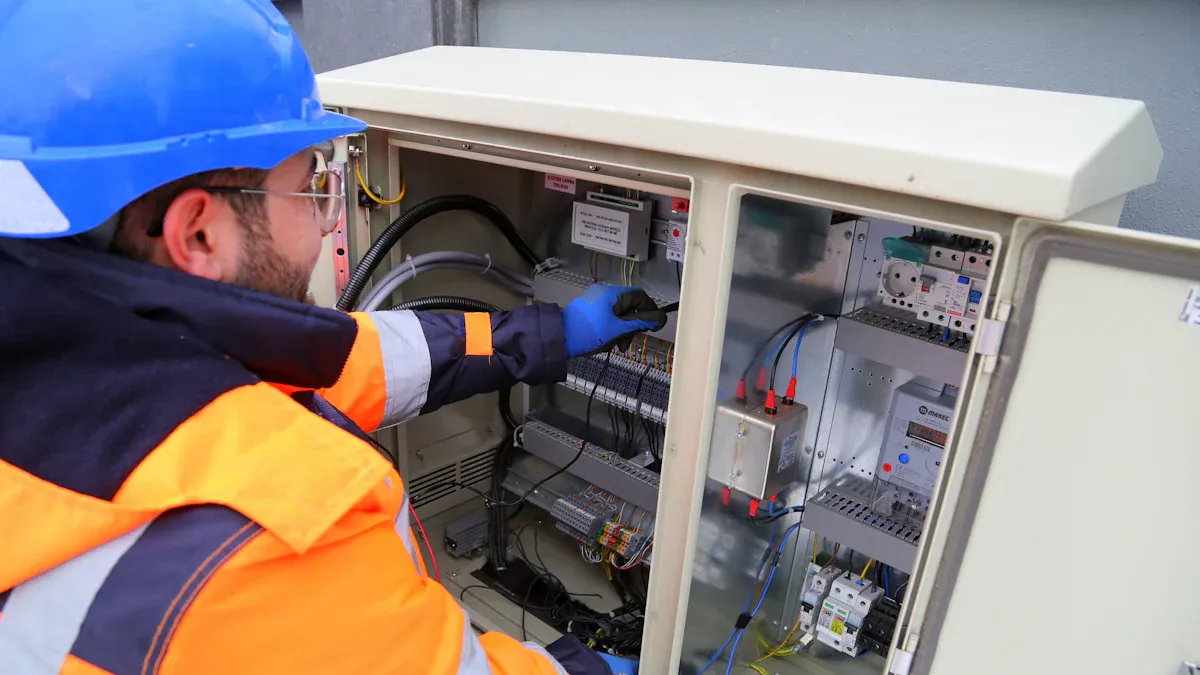
Choosing the right cabinet is a critical decision. You can simplify this process by breaking it down into three logical steps. This ensures you get the protection you need without overspending on features you will never use.
Assess Your Environmental Risks
Before you look at any products, you must first understand your environment. A thorough risk assessment helps you identify every potential threat to your equipment. You can use a structured approach to make sure you do not miss anything. Some organizations use a formal process, like a Hazard Assessment Tool, to identify chemical and physical hazards in a specific location. This helps them choose the right protective measures.
You can perform your own simple assessment. Ask yourself the following questions about the cabinet’s future location:
- Solids: Will the cabinet be exposed to fine dust, dirt, or larger debris? Is it an indoor industrial site or an outdoor, windy area?
- Liquids: What is the main water risk? Is it light rain, splashing water, powerful cleaning jets, or potential flooding?
- Chemicals: Will the cabinet be near corrosive substances, oils, or other chemicals?
- Impact: Is there a risk of physical impact from vehicles, equipment, or vandalism?
Answering these questions gives you a clear picture of the protection level your equipment requires.
Match Your Needs to the Correct IP Rating
Once you know your risks, you can find the right ip. The ip rating system provides a great framework, but you must use it wisely. Simply picking the highest number is not always the best strategy.
- Over-specifying an ip rating leads to unnecessary costs.
- Under-specifying an ip rating risks equipment failure and costly replacements.
- Different applications have different needs. An outdoor security camera needs a high rating, while an indoor office switch does not.
You need to make a realistic choice based on your assessment. For example, consider if you need an IP65 or IP67 cabinet. IP65 protects against rain and dust, which is enough for most outdoor uses. IP67 protects against temporary submersion. While IP67 offers more protection, it also increases the cost and weight of the cabinet. You should only invest in IP67 if there is a real chance of flooding, like in marine or off-roading applications.
This table gives you a general guide for matching environments to common ip ratings.
| Environmental Factor | Example Product | Recommended IP Rating | Rationale |
|---|---|---|---|
| Indoor Office | Printers, Switches | IP20 | Protection against finger-sized objects |
| Kitchen (Splashing Water) | Household Appliances | IP24 | Guard against splashing water |
| Outdoor (Dust-tight, Water Jets) | Outdoor Lighting Fixtures | IP65 | Dust-tight and resistant against water jets |
| Automotive Engine Bay | Electrical Components | IP6K9K | Resist dust and high-pressure, high-temperature cleaning |
Consider Material and Build Quality
A cabinet’s material and construction are just as important as its rating. The materials determine the cabinet’s lifespan and its ability to resist hazards beyond dust and water. Polycarbonate and stainless steel are two excellent choices for durable enclosures.
Pro Tip: The material you choose directly impacts the cabinet’s long-term performance. Stainless steel offers superior durability, while polycarbonate provides excellent impact resistance.
This table compares the two materials to help you decide.
| Feature | Stainless Steel | Polycarbonate |
|---|---|---|
| Durability | High; resists dents and chemical reactions | Good; impact resistant and does not crack easily |
| Lifespan | Longer; built for heavy-duty use | Moderate; may show scratches over time |
| Heat Tolerance | High; handles direct heat | Moderate; handles warm temperatures |
| Maintenance | Simple and sanitary | Requires careful cleaning to avoid scratches |
| Cost | Higher upfront cost | More affordable than steel |
Finally, look at the small details of the cabinet’s construction. These features ensure the enclosure maintains its seal over time. A high-quality rubber gasket is essential for a truly water-resistant and dustproof seal. You should also check for other signs of quality construction.
| Feature | Benefit |
|---|---|
| Reinforced hinge | Prevents the door from sagging over time |
| Sturdy latches | Keeps the door securely closed to prevent accidental opening |
| Lockable handles | Protects your equipment against theft and vandalism |
By carefully considering your environment, matching it to the right rating, and inspecting the material and build quality, you can confidently select a cabinet that will protect your valuable equipment for years to come.
Advanced Considerations Beyond the IP Rating
A high IP rating is your first line of defense, but other factors ensure your cabinet performs well long-term. You must also think about heat, material durability, and security to fully protect your investment.
Thermal Management for Electronics
Your electronic components generate heat inside the cabinet. The outside ambient temperature also affects the internal climate. High temperatures can reduce the lifespan of your equipment and even create fire hazards. You need a way to manage this heat.
A closed-loop thermal management system is often the best solution. It removes heat without letting dust or moisture inside. Air-to-air heat exchangers are a popular choice. They transfer heat from the warm inside air to the cooler outside air.
Other common cooling solutions you might consider include:
- Fans
- Air conditioners
- Thermoelectric coolers
Choosing the right system helps you maintain a safe operating temperature for your sensitive electronics.
UV Resistance and Material Longevity
Sunlight contains ultraviolet (UV) radiation that can damage a cabinet over time. Constant exposure can make some materials, especially certain plastics, brittle and weak. This degradation can cause cracks, which compromises the cabinet’s seal and lowers its IP rating.
You should select a cabinet made from UV-resistant materials. For example, high-grade polycarbonate or coated stainless steel can withstand years of sun exposure without breaking down. This choice ensures your enclosure remains strong and protective throughout its service life, saving you from costly future replacements.
Security Against Vandalism and Tampering
Protecting your equipment from the elements is only half the battle. You also need to secure it from unauthorized access and theft, especially in public areas. A truly secure cabinet combines a strong build with smart security features.
Look for cabinets with multiple layers of defense. Key features include:
- Robust Construction: Cabinets made from steel offer excellent resistance against forced entry.
- Secure Locks: High-quality locking mechanisms are essential to prevent access.
- Anchoring Points: Bolting the cabinet to a concrete slab or wall prevents thieves from carrying it away.
- Surveillance: Integrating motion-activated lights or cameras can deter potential intruders.
A strong, lockable, and water-resistant cabinet gives you confidence that your equipment is safe from both weather and people.
Your most reliable guide for ingress protection is the ip rating. Higher numbers on the ip code mean better defense against dust and water. Choosing incorrectly can be expensive, leading to downtime and repair costs that exceed the price of a proper cabinet. For weatherproof cabinets: understanding ip ratings and weather resistance standards, you must match the rating to your specific environmental hazards. This ensures your equipment stays safe and reliable for years, especially as the industry moves toward advanced materials and smarter security.
FAQ
Can I use an indoor cabinet outside if it is under a roof?
You should avoid this. An overhang does not protect from wind-driven rain, dust, or humidity. You need a cabinet with a proper outdoor IP rating, like IP65. This ensures your equipment stays safe from all environmental threats.
What does the ‘X’ mean in an IP rating like IPX7?
The ‘X’ acts as a placeholder. It means the cabinet was not tested for that specific type of protection. For example, an IPX7 rating means the cabinet was tested for liquid immersion but not for solid particle protection.
Is a higher IP rating always better?
Not always. You should match the IP rating to your specific risks. A higher rating costs more. Choosing an IP67 cabinet when you only need IP65 protection is an unnecessary expense. Your goal is to find the right balance.
How do I clean my weatherproof cabinet?
You can clean most cabinets with a soft cloth and mild soap. You should avoid:
- Harsh chemicals
- Abrasive pads
These can damage the cabinet’s surface or compromise the door seal. This damage would lower its protective capabilities.


