

Your business handles various flammable chemicals and hazardous materials. Proper storage is essential for workplace safety. Choosing the right cabinet from the many types of fire cabinets for different business environments: from offices to industrial settings is a critical decision. A major fire presents serious hazards to your operations.
The National Fire Protection Association (NFPA) reports that improper storage of flammable materials can increase the likelihood of a fire in industrial settings by up to 80%.
FEMA also indicates 40% of businesses never reopen after a major fire. The correct safety cabinets ensure your compliance with local regulations and protect your company’s future.
Why Investing in the Right Fire Safety Cabinets is Critical for Your Business
Choosing the correct fire safety cabinets is more than a purchase. It is a fundamental investment in your company’s future. These specialized containers are your first line of defense against devastating fire hazards. They provide essential protection for your people, your property, and your bottom line.
Protecting Your Employees and Property
Your team’s safety is your top priority. Industrial fire cabinets are engineered to contain flammable materials during a fire. This containment prevents small incidents from escalating into uncontrollable disasters. Proper storage minimizes risks and provides crucial minutes for evacuation. This protection extends to your physical assets. A single fire can destroy expensive equipment, inventory, and your entire facility. The right safety measures safeguard your investments and ensure operational continuity.
Ensuring Regulatory Compliance with OSHA and NFPA
You must follow strict federal and local regulations for chemical storage safety. The Occupational Safety and Health Administration (OSHA) and the National Fire Protection Association (NFPA) set clear standards for compliance. These regulations ensure maximum safety and fire protection.
Key Compliance Mandates: Both OSHA and NFPA require that safety cabinets limit internal temperatures to 325°F during a 10-minute fire test. They must also feature specific construction details.
Key requirements you must meet include:
- Construction: Metal cabinets need double-wall 18-gauge steel with a 1.5-inch air space.
- Security: Doors must have a three-point latching system to stay securely shut during a fire.
- Spill Containment: A 2-inch deep leak-proof sill at the bottom contains spills.
- Labeling: Cabinets must be clearly marked “Flammable – Keep Fire Away.”
Following these rules is non-negotiable for achieving regulatory compliance.
Preventing Costly Fines and Business Disruptions
Non-compliance with safety regulations can lead to severe penalties. OSHA can issue substantial fines for improper storage of hazardous materials. Beyond fines, a fire causes significant business disruption. Operations halt, deadlines are missed, and customer trust erodes. Integrating proper safety cabinets into your emergency preparedness plan is a proactive step. It prevents costly interruptions and demonstrates your commitment to workplace safety.
Decoding Cabinet Colors: A Guide to Storing Different Hazardous Materials
You will notice that fire safety cabinets come in different colors. This color-coding system is a vital visual tool for your workplace. It helps your employees quickly identify the types of hazardous materials stored inside. Proper chemical storage starts with choosing the right color cabinet for the job.
While regulatory codes from OSHA or NFPA do not mandate specific colors, the industry has adopted a standard color system. Following this system is a best practice that greatly improves safety and emergency response.
This system simplifies your chemical storage and ensures everyone can recognize potential hazards at a glance, which is critical during a fire.
Yellow Cabinets for Flammable Liquids
Yellow is the most common color you will see for safety cabinets. It universally signals the presence of flammable liquids. You should use yellow cabinets for the safe storage of any OSHA Category 1, 2, 3, or 4 flammable liquids. This color provides an immediate warning to keep fire and ignition sources away. Proper flammable liquid storage is a cornerstone of industrial safety.
These cabinets are designed to contain chemicals that ignite easily and have a low flash point. Common flammable chemicals you might store in a yellow cabinet include:
- Class IA & IB (Flash point below 73°F): Acetone, Ethanol, Gasoline, Toluene, and Methyl Ethyl Ketone.
- Class IC (Flash point at or above 73°F but below 100°F): Turpentine, Xylene, and Naphtha.
- Class II & III (Combustibles with flash points above 100°F): Diesel Fuel, Formaldehyde, and Pine Oil.
Red Cabinets for Paints, Inks, and Combustibles
You should use red cabinets for paints, inks, and other combustible liquids. The key difference between materials in red and yellow cabinets is their flash point. Combustibles in red cabinets do not ignite as easily as the flammable liquids stored in yellow cabinets. However, they still pose a significant fire risk and require proper storage.
Red cabinets help you segregate these specific materials from your other chemicals. This organization prevents accidental mixing and makes inventory management easier. Common items for a red cabinet include:
- Paints
- Inks
- Aerosols
- Motor oil
- Diesel fuel
Blue Cabinets for Corrosives and Acids
Blue cabinets signal the storage of corrosive liquids and acids. You must store these hazardous materials separately because their vapors can severely damage other items, including the cabinet itself. A standard steel cabinet will quickly degrade when exposed to corrosive fumes. Proper corrosive chemical storage protects both your employees and your equipment.
Blue cabinets are built differently to handle these aggressive substances. You have two main options depending on the strength of the corrosive chemicals you need to store.
| Feature | Poly-Coated Steel Cabinets | All-Polyethylene (HDPE) Cabinets |
|---|---|---|
| Best For | Flammables and less aggressive corrosives | Highly aggressive acids (sulfuric, nitric) |
| Construction | Powder-coated steel with poly lining/trays | Seamless, all-polyethylene (100% metal-free) |
| Advantage | High structural strength and fire resistance | Complete immunity to corrosion |
Manufacturers often use a durable powder-coat finish and add high-density polyethylene trays to the shelves and bottom of steel cabinets. This design works well for weak acids like acetic acid. For highly aggressive substances like sulfuric or nitric acid, you must use an all-polyethylene (HDPE) cabinet. These cabinets are 100% metal-free, offering superior protection against the most potent corrosive materials.
Green Cabinets for Pesticides and Insecticides
You should use green cabinets for the dedicated storage of pesticides, herbicides, and insecticides. These materials pose unique health and environmental risks. Proper storage is essential to prevent accidental exposure or contamination. Green cabinets help you segregate these specific chemicals from other substances in your facility.
These cabinets provide a secure location for toxic or flammable agricultural chemicals. This separation is a critical part of your overall chemical storage plan. It protects your employees and the environment from harmful spills. You might use a green cabinet for the safe storage of common pesticides such as:
- Glyphosate isopropylamine salt
- Hexazinone
- Acephate and chlorothalonil
- Daminozide
Safety Tip: Always store pesticides in their original, labeled containers inside the cabinet. This practice prevents dangerous mix-ups and ensures vital safety information is always accessible.
Using a designated green cabinet makes it easy for your team to identify where these hazardous materials are kept. This clear organization improves inventory control and supports a safer workplace.
Types of Fire Cabinets for Different Business Environments: From Offices to Industrial Settings

After you identify the material you need to store, your next step is to evaluate your workspace. The quantity of chemicals and the available space will determine the best cabinet size and style for your needs. Understanding the various types of fire cabinets for different business environments: from offices to industrial settings is key to making the right choice for safety and efficiency.
Compact and Undercounter Cabinets for Offices and Labs
You may not have room for a large, freestanding cabinet in a crowded laboratory or office. Compact and undercounter safety cabinets solve this problem. You can fit these smaller units under a workbench, countertop, or in other tight spaces. This placement maximizes workspace that often goes unused.
Undercounter safety cabinets are especially useful in laboratory settings. They offer several key advantages for your daily operations:
- You can store small amounts of flammable liquids near work areas.
- They eliminate frequent trips to a central storage room.
- They keep necessary chemicals within easy reach of your employees.
These cabinets provide convenient, point-of-use storage without sacrificing safety.
| Cabinet Type | Capacity (Gallons) |
|---|---|
| Undercounter | 22 |
| Slimline | 12, 22 |
Large-Capacity Safety Cabinets for Manufacturing and Warehouses
Your business may require bulk chemical storage if you operate in a large-scale environment. Manufacturing facilities, warehouses, and large laboratories often need to store significant quantities of flammable materials. Large-capacity cabinets are designed for this purpose. They provide secure, centralized storage for your inventory.
These cabinets are available in sizes up to a maximum of 120 gallons. This allows you to consolidate your chemical storage safely and efficiently. For example, a single 45-gallon flammable storage cabinet can hold nine separate five-gallon containers. This helps you organize materials and reduce the risk of a widespread fire.
Specialized Cabinets for Corrosive or Agricultural Environments
You must use specialized cabinets when storing highly corrosive chemicals or certain agricultural products. Standard steel cabinets will rust and degrade when exposed to corrosive vapors. This damage compromises the cabinet’s ability to contain a spill or protect its contents during a fire.
Important: You should not use standard steel cabinets for strong acids like sulfuric, hydrochloric, or nitric acid.
For these aggressive substances, you need a cabinet made from high-density polyethylene (HDPE). These all-polyethylene units are 100% metal-free. Their seamless construction offers excellent resistance to corrosion and provides superior leak protection. A polyethylene cabinet offers better long-term value and safety for storing heavy acids and bases. This makes them the ideal choice for both corrosive and agricultural chemical storage needs.
Outdoor Weather-Resistant Storage Lockers
Your business may need to store hazardous materials outside. You might lack sufficient indoor space or need to keep large quantities of chemicals away from your main facility. Outdoor weather-resistant storage lockers provide a safe and compliant solution. These units are specifically engineered to protect their contents from the elements while meeting strict safety standards. They are a crucial part of the many types of fire cabinets for different business environments: from offices to industrial settings.
These lockers are much more than simple sheds. They feature robust construction designed to withstand harsh conditions and prevent unauthorized access. This makes them an excellent choice for secure outdoor storage.
Did You Know? Many outdoor lockers are built to operate in extreme temperatures, from a freezing -13°F (-25°C) all the way up to a sweltering 122°F (50°C).
Key features make these lockers a reliable choice for your outdoor chemical storage needs:
- Robust Construction: Manufacturers use materials like double-reinforced 18-gauge steel or solid phenolic panels. This ensures the structure is durable and secure.
- Advanced Weatherproofing: These units have special powder-coat finishes to resist rust and corrosion. An engineered roof system also protects against rain and snow, keeping the contents dry.
- UV Protection: The materials and coatings are resistant to UV rays. This prevents the sun from degrading the locker or its contents over time.
Choosing the right unit is essential. These lockers represent one of the most durable types of fire cabinets for different business environments: from offices to industrial settings, ensuring your materials remain safe year-round.
Essential Features and Construction Standards for Maximum Safety
You must look beyond color and size when selecting a cabinet. The construction and features of safety cabinets are what provide true protection during an emergency. Understanding these standards helps you choose a unit that offers maximum safety and compliance.
Double-Wall Steel Construction and Air Space
The core of a fire-resistant cabinet is its construction. Quality cabinets feature double walls of tough, 18-gauge steel. A 1.5-inch air space separates these walls. This gap is not empty space. It acts as a thermal barrier. During a fire, this insulation slows heat transfer, keeping the internal temperature low. This design protects flammable contents from igniting for a critical period, giving your team time to evacuate.
Self-Closing vs. Manual Doors
You have two main choices for cabinet doors: manual-closing or self-closing. Your workplace environment and local fire codes often determine the best option for you.
- Manual Doors: You must physically shut and latch these doors. They offer convenience when you need to access contents frequently.
- Self-Closing Doors: These doors use a spring-loaded mechanism. The door will swing shut and latch automatically. This feature provides an extra layer of safety, ensuring the cabinet is never left open by mistake.
| Door Type | Key Advantage | Best For |
|---|---|---|
| Manual-Closing | Convenience and lower initial cost. | Areas with less foot traffic where users are trained to always close the door. |
| Self-Closing | Enhanced safety; always ensures containment. | High-traffic areas or where regulations mandate their use to prevent human error. |
Three-Point Latching Systems
A secure door is useless if it pops open in a fire. A three-point stainless steel bullet latching system provides superior security. This fail-safe mechanism engages the door at the top, bottom, and center. This ensures the door remains sealed shut under fire conditions, containing flames and hazardous vapors. For added security against unauthorized use, many handles include a cylinder lock and key set or can fit a padlock. This feature is vital for both fire safety and controlling access to flammable materials.
Leak-Proof Spill Containment Sills
Accidents happen, and spills are a common risk when you handle chemicals. A leak-proof spill containment sill is a critical safety feature built into the bottom of your fire cabinet. This feature is a liquid-tight well designed to catch drips and spills from containers. It prevents hazardous liquids from escaping the cabinet. This containment stops chemicals from spreading across the floor, where they could fuel a fire or create a dangerous slip hazard for your employees.
Regulations require robust containment to prevent fuel from spreading. For example, some standards require liquid-tight curbs to be at least 6 inches high in certain situations. The sill in your cabinet serves a similar purpose on a smaller scale. It ensures that any accidental leak remains safely inside the cabinet, protecting your people and property.
The Role of UL/FM Approval
You will often see certifications from UL (Underwriters Laboratories) and FM (Factory Mutual) on safety cabinets. These labels are your proof that the cabinet meets strict, independent safety standards. These third-party organizations test products to ensure they perform as promised during a fire. The National Fire Protection Association (NFPA) provides a clear definition for this process.
From the 2022 edition of NFPA 13
3.2.3 Listed.* Equipment, materials, or services included in a list published by an organization that is acceptable to the authority having jurisdiction…whose listing states that either the equipment, material, or service meets appropriate designated standards or has been tested and found suitable for a specified purpose.
This means that UL and FM “list” products that pass their tests. Your local fire marshal or code official is the one who grants final “approval” for use in your facility. Choosing a listed cabinet gives you confidence that it will provide the protection you need.
| Certification | Description |
|---|---|
| FM Approved | Tested and listed by Factory Mutual |
| UL Listed | Tested and listed by Underwriters Laboratories |
Proper Placement and Use of Your Fire Cabinets
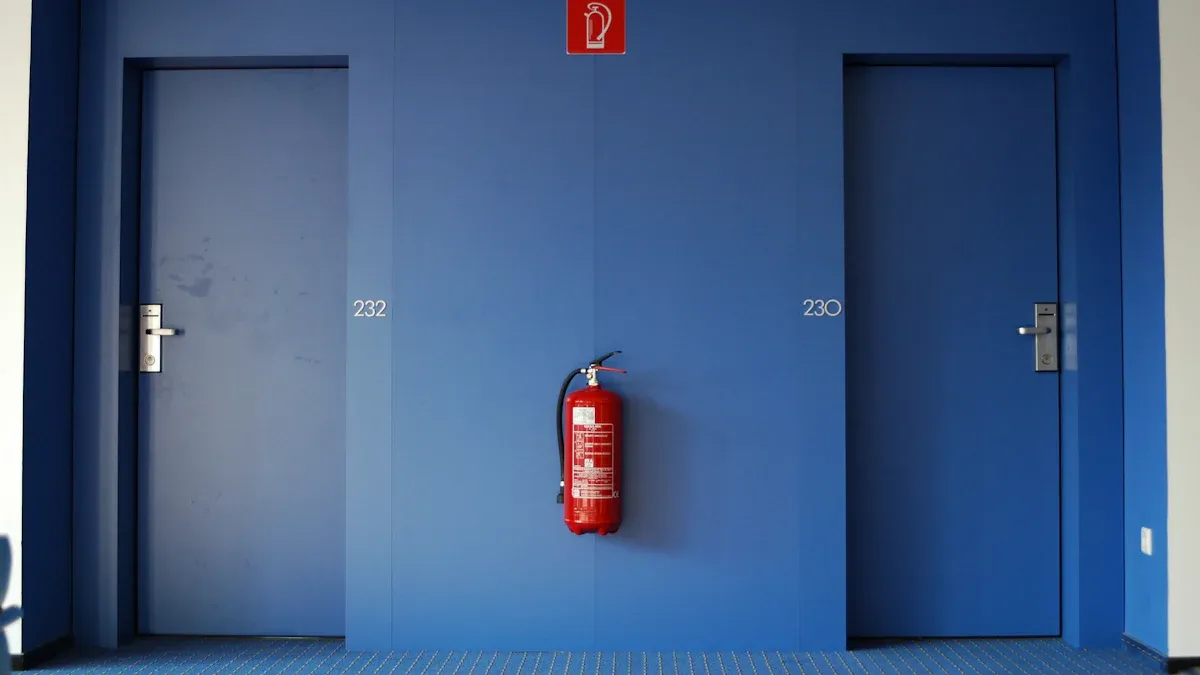
Your cabinet’s effectiveness depends heavily on its location and proper use. Correct installation and placement are just as important as the cabinet’s construction for ensuring workplace safety.
Strategic Location for Accessibility and Safety
You must place your cabinet in a strategic location. This ensures both easy access for your team and maximum safety during a fire. Proper placement of your flammable storage cabinet is a key part of your safety plan.
Important Placement Rules:
- Keep the cabinet at least three feet from ignition sources like sparks or open flames.
- Never place the cabinet near machines that produce constant heat, such as furnaces.
- Do not block hallways, exit routes, or access to emergency equipment.
- Avoid placing your flammable storage cabinet under stairways.
Understanding Venting Requirements
You may wonder if you need to vent your cabinet. The National Fire Protection Association (NFPA) does not require venting for fire protection. In fact, venting can sometimes compromise the cabinet’s ability to protect its contents in a fire. You should only vent a cabinet if your local code officials specifically require it. Always check local regulations before modifying your storage cabinet.
A Note on Fire Extinguisher Cabinets
It is important not to confuse hazardous material cabinets with fire extinguisher cabinets. They serve very different roles in your emergency preparedness plan. A hazardous material cabinet contains dangerous substances, while fire extinguisher cabinets make fire-fighting tools visible and accessible. Proper chemical storage requires the right type of cabinet, and regular inspections ensure both types of units are ready for an emergency. The table below highlights the key differences.
| Feature | Hazardous Material Cabinet | Fire Extinguisher Cabinets |
|---|---|---|
| Primary Purpose | Securely contain flammable or hazardous materials to prevent a fire. | Protect fire extinguishers and keep them accessible for fighting a fire. |
| Key Features | Double-wall steel, leak-proof sills, and three-point latching for security. | Clear panels for visibility, often recessed into walls. |
| Main Goal | Focuses on containment and prevention. | Focuses on accessibility and response. |
Understanding this distinction is vital. You need the right cabinet for the right job, and fire extinguisher cabinets are a separate but equally important part of your overall safety system.
Choosing the right safety cabinets protects your business from a devastating fire. Your selection process involves three simple steps for proper chemical storage.
- First, identify your flammable chemicals to pick the correct cabinet color.
- Second, evaluate your space to select the right storage size and type.
- Third, check for UL or FM approval to meet safety regulations.
Take action today. A full inventory of your hazardous materials helps you make a smart purchase. This ensures compliance and improves workplace safety, protecting your facility from fire. Proper storage for your chemicals is a critical defense against fire.
FAQ
Can you store different types of chemicals in the same cabinet?
You should not mix different chemical types. A fire could cause dangerous reactions. For example, you must store acids and flammables separately. Always use the correct color-coded cabinet for each group of chemicals to ensure safety.
What is the maximum amount of flammable liquid I can store?
OSHA sets limits for storage. You can store up to 60 gallons of Class I or II liquids in a single cabinet. For Class III liquids, the limit is 120 gallons per fire safety cabinet.
How often should you inspect your safety cabinets?
You should perform regular inspections of your cabinets.
Check for damage, ensure latches work correctly, and verify labels are clear. This routine check helps maintain safety and compliance before a fire occurs.
Do I need a special cabinet for corrosive materials?
Yes, you must use a special cabinet for corrosive substances. Standard steel cabinets will rust from the fumes. You should choose a polyethylene cabinet or a steel cabinet with a protective poly lining for these materials.


