

You protect yourself, your colleagues, and your research when you use laboratory storage cabinets designed for safety. Choosing the right cabinet can prevent accidents and keep hazardous materials secure. Many laboratory incidents happen because storage cabinets do not match the needs of the facility.
- Out of 128 laboratory accidents, about 50 occurred because of improper storage and handling of hazardous materials.
The Complete Guide to Laboratory Storage Cabinets: Types helps you understand how storage cabinets support safety in every laboratory.
Identify Your Storage Needs and Hazards

Assess What You Need to Store
You start by listing everything you plan to keep in your laboratory storage cabinets. Metal cabinets often hold hazardous materials, biological samples, heavy equipment, and toxic waste. These cabinets help you organize your laboratory and keep dangerous items secure. Safe laboratory chemical storage protects you from spills and accidents. You make your workspace safer when you choose the right storage cabinets for each material.
Identify Chemical and Biological Hazards
You must know the hazards before you select a cabinet. Many laboratories contain flammable liquids, corrosive substances, toxic chemicals, and compressed gases. The table below shows common hazards you may find in your laboratory:
| Hazard Class | Description | Examples |
|---|---|---|
| Flammable Liquids | Liquids with a flash point below 37.8 °C (100 °F) that can easily ignite. | Ethanol, Acetone, Gasoline |
| Corrosive Substances | Chemicals that can cause severe damage to skin, eyes, and materials. | Sulfuric Acid, Sodium Hydroxide |
| Toxic Substances | Chemicals that can cause harm or death when inhaled, ingested, or absorbed. | Mercury, Lead, Pesticides |
| Oxidizing Agents | Chemicals that can cause other materials to burn or support combustion. | Hydrogen Peroxide, Potassium Permanganate |
| Compressed Gases | Gases stored under pressure that can pose risks of explosion or asphyxiation. | Oxygen, Nitrogen, Propane |
| Explosive Substances | Chemicals that can undergo rapid reactions with gas, heat, and pressure. | TNT, Nitroglycerin |
| Reactive Substances | Chemicals that can react violently with other materials. | Sodium Metal, Peroxides |
| Carcinogens | Chemicals that can cause cancer. | Benzene, Asbestos |
| Mutagens | Chemicals that can cause genetic mutations. | Certain Dyes, Pesticides |
| Teratogens | Chemicals that can cause birth defects. | Thalidomide, Some Pesticides |
You also encounter biological hazards like antiseptics, disinfectants, herbicides, fungicides, dyes, paints, etching solutions, and commercial cleaners. Specialized cabinets, such as acid and corrosive storage, prevent chemical burns and toxic fume inhalation. You avoid dangerous reactions when you store these materials properly.
Consider Frequency and Access Requirements
You improve your workflow when you think about how often you need to access your storage. Cabinets with adjustable shelves and labeled compartments help you find items quickly. You spend less time searching for tools and materials. This makes your laboratory more efficient and keeps your work moving smoothly.
The Complete Guide to Laboratory Storage Cabinets: Types and Applications
You need to know the different types of laboratory cabinets before you choose the best option for your facility. The complete guide to laboratory storage cabinets: types helps you match each cabinet to your materials and workflow. You protect your team and your research when you select the right laboratory chemical storage cabinets for each hazard.
Flammable Storage Safety Cabinets
You use flammable storage safety cabinets to keep dangerous liquids away from fire and heat. These cabinets protect you from accidents and help you follow safety rules. The complete guide to laboratory storage cabinets: types shows you that flammable storage safety cabinets must meet strict standards. You see these cabinets in laboratories that handle ethanol, acetone, gasoline, and other flammable liquids.
Tip: Always check the labels on your flammable storage safety cabinets. You must see “Flammable Storage” or “Flammable – Keep Fire away” on the cabinet.
You find important safety requirements in the table below:
| Requirement | Description |
|---|---|
| UL Rating | Must be UL 1275 rated or FM Class #6050 approved. |
| Labeling | Cabinets must be marked “Flammable Storage” or “Flammable – Keep Fire away”. |
| Door Condition | Doors must fully close without gaps; warped doors must be repaired or replaced. |
| Maximum Capacity | No more than 60 gallons of Categories 1, 2, and 3 flammable liquids or 120 gallons of Category 4 liquids per cabinet. |
| Storage Limit | No more than three cabinets in a single storage area. |
You must use approved containers and portable tanks for flammable liquids. You store quantities of five gallons or less in safety cans. You keep one gallon or less in original containers. The complete guide to laboratory storage cabinets: types reminds you to check these rules often.
Acid and Corrosive Laboratory Chemical Storage Cabinets
You protect yourself from burns and toxic fumes when you use acid and corrosive laboratory chemical storage cabinets. These cabinets keep strong chemicals safe and prevent leaks. The complete guide to laboratory storage cabinets: types explains that you need special features for acid and corrosive storage.
You look for these features in acid and corrosive laboratory chemical storage cabinets:
- Double-walled construction of 18-gauge steel with a 1.5 inch air space to prevent heat transfer.
- Spill-proof sump with a capacity equal to the largest container stored.
- Doors with a three-point latching system for secure closure.
- Built-in grounding connectors for safety.
- Dual vents with built-in flash arresters to protect against flammable vapors.
- Chemical-resistant polyethylene trays for all shelves.
You choose cabinets made of plastic or metal coated with epoxy enamel. You use polyethylene trays for spill containment. If you do not have an acid cabinet, you store acids in a wooden cabinet inside a plastic tub. You must keep nitric acid separate from other acids. The complete guide to laboratory storage cabinets: types helps you avoid dangerous reactions and keep your laboratory safe.
General-Purpose Laboratory Cabinets
You use general-purpose laboratory cabinets to store lab equipment, supplies, and chemicals that do not need special protection. These cabinets help you organize your workspace and keep tools within reach. The complete guide to laboratory storage cabinets: types shows you that general-purpose cabinets support smooth and efficient laboratory operations.
You find these cabinets in academic and industrial laboratories. You use them for:
- Storing a variety of lab equipment and supplies.
- Keeping chemicals that do not require special containment.
- Creating a safe and organized workspace for laboratory personnel.
You improve your workflow when you use general-purpose laboratory cabinets. You keep your laboratory neat and make your work easier. The complete guide to laboratory storage cabinets: types helps you choose the right cabinet for every task.
Note: You can also use wall-mounted cabinets for lightweight equipment and metal base cabinets for heavy items. Fume hoods and ventilated cabinets are necessary for handling toxic substances.
You make your laboratory safer and more efficient when you understand the complete guide to laboratory storage cabinets: types. You match each cabinet to your materials and needs.
Biological Sample Storage Cabinets
You protect sensitive samples when you use biological sample storage cabinets designed for temperature and humidity control. These cabinets help you maintain the integrity of blood, DNA, tissue, and cell samples. You avoid contamination and degradation by following strict storage guidelines.
The table below shows recommended conditions for different sample types:
| Sample Type | Recommended Temperature | Humidity Control |
|---|---|---|
| Blood Samples | 2-8°C | Maintain low humidity to prevent degradation |
| DNA and Tissue | -80°C or lower | Controlled humidity to avoid contamination |
| Long-term Cell Storage | -196°C (liquid nitrogen) | Optimal humidity for structural integrity |
You select storage cabinets with digital controls and alarms. You monitor temperature and humidity to ensure samples stay safe. You choose cabinets with backup power systems for emergencies. You label each sample and organize them with adjustable shelves. You keep your laboratory efficient and your research reliable.
Tip: Always check the cabinet’s temperature and humidity settings before storing new samples. You prevent costly mistakes and protect your results.
Pesticide Storage Cabinets
You reduce risks when you store pesticides in cabinets that meet regulatory requirements. You follow EPA rules for both small portable containers and large stationary tanks. You read the storage instructions on each pesticide label. You keep pesticides in chemical storage cabinets that resist corrosion and leaks.
The EPA requires special containment for tanks holding 500 gallons or more. You also check local fire, building, and zoning codes. You place cabinets away from food, water, and high-traffic areas. You use clear signage to warn others about hazards.
You organize pesticides by type and hazard level. You lock cabinets to prevent unauthorized access. You inspect containers regularly for leaks or damage. You protect your laboratory and the environment by following these steps.
Note: Always wear gloves and safety goggles when handling pesticides. You avoid exposure and keep your workspace safe.
Gas Cylinder Cabinets
You secure gas cylinders in cabinets that meet strict safety standards. You choose cabinets made from fire-resistant and corrosion-resistant materials like steel or stainless steel. You install automatic locking mechanisms to keep cylinders safe from unauthorized access.
You store cylinders vertically and use chains or clamps to prevent tipping. You label each cabinet with GHS hazard symbols and contents. You place cabinets in well-ventilated areas and connect them to the laboratory’s ventilation system if you store flammable or toxic gases.
You install gas leak detectors for emergency response. You inspect cylinders and cabinets regularly for signs of damage. You train your team on safe handling and emergency procedures.
- Cabinets must meet ISO or ANSI safety standards.
- Materials should resist fire and corrosion.
- Automatic locking mechanisms protect against unauthorized access.
- Cylinders stay upright and secure with chains or clamps.
- Cabinets display clear hazard labels.
- Ventilation keeps air safe.
- Gas leak detectors alert you to emergencies.
- Regular inspections prevent accidents.
- Safety training prepares your team.
You keep your laboratory safe and organized when you use the right storage cabinets for gas cylinders.
Compare Materials and Construction for Laboratory Cabinets
Metal Cabinets: Steel and Stainless Steel
You often choose metal cabinets for their strength and durability. Steel and stainless steel are the most common materials. Each offers unique benefits and drawbacks. The table below helps you compare these options:
| Material | Advantages | Disadvantages |
|---|---|---|
| Steel | Heavy duty, moderate bacterial resistance, moderate chemical resistance, moderate scratch resistance, high fungal resistance, high water and moisture resistance, mid-price, resistant to germs, easy to care for, heat resistant | Can dent upon impact, customization increases price, not resistant to all chemicals |
| Stainless Steel | Moderate to heavy duty, moderate chemical resistance, high fungal resistance, high water and moisture resistance, high heat resistance, environmentally-friendly, high strength duplex grades | Low scratch resistance, dents easily, higher price, not resistant to some chemicals, can discolor with heat |
Steel cabinets work well in chemical, clean room, dental, electronics, and school laboratories. Stainless steel cabinets suit animal research, autopsy, biological science, food testing, hospital, and pharmaceutical labs. You select the material based on your workspace needs and the key features of laboratory cabinets.
Polypropylene and Plastic Laboratory Cabinets
You use polypropylene and plastic cabinets when you need exceptional chemical resistance. These cabinets protect against acids, bases, and solvents. Polypropylene cabinets last longer than metal cabinets in harsh environments. You avoid corrosion and rust, even in humid conditions. Plastic cabinets often outlast steel cabinets by twice as much when storing corrosive substances. You keep your laboratory safe and reliable with these cabinets.
Tip: Polypropylene cabinets are ideal for laboratories that handle strong acids and bases. You prevent damage and extend the life of your storage.
Wood Laboratory Cabinets
You may consider wood cabinets for general storage, but they have limitations. Wood cabinets swell and delaminate when exposed to moisture or spills. Constant exposure to chemicals and humidity causes structural decline. You see visual damage and reduced functionality over time. Phenolic cabinets offer better durability and chemical resistance than traditional wood. You choose phenolic cabinets for high-humidity and chemically exposed environments.
Note: Wood cabinets work best in dry, low-risk areas. You avoid them in spaces with frequent spills or chemical exposure.
Construction Quality and Durability
You want your laboratory cabinets to last for years. Construction quality plays a big role in how well your cabinets stand up to daily use. You should check if the cabinets have passed tough performance tests. For example, Cabinotch products have gone through extensive testing. These cabinets exceeded the ANSI/KCMA A161.1-2012 Performance and Construction Standard. They passed structural tests that show they can handle heavy loads and rough handling.
You also find high-quality wood casework options that are SEFA rated. SEFA 8 testing checks for durability, safety, and structural integrity. Cabinets that meet these standards give you confidence in their long-term performance.
When you look at construction quality, you need to focus on the materials used. Cabinets must be made from materials that can handle harsh laboratory conditions. Here are some common materials and their benefits:
- Plastic laminate resists chemicals, moisture, and abrasion.
- Stainless steel is durable, corrosion-resistant, and easy to clean.
- Phenolic resin stands up to chemicals, moisture, and impact.
- Wood offers a nice look and can be customized for your needs.
You should also check the cabinet’s joints and hinges. Strong joints keep the cabinet stable. Heavy-duty hinges make sure doors open and close smoothly. You want shelves that do not sag under weight. Reinforced corners and thick panels add strength.
The table below shows what to look for in durable cabinets:
| Feature | Why It Matters |
|---|---|
| Tested to standards | Shows cabinet can handle tough use |
| Durable materials | Withstands chemicals and moisture |
| Strong joints | Keeps cabinet stable |
| Heavy-duty hinges | Ensures smooth door movement |
| Reinforced corners | Adds extra strength |
Tip: Always ask your supplier about testing and ratings. Cabinets that meet industry standards last longer and keep your laboratory safe.
Evaluate Safety Features and Compliance in Safety Cabinets
When you choose safety cabinets, you must look at the safety features and compliance standards. These details help you protect your team and meet laboratory safety rules. You keep your laboratory safe by checking fire resistance, ventilation, and locking systems.
Fire Resistance and Flammability Ratings
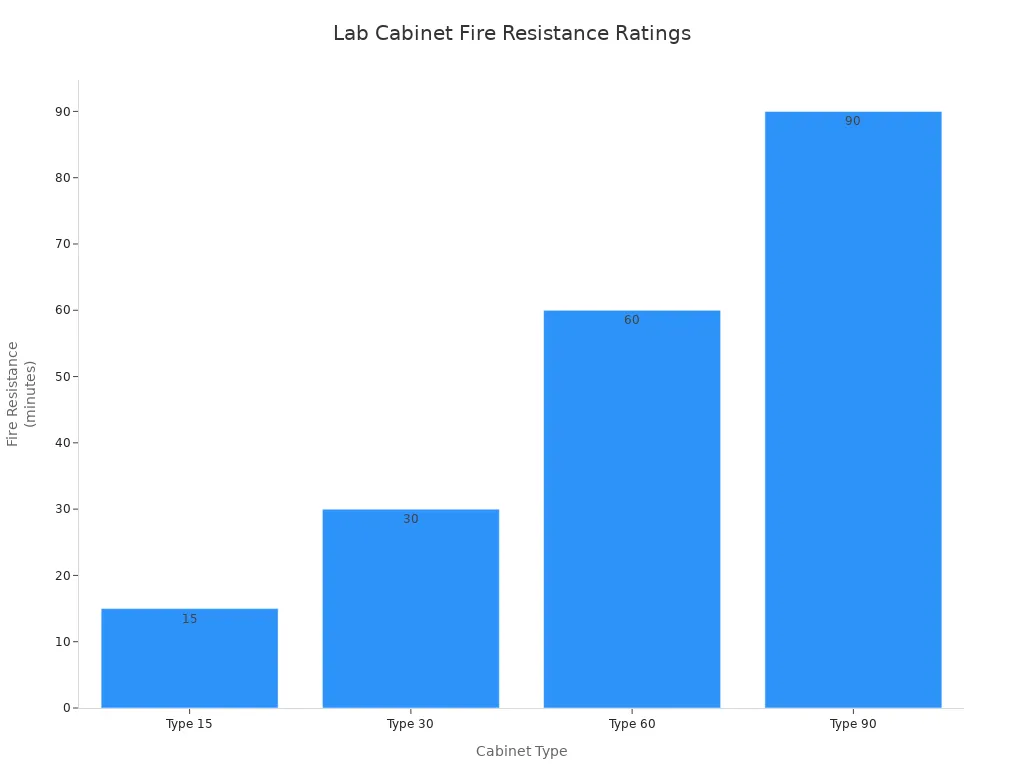
You need to know how long your safety cabinets can withstand fire. International standards set clear fire resistance durations. The table below shows the main types:
| Type | Fire Resistance Duration |
|---|---|
| Type 15 | Not less than 15 minutes |
| Type 30 | Not less than 30 minutes |
| Type 60 | Not less than 60 minutes |
| Type 90 | Not less than 90 minutes |
You must store all high or low flammables in fireproof cabinets. Cabinets with a 90-minute fire resistance, certified by EN14470-1, offer the highest level of protection.

Ventilation Options for Laboratory Cabinets
Proper ventilation is a key safety measure in safety cabinets. You lower the risk of harmful fumes by choosing the right ventilation option. The table below explains common choices:
| Ventilation Option | Description |
|---|---|
| Fume Hoods | Exhausted enclosures that minimize exposure to hazardous gases, vapors, and dust. |
| Local Exhaust Ventilation | Targeted capture of contaminants at the source, ideal for small-scale tasks generating localized fumes. |
| Ductless Fume Hoods | High-tech filters that recirculate clean air, suitable for small volumes of low-to-moderate hazard chemicals. |
You improve containment and safety storage by using these systems. Integrated safety cabinets with proper ventilation protect you and your laboratory.
Locking and Security Mechanisms
You must prevent unauthorized access to hazardous materials. Safety cabinets use several safety mechanisms to keep your materials secure:
- Cam locks add pick resistance and drill protection.
- Key control measures stop unauthorized key duplication.
- Reinforced doors with secure locking mechanisms give extra protection.
- Leak-proof sills and fire-resistant materials improve containment features.
You keep your laboratory safe by using these safety measures. Safety cabinets with strong locking systems help you meet compliance standards and protect your team.
Spill Containment and Leak Prevention
You protect your laboratory by choosing safety cabinets with strong spill containment and leak prevention features. Modern safety cabinets use several safety measures to keep hazardous materials secure and prevent accidents. You find these features in many safety cabinets:
- Self-closing doors stop spills from spreading and keep the cabinet sealed.
- Spill containment sumps collect leaks and prevent chemicals from reaching the floor.
- Fire-resistant materials protect your laboratory from heat and flames.
- Tight-sealing doors block fumes and liquids from escaping.
- Advanced ventilation removes harmful vapors and improves laboratory safety.
- Locking mechanisms keep dangerous materials away from unauthorized users.
- Clear hazard labeling helps you identify risks quickly.
- Double-walled construction adds extra protection against leaks and fire.
- Specialized coatings resist corrosion and fire damage.
- Integrated drip trays manage spills and make cleaning easier.
You check these safety features before you buy new safety cabinets. You improve laboratory safety and containment by using cabinets with these safety requirements. You also train your team to inspect cabinets regularly and report leaks right away. You keep your laboratory safe and organized with proper safety storage.
Tip: Always use cabinets with spill containment sumps and tight-sealing doors. You reduce the risk of accidents and protect your research.
Compliance with OSHA, NFPA, and Local Codes
You must follow safety regulations to keep your laboratory safe and avoid fines. Safety cabinets must meet strict safety requirements set by OSHA, NFPA, and local codes. You check the table below to understand the main rules:
| Regulation | Description |
|---|---|
| OSHA 29 CFR 1910.106 | Limits the quantity of flammable liquids stored outside of designated areas. |
| NFPA 30 | Specifies construction and labeling requirements for storage cabinets. |
| Uniform Fire Code 79.201 | Outlines general requirements for storage cabinets, including labeling and construction standards. |
You store flammable liquids in approved safety cabinets to prevent industrial fires. You label cabinets clearly to show flammable contents. You check chemical compatibility to avoid dangerous reactions. You follow these safety regulations to meet laboratory safety standards and protect your team.
Note: You should always review local codes because some areas have extra safety requirements for laboratory safety cabinets.
Consider Space, Capacity, and Workflow Integration for Laboratory Storage Cabinets

Cabinet Size and Storage Capacity
You need to choose cabinets that fit your laboratory’s needs. Cabinet size and storage capacity affect how you work every day. In testing laboratories, especially in Histopathology, storage space keeps growing in importance. High-Density Storage Cabinets give you more room for samples and supplies. These cabinets help you use space wisely and keep your workflow smooth. You can store up to 264,000 slides and 75,600 blocks in the largest units. You avoid clutter and make your laboratory more efficient with these efficient storage solutions.
- Cabinets placed in smart locations create a logical flow.
- You move easily between tasks and save time.
- Well-organized cabinets let you find tools and supplies quickly.
- You enjoy a more efficient research experience.
Placement and Accessibility
You must install cabinets in the right spots to keep your laboratory safe and easy to use. Biosafety cabinets need careful placement. You should not put cabinets in line with doors, windows, or busy paths. Airflow can disturb your work and cause contamination. Keep at least 1.5 meters (5 feet) between air supply diffusers and the cabinet’s front opening. You need 40 inches (1020 mm) of open space in front of each cabinet for comfort and safety. Leave 6 inches (150 mm) from walls and 60 inches (1520 mm) from opposing walls. Control humidity between 20% and 90% and keep temperatures from 41°F to 95°F. You follow these steps to make your laboratory safer and more productive.
Integration with Lab Layout and Workflow
You improve your laboratory’s workflow when you integrate cabinets into your lab layout. Maximizing storage efficiency keeps your lab organized. You prevent disruptions caused by missing or misplaced items. Custom laboratory cabinets fit your space and make your work easier. You invest in cabinets that enhance safety, efficiency, and adaptability. Custom cabinets blend into your lab layout and help you reach supplies quickly. You keep your laboratory running smoothly with cabinets that match your workflow.
Tip: Plan your cabinet placement before you buy. You save time and make your laboratory safer.
Explore Additional Features and Customization for Laboratory Cabinets
Adjustable Shelving and Modular Options
You can make your laboratory cabinets fit your needs by choosing adjustable shelving and modular options. These features help you organize your storage and change the layout as your work changes. You get many benefits when you use modular cabinets:
- Flexibility and customization let you rearrange shelves and compartments for different materials.
- Space optimization helps you use every inch of your storage area.
- Cost-effectiveness saves money because you can update cabinets without buying new ones.
- Improved ergonomics make your workspace safer and more comfortable.
- Enhanced safety comes from chemical-resistant and fire-resistant materials.
You create a safer and more efficient laboratory when you select cabinets with these features.
Security Upgrades and Access Control
You protect your laboratory storage by adding security upgrades and access control systems to your cabinets. These technologies help you manage who can open cabinets and when. The table below shows common security features:
| Feature | Description |
|---|---|
| Access Control Unit | Integrated system for securing laboratory cabinets with card reader access. |
| User Management | Arrange access by site, floors, rooms, or cabinets. |
| Customizable Access | Restrict access based on time, days, users, or security levels. |
| Software Integration | AKCPro Server Management Software for user management and analytics. |
| Remote Unlocking | Unlock doors remotely using software control. |
You keep your storage safe and organized by using these advanced security options.
Custom Colors, Labels, and Signage
You improve safety and organization in your laboratory by using custom colors, labels, and signage on your cabinets. Color-coding helps you recognize hazards quickly and manage materials more effectively. Clear labels and signs make it easy to find what you need and follow safety rules. This system reduces accidents and makes your storage processes more efficient. You help everyone in your laboratory work safely and stay organized.
Assess Supplier Reliability and Cost-Effectiveness for Laboratory Storage Cabinets
Reputation and Support Services
You need to trust your supplier when you buy safety cabinets and laboratory casework. Reliable suppliers help you avoid problems and keep your laboratory safe. You can check their reputation by looking at past projects, casework photos, and references. Suppliers who follow safety standards and offer professional installation give you peace of mind. You should also look for corrosion-resistant and impact-resistant casework. Low maintenance cabinets save you time and reduce contamination risks. The table below shows important criteria for evaluating suppliers:
| Criteria | Description |
|---|---|
| Corrosion-resistant | Essential for environments with acids or high humidity. |
| Impact-resistant | Protects against damage from dropped equipment or tools. |
| Low maintenance | Easy-to-clean surfaces reduce downtime and contamination risks. |
| Review Past Projects | Look for project photos, case studies, or references to assess quality. |
| Compliance with Safety Standards | Ensure adherence to ISO certifications, fire resistance, and ergonomic design. |
| Installation and After-Sales Support | Professional installation and prompt support are crucial for long-term satisfaction. |
| Budget and Value for Money | Consider long-term costs versus initial price to ensure good investment. |
Warranty and After-Sales Service
You protect your investment when you choose safety cabinets and laboratory casework with strong warranty and after-sales service. Leading manufacturers offer warranties that cover defects in materials and workmanship. You get repairs for parts and labor if something goes wrong. Some warranties last five years for safety cabinets and laboratory casework in North America. International warranties may cover parts for six years. The table below shows typical terms:
| Manufacturer | Product Type | Warranty Period | Coverage Details |
|---|---|---|---|
| NuAire | Class II, Type A2 Biosafety Cabinets | 5 years (parts and labor in North America), 6 years (parts only internationally) | Covers defects in materials and workmanship, parts and labor for repairs. Excludes misuse and external damages. |
| NuAire | Laminar Airflow Workstations | 5 years (parts and labor in U.S. and Canada) | Similar coverage as above, ensuring product reliability and safety. |
Tip: Always ask about warranty details and after-sales support before you buy new safety cabinets or laboratory casework.
Balancing Cost with Long-Term Value
You make smart choices when you balance cost with long-term value for safety cabinets and laboratory casework. New cabinets give you better durability and meet safety regulations. Used cabinets cost less but may not follow updated safety standards. You should think about the total cost of ownership, including lifespan and maintenance. You avoid focusing only on the initial price. Consider these points:
- New safety cabinets and laboratory casework offer enhanced durability and compliance.
- Used cabinets work for non-critical storage but may lack updated safety features.
- Total cost includes maintenance, repairs, and lifespan.
You get the best value when you look at both price and long-term benefits for your laboratory casework and safety cabinets.
Maintenance and Lifecycle Tips for Laboratory Cabinets
Routine Inspection and Cleaning
You keep your laboratory safe when you inspect safety cabinets and laboratory casework regularly. You check for signs of wear, corrosion, or damage. You look at hinges, locks, and seals to make sure everything works. You clean surfaces with approved cleaners. You remove dust, spills, and chemical residues. You use a checklist to track your inspection steps. You help prevent accidents and extend the life of your casework.
Tip: You schedule inspections every month. You record findings and fix problems right away.
Replacement Parts and Upgrades
You improve safety cabinets and laboratory casework by replacing worn parts. You change damaged shelves, hinges, or locks. You upgrade casework with new features like fire-resistant coatings or advanced locking systems. You ask your supplier for compatible parts. You keep extra parts on hand for quick repairs. You avoid downtime and keep your laboratory running smoothly.
Here is a simple table for common replacement parts:
| Part | When to Replace | Benefit |
|---|---|---|
| Hinges | Rust or loose movement | Secure doors |
| Locks | Broken or faulty | Prevent unauthorized access |
| Shelves | Sagging or cracked | Safe storage |
| Seals | Worn or leaking | Contain spills |
Planning for Future Needs
You plan ahead for changes in your laboratory. You review your safety cabinets and laboratory casework every year. You think about new research, more staff, or new hazards. You choose modular casework that adapts to new needs. You add extra safety cabinets when you store more chemicals. You work with your supplier to design flexible casework. You keep your laboratory ready for growth and new challenges.
Note: You update your storage plan as your laboratory changes. You stay prepared and keep your team safe.
You make your laboratory safer when you follow a step-by-step process for choosing storage cabinets.
- List your hazards and materials.
- Match cabinet types and features to your needs.
- Check safety guidelines and supplier reputation.
- Create a checklist for your facility.
Remember, safety cabinets protect your team and research. Review your choices often to keep your laboratory safe.
FAQ
What is the best way to organize chemicals in storage cabinets?
You should group chemicals by hazard class. Keep acids, bases, and flammables separate. Use clear labels and color-coded shelves. Always store the most dangerous materials at eye level for quick access. This method helps you find items fast and improves safety.
How often should you inspect your laboratory storage cabinets?
You should inspect your cabinets every month. Look for signs of damage, leaks, or corrosion. Check locks and hinges. Clean spills right away. Regular inspections help you catch problems early and keep your laboratory safe.
Can you store food or drinks in laboratory storage cabinets?
Never store food or drinks in laboratory storage cabinets.
You risk contamination and exposure to hazardous chemicals. Always keep personal items away from work areas to protect your health.
What should you do if you find a leak in a storage cabinet?
- Wear gloves and safety goggles.
- Remove any nearby materials.
- Contain the spill using absorbent pads.
- Report the leak to your supervisor.
- Clean the area following safety guidelines.
Quick action prevents accidents and keeps your workspace safe.


