

You see superabsorbent materials in many products you use every day. These materials can soak up much more liquid than traditional absorbents. Take a look at how they compare:
| Material Type | Absorption Capacity (g/g) | Surface Area-to-Volume Ratio | Weight Efficiency |
|---|---|---|---|
| Super-absorbent (Microfiber) | High | Increased | Superior |
| Traditional Absorbent | Moderate | Standard | Lower |
Superabsorbent materials matter because they help industries grow and improve products. The Science Behind Super-Absorbent Materials: How They Work and Where to Use Them helps you understand why the market value is rising fast:
- Market revenue surpassed USD 12.44 billion in 2024.
- It may reach about USD 24.87 billion by 2033 with a strong growth rate.
The Science Behind Super-Absorbent Materials: How They Work and Where to Use Them
What Makes a Material Superabsorbent
You might wonder what sets a superabsorbent material apart from regular absorbents. The answer lies in the unique structure of these materials. Superabsorbent polymers have a three-dimensional network that allows them to soak up large amounts of water. This network contains many hydrophilic, or water-loving, groups. When you add water, the material swells and holds the liquid inside. The process starts with capillary action, which draws water into the material. Next, ionic changes inside the polymer help it expand even more. This combination lets superabsorbent polymers absorb over 1000 times their dry weight in water. The science behind super-absorbent materials: how they work and where to use them shows that the size and shape of the particles also matter. Larger particles can hold more water, but they take longer to absorb it. Smaller particles act faster but may leak in some uses.
Key Properties and Polymer Chemistry
The science behind super-absorbent materials: how they work and where to use them depends on the chemistry of the polymers. You will find both synthetic and natural options. Common synthetic polymers include PAA, polyacrylamide, polyacrylonitrile, and polyvinyl alcohol (PVA). Natural choices often use cellulose or its derivatives. These materials have special chemical groups that attract and hold water. The way you make the polymer, the type of monomers you use, and the size of the particles all affect how well the material works. The science behind super-absorbent materials: how they work and where to use them also involves the balance between absorption speed and capacity. If you use larger particles, you get more absorption but at a slower rate. Smaller particles work faster but may not be as practical in every situation.
- Synthetic polymers:
- PAA
- Polyacrylamide
- Polyacrylonitrile
- Polyvinyl alcohol (PVA)
- Natural polymers:
- Cellulose and its derivatives
The Role of Cross-Linking in Superabsorbent Polymers
Cross-linking plays a key role in the science behind super-absorbent materials: how they work and where to use them. Cross-linking means connecting the long chains of the polymer at certain points. This creates a network that can trap water. If you increase the amount of cross-linking, the material becomes stronger and more stable. However, too much cross-linking can reduce how much water the material can hold. The science behind super-absorbent materials: how they work and where to use them shows that you need the right balance. Too little cross-linking leads to weak absorption. Too much makes the material stiff and less absorbent.
| Effect of Cross-Linking | Description |
|---|---|
| Mechanical Stability | Increases with cross-linker concentration |
| Water Absorption Rate | Decreases after optimal cross-linker level |
| Swelling Ability | Reduced in tightly cross-linked polymers |
| Cross-Linking Density | Effect on Water Absorption |
|---|---|
| Low | Ineffective spatial network, weak absorption |
| Moderate | Enhanced absorption capacity |
| High | Reduced water retention, shortened chain |
Tip: When you choose a superabsorbent polymer, look for the right level of cross-linking. This ensures you get both strength and high absorption.
The science behind super-absorbent materials: how they work and where to use them helps you understand why these materials perform so well in many products. You can now see how chemistry, structure, and cross-linking all work together to create powerful absorbents.
Types and Forms of Superabsorbent Materials
Synthetic Superabsorbent Polymers
You will find that synthetic superabsorbent polymers play a big role in many industries. These materials can absorb large amounts of water and form a hydrogel that locks in moisture. The most common types include polyacrylic acid, polyacrylamide, polyacrylonitrile, and polyvinyl alcohol. Each type creates a hydrogel with unique properties for different uses. For example, you might see polyacrylic acid in agriculture to help soil hold water. Polyacrylamide works well in water treatment. Polyacrylonitrile is used in industrial filtration, while polyvinyl alcohol is popular in biomedical hydrogel applications.
| Type of Superabsorbent Polymer | Typical Applications |
|---|---|
| Polyacrylic acid | Horticulture, agriculture, drug delivery |
| Polyacrylamide | Water treatment, soil conditioning |
| Polyacrylonitrile | Industrial applications, filtration |
| Polyvinyl alcohol | Biomedical applications, drug delivery |
Synthetic superabsorbent polymers can absorb hundreds or even thousands of times their weight in water. When you add water, they quickly form a hydrogel that prevents leaks. You will see these hydrogels in products like diapers, wound dressings, and spill containment pads.
Natural Superabsorbent Materials
You can also find natural materials that act as superabsorbents. These include cellulose, chitosan, starch, proteins, amino acids, and alginate. When you use these materials, you get a hydrogel that is more environmentally friendly. Natural hydrogels usually absorb less water than synthetic ones, but they break down faster and are safer for the planet. You might see natural hydrogels in consumer goods and biodegradable products. Sometimes, scientists modify these materials to improve their absorption rate and hydrogel strength.
| Aspect | Synthetic Superabsorbent Polymers | Natural Superabsorbent Polymers |
|---|---|---|
| Absorption Capacity | Very high | Lower |
| Absorption Rate | Fast | Slower |
| Biodegradability | Low | High |
Note: Natural hydrogels are a great choice when you want a greener solution.
Common Forms: Particles, Fibers, and Gels
You will see superabsorbent hydrogels in three main forms: particles, fibers, and gels.
- Particles: These are the most common. You find them in agriculture, cosmetics, and industrial uses. They create a hydrogel that holds water well but may not be strong under pressure.
- Fibers: These hydrogels are flexible and work well in medical dressings and hygiene products. You can wear them or use them in filters.
- Gels: These hydrogels swell when wet and release water slowly. You see them in drug delivery, water collection, and purification.
Each form has its own strengths and weaknesses. Particles are easy to use but may lack strength. Fibers are flexible but need special processing. Gels offer controlled swelling but may not hold their shape well.
Tip: Choose the hydrogel form that matches your needs for absorption, strength, and reusability.
How Superabsorbent Polymers Work
Absorption and Retention Mechanisms
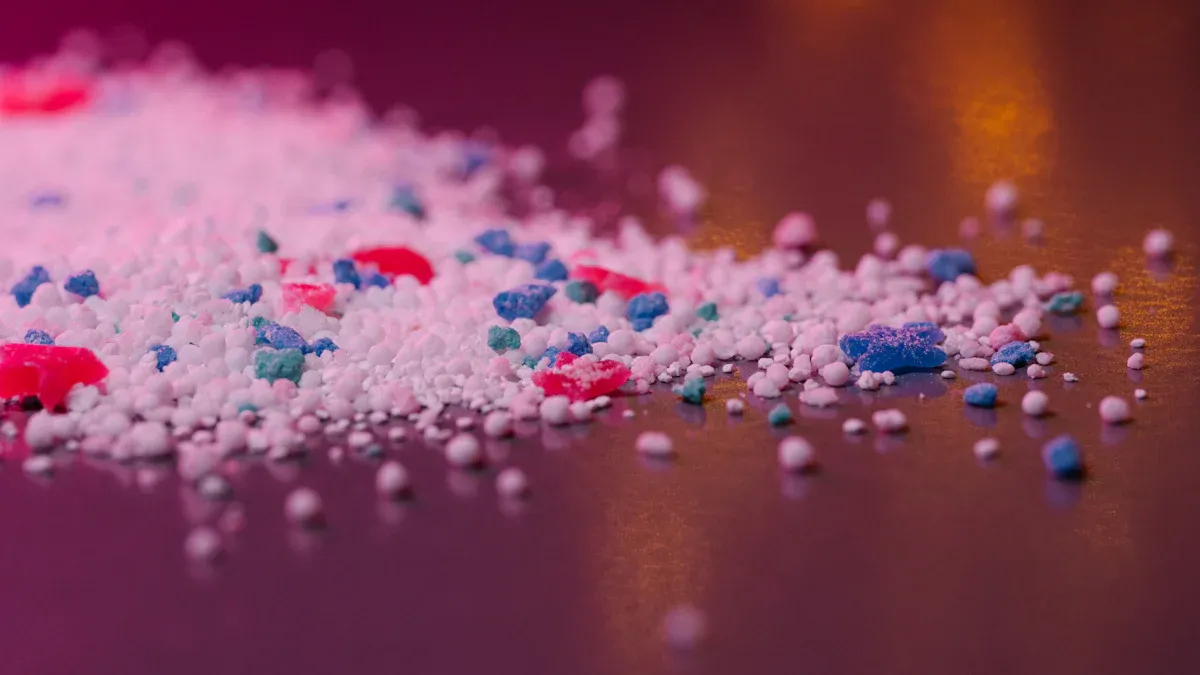
You see hydrogel materials in many products because they absorb and hold water so well. The absorption and release mechanism starts when you add water to a hydrogel. The polymer acts like a sponge, pulling water inside through osmosis. This process works because the polymer network contains ionic groups and hydrophilic sites. These sites attract water molecules, which are polar. Hydrogen bonding and ionic attraction help the hydrogel lock in moisture.
- Superabsorbent polymers absorb water through osmosis, acting like semipermeable membranes.
- The hydrogel can absorb several hundred grams of water per gram of polymer.
- Hydrogen bonding and ionic attraction with water molecules drive the absorption and release mechanism.
When you press on a hydrogel, it keeps most of the water inside. The three-dimensional structure of the polymer network creates voids and tubes that trap water. The ionic groups inside the polymer chain transform into anions and cations. This transformation causes electrostatic interactions, which expand the polymer chains. The expansion increases internal osmotic pressure, helping the hydrogel retain water even under mechanical stress.
Note: The degree of cross-linking in the polymer network affects how much water the hydrogel can hold. If you use the right amount of cross-linking, you get strong absorption and good retention.
Water Release and Reusability
You can release water from a hydrogel in several ways. The method you choose depends on how tightly the water is bound to the polymer. Some water molecules are loosely attached, while others are strongly held. You can change the pH to an acidic range to extract loosely bound water. Creating concentration gradients also helps pull water out. Air drying removes water slowly, while oven drying at 55°C releases strongly bound water molecules.
| Aspect | Details |
|---|---|
| Methods to release water | – Altering pH to acidic range to extract loosely bound water molecules |
| – Creating concentration gradients | |
| – Air drying | |
| – Washing back to neutral pH (5–6) and oven drying at 55°C to remove strongly bound water molecules | |
| Effects on reusability | – Structural changes observed after multiple uses: from discrete grid to larger porous network |
| – Reduced water retention capacity and physical strength due to structural deterioration | |
| – Structural deterioration can be mitigated by selecting porous but water-insoluble SAPs or gentler dewatering methods | |
| Reusability context | – Depends on application: not feasible for ‘leave-on’ uses like agriculture or construction |
| – Possible for non-toxic, unreactive slurry dewatering | |
| – Limited for biological or toxic fluids due to cleaning challenges but recyclability remains possible |
After you release water, the hydrogel may change shape or lose strength. Multiple cycles of absorption and release mechanism can cause the polymer network to become more porous. This change reduces water retention and physical strength. You can improve reusability by choosing porous but water-insoluble superabsorbent polymers or using gentle drying methods. Reusability depends on the application. In agriculture or construction, you usually leave the hydrogel in place. In slurry dewatering, you can reuse the hydrogel if it is non-toxic and unreactive. For biological or toxic fluids, cleaning is harder, but recycling remains possible.
Tip: If you want to reuse hydrogel materials, select those with strong networks and use gentle methods to release water.
Factors Affecting Superabsorbent Performance
You need to consider several factors when you use hydrogel materials. The absorption and release mechanism depends on pH, ionic strength, and cross-linking density. High ionic concentration lowers absorption. If you add salt, the hydrogel absorbs less water. Extreme pH values also reduce absorption. At low pH, protonation of carboxylate groups shrinks the polymer network and decreases water absorbency. Between pH 5 and 9, ionization increases, strengthening repulsion and swelling. At high pH, excess sodium ions screen charges, reducing repulsion and water absorption.
The swelling capacity of hydrogel composites changes with pH. At low pH, the network shrinks. Between pH 5 and 9, the network expands. At high pH, the network disintegrates, and absorption drops. The concentration of cross-linking agents affects mechanical properties and water retention. If you use too little cross-linking, the hydrogel absorbs weakly. Too much cross-linking limits water retention.
Note: You can optimize hydrogel performance by controlling pH, ionic strength, and cross-linking density.
Hydrogel materials work best when you match their properties to your needs. You can adjust the absorption and release mechanism by changing the polymer structure, particle size, and environmental conditions. If you understand these factors, you can choose the right hydrogel for your application.
Where to Use Superabsorbent Materials

Industrial Applications
You see hydrogel technology in many industrial sectors. Superabsorbent materials help you manage moisture and improve product performance. The hygiene sector uses hydrogel in baby diapers, adult diapers, and feminine hygiene products. You find hydrogel in agriculture for water retention and soil improvement. Biomedical applications rely on hydrogel for wound care, drug delivery, and tissue engineering. The table below shows typical use cases:
| Industrial Sector | Typical Use Cases |
|---|---|
| Hygiene Sector | Incontinence products (baby and adult diapers, feminine hygiene products) |
| Agriculture | Water retention in soil to improve crop yield and reduce water usage |
| Biomedical | Wound care, drug delivery, and tissue engineering |
Hydrogel provides reliable moisture management and supports product innovation in these industries.
Agricultural Uses
Hydrogel plays a key role in agricultural applications. You use hydrogel to enhance soil water retention, which helps crops grow in dry regions. Hydrogel reduces evaporation and keeps moisture in the soil. You can use hydrogel as a carrier for fertilizers, increasing their effectiveness and reducing pollution. Natural polymers are biodegradable and safe, but synthetic hydrogel works better for water retention. Semi-synthetic hydrogel combines both benefits and supports slow nutrient release. This process improves crop yields and promotes sustainable farming.
- Hydrogel enhances soil water retention for crop growth.
- Hydrogel reduces evaporation and maintains soil moisture.
- Hydrogel acts as a carrier for fertilizers, boosting crop yields.
- Semi-synthetic hydrogel supports slow nutrient release for sustainable agriculture.
Hydrogel helps you conserve water and increase productivity in agricultural applications.
Biomedical and Healthcare Applications
Hydrogel is essential in biomedical applications. You find hydrogel in baby diapers, adult diapers, sanitary napkins, wound dressings, surgical pads, medical waste solidification, drug delivery systems, and antimicrobial hydrogel products. Hydrogel absorbs fluids and keeps patients dry, which reduces infection risks and improves comfort. Medical hydrogel underpads manage moisture and prevent the spread of infections. Hydrogel minimizes skin irritation and supports patient well-being. Biomedical applications use hydrogel for advanced drug delivery and tissue engineering. Hydrogel provides high swelling capacity and excellent water retention, making it ideal for biomedical applications.
- Hydrogel is used in baby diapers and adult diapers.
- Hydrogel is found in sanitary napkins and wound dressings.
- Hydrogel supports surgical pads and medical waste solidification.
- Hydrogel enables drug delivery systems and antimicrobial hydrogel products.
- Hydrogel underpads manage moisture and reduce infection risks.
- Hydrogel keeps patients dry and comfortable.
- Hydrogel minimizes skin irritation in biomedical applications.
- Hydrogel supports tissue engineering and advanced biomedical applications.
Hydrogel improves hygiene, infection control, and patient comfort in biomedical applications.
Construction and Environmental Solutions
You can see superabsorbent materials making a big difference in construction and environmental projects. These materials help you solve problems like water leaks, soil erosion, and pollution. When you use superabsorbent polymers in construction, you improve safety and save resources.
How do superabsorbent materials help in construction?
- You can mix them into concrete to control water content. This helps concrete cure evenly and prevents cracks.
- You can use them to seal leaks in tunnels, basements, and foundations. The polymers swell when they touch water and block the flow.
- You can add them to roadbeds and embankments. This keeps the soil stable and reduces damage from heavy rain.
Environmental solutions also benefit from these materials:
- You can use superabsorbent polymers to clean up oil spills and chemical leaks. The polymers soak up the liquid and make it easy to remove.
- You can stop soil erosion by mixing the polymers into the ground. They hold water and keep the soil from washing away.
- You can use them in landfills to trap hazardous liquids and prevent pollution.
| Application Area | How Superabsorbents Help |
|---|---|
| Concrete curing | Control moisture, reduce cracks |
| Leak sealing | Swell to block water flow |
| Soil stabilization | Hold water, prevent erosion |
| Spill cleanup | Absorb oil and chemicals |
| Landfill management | Trap hazardous liquids |
Tip: When you choose a superabsorbent material for construction or environmental use, check its swelling speed and strength. This helps you match the right product to your project.
You can see that superabsorbent materials protect buildings, roads, and the environment. You make your projects safer and more sustainable when you use these advanced materials.
Benefits and Future of Superabsorbent Materials
Advantages Over Traditional Absorbents
You get many benefits when you choose superabsorbent materials instead of traditional absorbents. These materials can absorb and hold much more liquid compared to their own weight. You also save money because superabsorbent polymers cost less and last longer. They work fast and keep liquids locked in, which helps in many areas like biomedical products, hygiene items, and waste management.
- Superabsorbent polymers absorb and retain large volumes of liquid.
- They are more affordable and cost-effective than traditional absorbents.
- You see rapid swelling and excellent liquid retention.
- They work better than clay or sawdust, especially in biomedical and hygiene products.
- Superabsorbent polymers solidify liquid waste and other fluids quickly.
Tip: You can use these materials in biomedical fields to manage fluids safely and efficiently.
Innovations and Emerging Trends in Superabsorbent Polymers
You see new ideas and products shaping the future of superabsorbent materials. Companies now use biodegradable materials like starch and potassium humate to improve water retention and salt resistance. Some researchers create nutrient-rich composites that last longer and can be recycled. Others use waste from factories to make new types of superabsorbent polymers that help soil and crops.
The market for these materials grows fast because you need better hygiene products, more efficient farming, and advanced biomedical solutions. You also see new products like HYDRAPRO BIO and AQUALIC CA BIO, which are biodegradable and safer for the environment. These trends show that you will have more choices for sustainable and high-performing biomedical and agricultural products.
Sustainability and Environmental Impact
You help the planet when you choose sustainable superabsorbent materials. Bio-based superabsorbent polymers come from renewable resources and break down naturally at the end of their life. This reduces long-term waste and helps protect the environment. You can also find green crosslinkers and modifiers that make these materials easier to recycle.
| Study | Findings | Environmental Impact Categories |
|---|---|---|
| Van den Heede et al. | Higher environmental burden compared to reference | Abiotic depletion, global warming, ozone depletion, acidification |
| Cordella et al. | Raw material supply is main contributor | 25% global warming, 22% energy demand, 16% abiotic depletion, 15% acidification |
You can improve biodegradability by mixing natural and synthetic materials or by changing the surface of the polymer. These strategies help you get high absorption and better environmental results. In agriculture, you use these materials to save water and boost plant growth. In biomedical uses, you keep patients safe and reduce pollution. You see that both production and disposal matter, so you need to choose wisely for the best impact.
Note: You can support a cleaner future by using superabsorbent materials in biomedical, agricultural, and environmental projects.
You have learned that superabsorbent materials can hold much more water than regular absorbents. Recent research shows new types with better absorbability and more uses in medicine, food storage, and home care.
- You see these materials in wound dressings, agriculture, and hygiene products.
- Companies now focus on making them eco-friendly and affordable.
Ongoing innovation means you will find superabsorbent materials in even more areas, like sustainable farming and advanced medical devices.
FAQ
What are superabsorbent materials made of?
You find superabsorbent materials made from special polymers. These can be synthetic, like polyacrylic acid, or natural, like cellulose. The structure lets them soak up and hold large amounts of water.
Can you reuse superabsorbent materials?
You can reuse some superabsorbent materials, especially in industrial settings. However, each use may reduce their ability to absorb water. For hygiene or medical products, you should use them only once.
Are superabsorbent materials safe for the environment?
Many superabsorbent materials are safe, especially those made from natural sources. Synthetic types may take longer to break down. You can choose biodegradable options for a greener choice.
Where do you see superabsorbent materials in daily life?
You see these materials in diapers, sanitary pads, wound dressings, and gardening products. They also help in cleaning up spills and keeping soil moist for plants.
How do you store superabsorbent materials?
- Keep them in a dry, cool place.
- Seal the package tightly.
- Avoid direct sunlight and moisture.
Proper storage helps you maintain their absorbing power.


