

You play a key role in maintaining safety when you organize flammable liquid cabinets. Flammable liquid fires cause 454 civilian deaths and 3,910 injuries each year, with property damage reaching $1.5 billion.
| Statistic | Value |
|---|---|
| Fires started by flammable liquids | 160,900 |
| Estimated deaths per year | 454 |
| Estimated injuries per year | 3,900 |
| Direct property damage per year | $1.5 billion |
Failure to follow safety rules can lead to heavy fines and injuries.
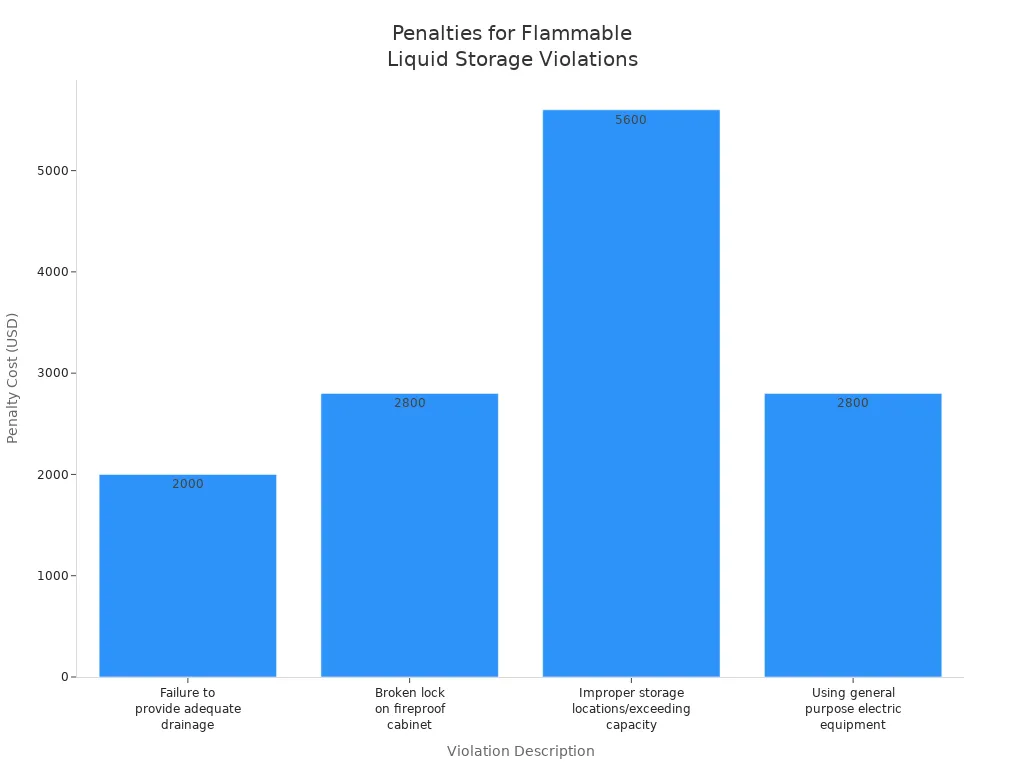

You need to prioritize fire protection and follow Optimizing Flammable Liquid Cabinet Storage: Organization Tips and Best Practices. Use clear steps to keep your workplace safe and avoid costly mistakes.
Optimizing Flammable Liquid Cabinet Storage: Organization Tips and Best Practices
Segregating Incompatible Flammable Materials
You need to separate incompatible chemicals in your cabinet. This step prevents dangerous reactions if a container breaks or leaks. Flammable liquids must stay away from oxidizing, pyrophoric, and water-reactive chemicals. Store hazardous materials based on their physical properties and reactivity. Use secondary containment with clear labels to keep incompatible substances apart. Materials that burn very hot or cannot be extinguished with usual extinguishants require their own space. These organization tips help you avoid violent reactions and keep your workplace safe.
Tip: Never store flammable materials in cold rooms. These spaces lack proper ventilation and increase risks.
Grouping Similar Substances
You should group similar substances together in your cabinet. This practice reduces the chance of accidental mixing and hazardous reactions. When you fail to group similar items, you risk fires, explosions, and the release of toxic gases. Keeping like chemicals together makes it easier to find what you need and supports best practices and tips for safety. You also improve emergency response by making cabinet contents predictable.
- Grouping similar substances is one of the best ways to prevent accidents.
- It supports optimizing flammable liquid cabinet storage: organization tips and best practices.
Using Color-Coding for Identification
Color-coding helps you identify cabinet contents quickly. You can use yellow for flammable liquids, red for combustible liquids, and blue for acids and corrosive liquids.
| Color Code | Material Type |
|---|---|
| Yellow | Flammable Liquids |
| Red | Combustible Liquids |
| Blue | Acid & Corrosive Liquids |
This system reduces the risk of improper storage and enhances emergency preparedness. Color-coding is one of the best practices and tips for optimizing flammable liquid cabinet storage: organization tips and best practices. You make your cabinet safer and easier to manage by following these best organization tips.
Flammable Safety Cabinets: Proper Labeling and Identification

Dangers of Unlabeled Flammable Materials
You face serious risks when you store flammable liquids without proper labels. Unlabeled containers can lead to confusion and dangerous mistakes. For example, crew members have accidentally ingested solvents and fuel because bottles lacked clear identification. One worker drank from a bottle that looked like water but contained a solvent, resulting in a near-miss incident. Another person became ill for several days after consuming fuel from an unmarked container. These accidents show why flammable liquids safety depends on accurate labeling.
Always check labels before handling any container. This simple step protects you and your coworkers from harm.
Labeling Standards for Flammable Liquid Storage
You must follow OSHA rules for labeling flammable safety cabinets and containers. OSHA requires that every flammable storage container displays a label with the chemical name, hazard category, and handling precautions. Cabinets must also show clear signs that indicate they contain flammables or combustibles. You should place a label such as “Flammable — Keep Fire Away” on cabinet doors. These standards help you meet flammable liquids safety requirements and prevent accidents.
- Label every container with the correct information.
- Make sure cabinet doors display warning signs.
- Follow OSHA guidelines to stay compliant.
Maintaining Clear Identification
You need to keep identification clear and visible at all times. Use a digital process to collect chemical data, including the substance name, manufacturer, and container type. Label each cabinet with a department abbreviation and a number for easy tracking. Cross-reference your inventory with the facility’s Safety Data Sheet (SDS) library to ensure all SDSs are available. Keep warning labels visible and avoid any modifications that block them. These steps support flammable liquids safety and help you maintain flammable safety cabinets according to OSHA standards.
Tip: Review labels regularly and replace any that fade or peel. Clear identification keeps your workplace safe.
Loading Your Flammable Cabinet: Avoiding Overloading

Structural Risks and Fire Hazards
When you overload your flammable cabinet, you increase the risk of fire and explosion. Flammable liquids ignite easily if exposed to heat, sparks, or flames. Specialized cabinets isolate these materials from ignition sources, but too much weight can damage the cabinet’s structure. Damaged cabinets may fail to contain a fire, leading to greater hazards. Improper storage also causes chemical off-gassing, which can affect indoor air quality. Hazardous gases and vapors build up in poorly ventilated areas, raising the risk of fire and explosion. OSHA and NFPA set standards to prevent these risks and protect your workplace.
- Overloading weakens cabinet safety features.
- Flammable liquids can ignite quickly and spread fire.
- Off-gassing chemicals create hidden hazards.
- Poor storage increases the risk of explosion.
Tip: Always check the cabinet’s condition before loading your flammable cabinet. Look for signs of damage or corrosion.
Maximum Capacity Guidelines
You must follow strict guidelines when loading your flammable cabinet. NFPA standards set maximum capacities based on the category of liquid and storage conditions. Exceeding these limits increases the risk of fire and explosion.
| Category of Liquid | Maximum Capacity in Cabinet |
|---|---|
| Category 1, 2, 3 | 60 gallons |
| Category 4 | 120 gallons |
| Storage Condition | Maximum Capacity |
|---|---|
| Without fire suppression | 60 gallons |
| With fire suppression | 120 gallons |
Check the cabinet label for capacity information. Loading your flammable cabinet beyond these limits can lead to regulatory violations and safety hazards.
Safe Load Distribution
You need to distribute containers evenly when loading your flammable cabinet. Proper stacking reduces the risk of spills and accidents. Heavy containers should go on lower shelves to prevent tipping. Never block vents or safety features. Maintain the cabinet’s maximum load capacity so safety features work as designed. Train staff to handle flammable liquids safely and follow loading guidelines.
- Stack containers carefully to avoid spills.
- Place heavy items on lower shelves.
- Keep vents clear for proper ventilation.
- Train staff to reduce risk and prevent fire.
Note: Safe load distribution protects you from fire hazards and keeps your cabinet effective.
Flammable Liquid Storage: Spill Containment and Maintenance
Consequences of Spills
You must understand the dangers that spills create in flammable liquid storage cabinets. Spills can lead to hazardous situations that threaten your safety and the environment. The table below shows the main consequences of spills:
| Consequence | Description |
|---|---|
| Increased fire hazards | Spills can ignite, causing fires near the cabinet. |
| Slip and fall risks | Liquid spills make floors slippery, raising the chance of accidents. |
| Environmental contamination | Spills allow hazardous substances to enter the environment. |
Chemical spills often cause fires, injuries, and pollution. You need to prevent spills to protect yourself and others from hazardous outcomes.
Spill Containment Solutions
You can reduce risks by using spill containment solutions in your flammable liquid storage area. These solutions help you manage spills and keep your workplace safe. Here are some important steps:
- Store flammable liquids properly to create a safer environment.
- Close unused vents in cabinets to lower fire risk.
- If you vent cabinets, duct openings directly outdoors.
- Check local rules for ventilation requirements.
Spill containment keeps hazardous liquids from spreading. You should always use spill containment trays and absorbent materials to control chemical spills. These tools help you clean up spills quickly and prevent hazardous exposure.
Tip: Keep spill containment kits near your flammable liquid storage cabinets. Quick access helps you respond to spills fast.
Regular Maintenance and Inspection
You need to inspect your flammable liquid storage cabinets often. Regular checks help you spot hazardous leaks, damaged seals, or broken latches. Follow these steps for maintenance:
- Inspect cabinets for proper sealing and intact door latches.
- Check ventilation to make sure it works as intended.
- Set a routine inspection schedule, from monthly to yearly, based on your workplace needs.
- Look for signs of wear, damage, or malfunction.
Routine maintenance helps you prevent chemical spills and keeps your spill containment systems ready. Inspections are a key part of your fire prevention plan. You protect yourself and your coworkers by keeping cabinets in good condition.
Flammable Safety Cabinets: Storing at Safe Heights
Accessibility and Safety Concerns
You need to pay attention to how you store flammable liquids in your cabinet. Storing materials at improper heights increases the risk of fire and accidents. If you place chemicals too high, you make them hard to reach and more likely to fall. You also put yourself and your coworkers in danger. Insurance companies may deny claims if your cabinets are not up to code. Legal trouble can follow if your storage practices do not meet safety standards.
- Storing flammable liquids improperly increases the chance of a fire.
- You risk injuries and property damage.
- Non-compliant storage can lead to legal issues.
- Insurance companies might deny claims after a fire.
Tip: Keep chemicals within easy reach. Avoid storing materials above 5 feet (~1.5m) to reduce accidents.
Proper Shelf Placement
You should place shelves in your cabinet so you can access chemicals safely. Never store materials on top of cabinets. This practice blocks safety clearance and makes accidents more likely. Flammable cabinets must not sit on pallets. If the wood ignites, the cabinet can fall and expose chemicals to flames. Position cabinets so exits, stairs, walkways, and doors stay clear. Some flammable liquids cannot be stored in basements due to extra risks.
- Keep shelves at a safe height.
- Avoid placing cabinets on pallets.
- Make sure exits and walkways are clear.
- Check restrictions for basement storage.
| Placement Rule | Why It Matters |
|---|---|
| No storage above 5 feet | Reduces risk of falls and spills |
| No items on cabinet tops | Maintains safety clearance |
| No cabinets on pallets | Prevents fire hazards |
Preventing Accidental Drops
You can prevent accidental drops by following simple steps. Place heavy containers on lower shelves. Use sturdy shelving that supports the weight of your chemicals. Make sure you do not overload shelves. When you reach for a container, use both hands and keep your body steady. If you drop a container, you risk spills, fires, and injuries.
- Store heavy items low.
- Use strong shelves.
- Avoid overloading.
- Handle containers carefully.
Note: Careful shelf placement and safe handling protect you from accidents and keep your workplace safe.
Flammable Liquid Storage: Choosing the Right Cabinet Type
Cabinet Types and Their Uses
You need to choose the right cabinet for storing flammable liquids. Different cabinet types offer unique features and uses. The table below shows common cabinet types and their purposes:
| Cabinet Type | Features | Uses |
|---|---|---|
| Flammable Liquid Safety | 18-gauge thick, welded steel construction, warning label, self-close doors | Storing flammable liquids like fuels, solvents, paints, pesticides |
| Manual-Close Doors | Open to 180 degrees, self-latch when closed | General storage of hazardous materials |
| Lockable Cabinets | Can add padlock for extra security | Secure storage of hazardous materials |
Safety storage cabinets are categorized based on their storage capabilities. You must segregate materials by hazmat classification. Cabinets must be constructed from materials that match the contents they hold.
Risks of Mismatched Storage
If you use the wrong cabinet, you increase the risk of fire and chemical spills. Cabinets that do not meet NFPA 30-4.3.3 construction requirements may fail during emergencies. You might store incompatible chemicals together, which can cause dangerous reactions. Insurance companies may deny claims if you use mismatched cabinets. You also risk regulatory fines and workplace injuries. Always check the approval ratings of your flammable liquids cabinet, such as FM or UL/ULC.
Tip: Cabinets should be labeled “Flammable-Keep Fire Away” and grounded to reduce hazards.
Selecting the Correct Cabinet
You must select the correct flammable liquids cabinet for your materials. Start by identifying the types of liquids and their flash points. Group materials according to hazard classifications. Choose cabinets designed to contain spills, using features like polyethylene trays. Opt for self-closing cabinets to enhance safety. Make sure the cabinet can release flammable vapors and seal properly. The number and size of cabinets depend on your laboratory size and research type. Prioritize high-quality cabinets to protect your workplace.
- Identify liquid types and hazard levels.
- Check cabinet approval ratings.
- Ensure spill containment features.
- Choose self-closing doors for extra safety.
Note: Selecting the right cabinet keeps your workplace safe and compliant.
Flammable Safety Cabinets: Regular Inspection Practices
Importance of Routine Checks
You need to inspect flammable safety cabinets regularly to keep your workplace safe and compliant. Routine checks help you spot problems before they become hazards. Safety regulations require you to check structural integrity, storage limits, and label visibility. You must also confirm that doors close securely and cabinets sit away from walkways or ignition sources. Grounding and vent maintenance protect against static electricity and vapor buildup. The table below shows why each inspection aspect matters:
| Aspect of Inspection | Importance |
|---|---|
| Structural integrity checks | Identify damage that could compromise fire resistance. |
| Compliance with storage limits | Ensure the quantity of stored liquids adheres to regulations. |
| Visibility of safety labels | Ensure the ‘FLAMMABLE—KEEP FIRE AWAY’ label is legible. |
| Door functionality | Confirm secure latching and proper closure of cabinet doors. |
| Cabinet placement | Verify cabinets are away from walkways, exits, and ignition sources. |
| Grounding checks | Prevent static electricity buildup. |
| Vent maintenance | Ensure vents are sealed or maintained as required by local codes. |
Inspection Checklist
You can use a checklist to make inspections easier and more effective. This helps you remember every step and keeps flammable safety cabinets in top condition. The checklist below covers key items:
| Checklist Item | Description |
|---|---|
| Proper Latching | Ensure doors latch correctly to avoid code violations. |
| Modifications | Check for unauthorized modifications that void certification. |
| Storage Conditions | Verify no unapproved cans or liquids are stored around the cabinet. |
| Safety Can Compliance | Confirm safety cans meet code requirements and are leak-tight. |
| Flame Arrester Condition | Inspect for damage to the flame arrester to prevent fire hazards. |
Tip: Keep your checklist handy and update it after each inspection.
Addressing Issues Promptly
You must act quickly when you find problems during inspections. Follow these steps to address issues:
- Learn safety standards like OSHA 1926.152 and NFPA 30.
- Set a regular inspection schedule, such as monthly or quarterly.
- Check the cabinet exterior for damage and proper labeling.
- Inspect doors and seals for secure closure.
- Make sure ventilation openings are clear and working.
- Look inside for spills, leaks, and correct labeling.
- Verify grounding connections if required.
- Document your inspection findings and resolutions.
- Train your team on inspection procedures and their importance.
Quick action keeps flammable safety cabinets safe and prevents accidents. You protect your team and workplace by staying alert and organized.
Flammable Materials: Access Control and Staff Training
Risks of Untrained Handling
You face serious risks when you handle flammable materials without proper training. Untrained staff often make mistakes that put everyone in danger. You may not recognize the hazards or follow correct procedures. This can lead to severe injuries or property damage. Improper storage increases the risk of fire. You must understand that hazardous substances require careful handling to protect yourself and your coworkers.
- Untrained staff are more likely to engage in hazardous behavior unknowingly.
- Lack of knowledge on safe handling procedures can lead to severe injuries or property damage.
- Improper storage of flammable materials increases the risk of fire hazards.
Always ask questions if you do not know how to handle a material safely. Your actions help prevent accidents.
Training Requirements
You need to complete training before you handle flammable materials. Training covers important safety practices and rules. You learn about OSHA 29 CFR 1910.106 and NFPA 30 standards. You discover the dangers of vapors, static electricity, and ignition sources. Training explains how to store, handle, and transfer liquids safely. You also learn spill management procedures. Training helps you identify proper storage methods, including approved rooms, cabinets, containers, and safety cans.
- Training covers OSHA and NFPA safety practices.
- You learn about flammable liquid hazards, including vapors and ignition sources.
- You discover proper storage, handling, and transfer techniques.
- Training enhances your awareness of spill management procedures.
- You identify approved storage methods for flammable materials.
Tip: Review your training regularly. Stay updated on new safety rules and procedures.
Access Control Measures
You must control access to flammable materials to keep your workplace safe. Only trained and trusted staff should handle these materials. You can use several access control measures to prevent unauthorized handling and protect your facility.
| Access Control Measure | Description |
|---|---|
| Comprehensive risk assessment | Evaluate security risks related to hazardous substances transportation. |
| Personnel security measures | Use background checks to ensure the trustworthiness of staff handling flammable materials. |
| Unauthorized access prevention | Establish physical security, access controls, and surveillance to stop unauthorized entry. |
| Physical Security Enhancements | Install sturdy fencing and barriers to prevent or slow down unauthorized access. |
| Access Control | Use biometric identification, card readers, or manned gates to restrict entry. |
| Surveillance Systems | Install CCTV cameras with night vision and motion detection to monitor premises. |
You can install fencing and barriers around storage areas. Use card readers or biometric systems to limit access. Surveillance cameras help you monitor activity and spot threats. These steps keep your flammable materials secure and support overall safety.
Note: Strong access control protects your facility and prevents accidents.
Flammable Liquid Storage: Approved Containers and Safe Handling
Approved Containers vs. Improvised Storage
You need to use approved containers when storing flammable chemicals. Approved containers meet strict safety standards and requirements. They protect you from fire risks and help prevent accidents. Improvised storage, such as using old bottles or makeshift bins, does not offer the same protection. These containers may leak or break easily. You should always store flammable liquids in fire-resistant cabinets or bins designed for proper chemical storage. These containers retain spills and minimize hazards, unlike improvised solutions.
| Storage Method | Safety Features | Risk Level |
|---|---|---|
| Approved Containers | Fire-resistant, spill-proof | Low |
| Improvised Storage | Lacks safety features | High |
Container Integrity and Safety
You must check the integrity of containers before storing flammable chemicals. Containers should be made from materials that do not react with the chemicals inside. Look for cracks, leaks, or signs of corrosion. Proper chemical storage depends on using containers that stay strong and secure. Label each container with the chemical name, hazards, and handling instructions. This step helps you follow guidelines and keeps your workplace safe. If you find a damaged container, replace it right away.
Tip: Always inspect containers for damage before use. Safe containers protect you and your coworkers.
Replacement and Disposal Guidelines
You need to follow strict guidelines when replacing or disposing of flammable liquid containers. Safe handling prevents accidents and protects the environment.
- Do not smoke or light an open fire within 20 meters of flammable liquids.
- Discard combustible items like wood and paper in designated storage areas.
- Avoid exposing containers to direct sunlight or overheated sheds.
- Decant or pour flammable liquids outdoors.
- Keep storage quantities to a minimum.
- Safely dispose of excess or unneeded flammable liquids.
- Never pour flammable liquids down a drain or sewer.
- Contact a certified hazardous waste disposal company for removal.
- Use containers made from safe materials that do not react with the waste.
- Properly label containers with waste type, hazards, and handling instructions.
- Follow the Resource Conservation and Recovery Act (RCRA) requirements for container types, labeling, and handling.
Safe disposal and replacement keep your flammable liquid storage area secure. You protect your facility and the environment by following these steps.
Optimizing Flammable Liquid Cabinet Storage: Ventilation and Temperature Control
Preventing Vapor Accumulation
You must control vapor buildup in your flammable liquid cabinets to keep your workplace safe. Vapors from flammable liquids can spread quickly and create fire hazards. You should use cabinets that meet strict construction standards. These cabinets help limit the temperature inside during a fire. Most cabinets do not need extra ventilation. If your cabinet has vents, you should seal them unless your local fire code says otherwise. Sealing vents helps stop vapors from escaping and mixing with air outside the cabinet. This step increases safety for you and your coworkers.
Tip: Always check your cabinet for proper labels. Labels warn everyone about the flammable contents and remind staff to follow safety rules.
You should keep the cabinet doors closed when not in use. This practice keeps vapors inside and reduces the risk of fire. You also protect yourself by storing only the allowed amount of flammable liquids in each cabinet.
Maintaining Safe Temperatures
You need to keep flammable liquids at safe temperatures. High heat can cause these liquids to release more vapors. If the temperature rises too much, the risk of fire grows. Cabinets built for flammable liquids help keep the inside cooler during a fire. You should place cabinets away from heat sources like radiators, direct sunlight, or machinery. This placement helps you control the temperature and maintain safety.
You should check the area around your cabinet often. Make sure nothing blocks airflow or adds extra heat. If you notice a problem, fix it right away. Keeping the storage area cool and dry helps you avoid accidents. You also protect your facility and everyone inside by following these safety steps.
| Safety Step | Why It Matters |
|---|---|
| Seal unused vents | Stops vapor leaks and fire hazards |
| Keep cabinets away from heat | Reduces risk of vapor buildup |
| Check labels and doors | Maintains safety and awareness |
Note: Good ventilation and temperature control are key parts of flammable liquid safety. You make your workplace safer by following these simple steps.
You can avoid serious accidents by steering clear of common mistakes in flammable liquid storage.
- Never overload cabinets
- Always label containers
- Store chemicals at safe heights
- Use approved containers
- Inspect cabinets often
Stay alert and review your safety practices regularly. Train your team and follow best practices. You protect your workplace when you stay organized and keep improving your flammable safety cabinet setup.
FAQ
What is the safest way to store flammable liquids?
You should use approved safety cabinets. Keep containers sealed and labeled. Store liquids away from heat sources. Follow capacity limits and check cabinets often.
How often should you inspect flammable liquid cabinets?
You need to inspect cabinets at least once a month. Look for leaks, damaged seals, and clear labels. Record your findings and fix any issues right away.
Can you store different types of flammable liquids together?
You must separate incompatible chemicals. Group similar substances. Use color-coding and clear labels to prevent dangerous reactions.
What should you do if a spill occurs in the cabinet?
Act quickly. Use spill kits and absorbent materials. Wear protective gear. Clean the area and report the spill to your supervisor.


