
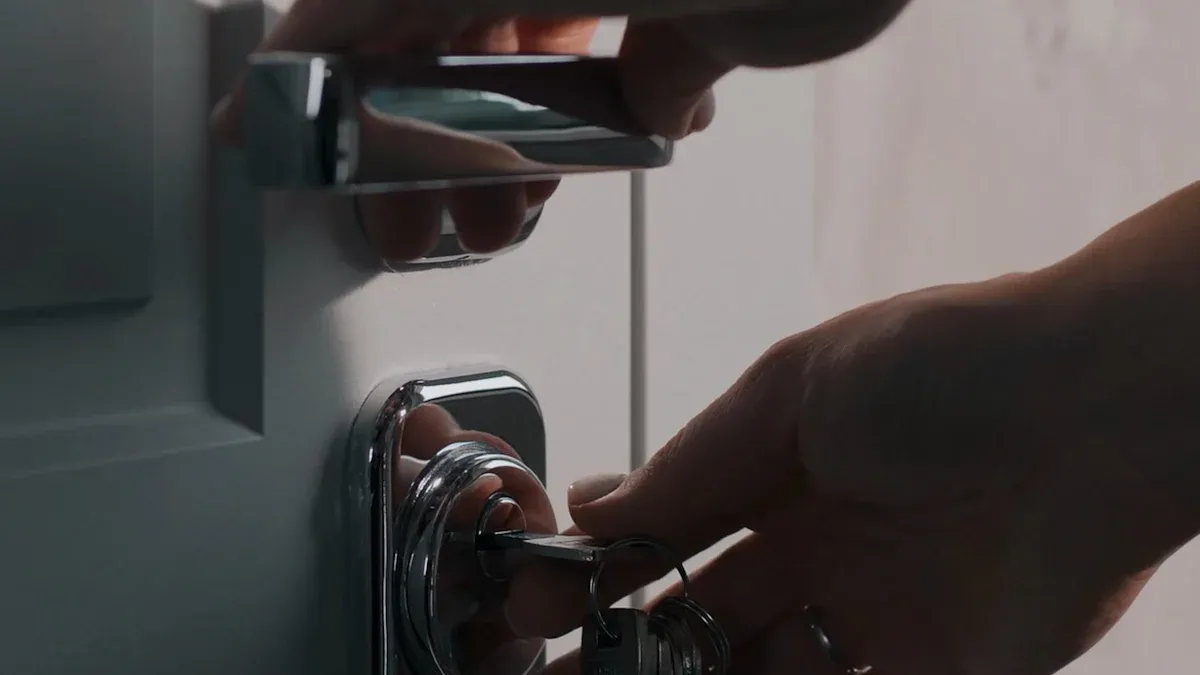
Finding the perfect cabinet lock starts with a few questions. You must first evaluate your security needs. A simple key lock provides basic security. For more advanced needs, you might consider a combination or biometric lock.
Tip: How to Choose the Right Storage Cabinet Lock: Key factors include your budget, your need for a convenient key or code, and the value of the items you are protecting.
Step 1: Assess Your Security Needs and What You’re Storing
Before you choose a lock, you must first understand what you are protecting. The contents of your cabinet determine the level of security you need. A lock for snacks is very different from a lock for important files.
Low-Security Needs: Deterring Casual Access
Low-security needs involve keeping honest people honest. You are not trying to stop a skilled burglar. Instead, you want to prevent casual access from children, roommates, or curious guests. This could mean securing cleaning supplies, personal snacks at the office, or non-sensitive files. A simple cam lock or basic combination lock often works perfectly for this purpose. The goal is deterrence, not high-level defense.
Medium-Security Needs: Protecting Valuables and Documents
This level of security is for items that have significant value or contain sensitive information. Protecting these items helps prevent loss and identity theft. In a home, you might need to secure:
- Prescription drugs, which are often targeted.
- Firearms, which should be stored in a locked cabinet or a dedicated gun safe.
In an office setting, the risk shifts from physical items to information.
Burglars may target sensitive records or computers instead of physical items. A good lock on a filing cabinet can prevent a costly data breach.
For these situations, you need a more robust lock or even a small safe.
High-Security Needs: Securing Critical Assets
When you must protect critical assets, you need a high level of security. This applies to items whose loss would be catastrophic. Examples include classified documents, high-value merchandise in a retail store, or cash drawers. A standard cabinet lock is not enough for this job. You should use a high-security lock, and in many cases, the items should be stored inside a certified safe. A quality safe provides superior protection against forced entry and fire. For ultimate protection, a safe is the correct choice over a simple cabinet. This ensures your most vital assets are truly safe.
Step 2: A Comparative Guide to Choosing a Lock Type

Your security assessment from Step 1 guides your next decision. Choosing a lock type is a balance between security, convenience, and technology. You can select from traditional key locks, convenient combination locks, or advanced electronic locks. Each option offers unique benefits for different situations. This guide will help you understand how to choose the right storage cabinet lock: key features matter.
How to Choose the Right Storage Cabinet Lock: Key Options
Key locks are the most common and traditional choice for cabinets. They are simple, reliable, and often very affordable. You use a physical key to secure the cabinet. This straightforward mechanism is effective for many low and medium-security needs. The main question for how to choose the right storage cabinet lock: key style and lock mechanism are critical.
You will find several types of key locks available:
- Core Lock: This lock has a removable core. You can easily replace the core if a key is lost, without replacing the entire lock.
- Hasp Lock: This type is common on hinged doors. A rotating hasp fits over a loop, and you secure it with a separate padlock.
- Hinged Locking Bars: These bars mount on the side of a cabinet. You use a padlock to secure the bar, which locks all the drawers at once.
- Security Panel: This system allows you to lock individual drawers. A central lock can also secure the entire cabinet for an extra layer of protection.
While effective, key locks have one major drawback. A physical key can be lost, stolen, or copied. Managing multiple keys for different cabinets can also become a hassle.
Combination Locks: Keyless Convenience for Multiple Users
Combination locks offer a major advantage: you do not need a key. This eliminates the risks associated with lost or stolen keys. You simply enter a numeric combination to open the lock. This makes combination locks a great choice for shared spaces like gyms, schools, or offices.
For shared environments, combination locks allow users to set their own temporary codes. Staff can use a master key or control key for supervisory access if someone forgets their combination.
This keyless convenience is a primary reason for their popularity. You get a high level of security without the burden of key management. The right combination lock can be as secure as a basic safe for certain items. Choosing a lock type like this simplifies access for many people.
There are two main styles of combination locks: dial and push-button. Dial locks require you to turn a dial to the correct numbers in a sequence. Push-button locks are often faster, as you just press the correct digits. The best combination for you depends on your preference for speed versus a more traditional feel.
Electronic & Keypad Locks: Modern, Managed Access
Electronic locks represent the cutting edge of cabinet security. They offer the most features and the highest level of control. You can open these locks using a keypad code, a key card, or even your smartphone. This makes them ideal for securing sensitive documents or valuable assets where access must be monitored. If you need more than a simple lock but not a full safe, electronic locks are an excellent middle ground.
Modern electronic locks provide powerful management features:
- Managed Access: You can grant or revoke access remotely using cloud-based software. This allows you to control who can open the lock and when.
- Audit Trails: Many electronic locks record every opening. You can download a log of who accessed the cabinet and at what time. Some models use a USB port to download up to 1,000 time-stamped events.
- Advanced Security: These locks use strong encryption, like AES-256, to protect communication. This prevents unauthorized digital access, making them as secure as a personal safe.
- Flexible Credentials: You can use smartphones with Bluetooth or NFC, existing employee badges, or transponders as digital keys.
The question of how to choose the right storage cabinet lock: key considerations for electronic locks include power. Most are battery-powered, but they use energy-saving modes to extend battery life. Understanding how to choose the right storage cabinet lock: key features like audit trails are vital for business security. For those wondering how to choose the right storage cabinet lock: key benefits include superior control and monitoring, making them a small-scale safe for your most important items.
Biometric Locks: The Ultimate in Personal Security
Biometric locks offer the highest level of personal security for your cabinets. This technology uses your unique fingerprint as the key. You no longer need to worry about lost keys or forgotten codes. Your fingerprint grants you instant access. This makes biometric locks the fastest and most convenient option available. This choice provides state-of-the-art security for your most sensitive items.
The primary benefits of biometric technology include:
- Unmatched Speed: You can unlock your cabinet in less than a second with a single touch.
- Ultimate Convenience: Your key is always with you. You cannot lose or forget it.
- Superior Security: A fingerprint is nearly impossible to copy or fake. This makes a biometric lock an excellent choice for protecting valuables.
When choosing a lock type, consider the accuracy of a biometric system. These locks are incredibly precise. The chance of an unauthorized person opening your lock is extremely low. This is measured by the False Acceptance Rate (FAR).
A lower FAR means better security. For many models, the protection level is similar to a personal safe. Look at the data for some popular locks:
| Lock Type | False Acceptance Rate (FAR) |
|---|---|
| Chrome Fingerprint Lock | <0.001% |
| Ultraloq Smart Lever Lock | 0.00001% |
As you can see, the odds of a false match are practically zero. This makes a biometric lock a powerful tool, almost like a mini safe for your cabinet. The enrollment process is simple. You just scan your fingerprint a few times to register it with the lock. Most models allow you to store multiple fingerprints. This lets you grant access to trusted family members. These locks are often battery-powered and designed for efficiency, so you will not be changing batteries constantly. For items that need top-tier protection but do not require a full-sized safe, a biometric lock is an ideal solution. It turns your cabinet into a personal safe, securing your assets with your unique touch. You can think of it as a small safe built right into your furniture.
Step 3: Key Features and Considerations for Each Lock

You have a lock type in mind. Now you must look at the specific features of each option. The small details often determine if a lock is right for you.
Key Locks: Tubular vs. Flat Keys for Security
Key locks are a classic choice. The type of key you use matters for security. Flat keys are very common and easy to copy. Tubular keys have a circular shape with notches on the end. They are much harder to pick or duplicate. This makes them a better choice for medium-security needs. The main advantages of key locks are their low cost and high reliability. You can trust a simple mechanical lock to work for years. However, the disadvantages are clear. You can lose or misplace the physical key. The advantages of key locks are their simplicity, but a lost key can be a major problem.
Combination Locks: Dial vs. Push-Button for Ease of Use
Combination locks free you from carrying a key. You can choose between two main styles: a traditional dial or a modern push-button. Your choice affects how you access your cabinet. A push-button combination is much faster. A dial combination takes more time.
Tip: Consider who will use the lock. Push-button combination locks are easier for people who have trouble with fine motor skills.
| Feature | Dial Combination Lock | Push-Button Combination Lock |
|---|---|---|
| Speed | Slower to open | Much faster to open |
| Ease of Use | Can be difficult for some | Very convenient and simple |
| Code Change | Often needs a locksmith | You can change it easily |
| Security | Very secure | Locks down after wrong attempts |
Electronic Locks: Power, Batteries, and Backup Access
Electronic locks offer the most features. The advantages of electronic locks include audit trails and remote access. However, these advantages come with a need for power. The main disadvantages of electronic locks involve battery life. Most electronic locks use batteries that you must replace.
Battery life depends on the lock and how often you use it:
- Standard Use (Alkaline): 6 to 12 months
- Heavy Use (Alkaline): 3 to 6 months
- Lithium Batteries: Can extend life by 3 to 6 months
What happens if the battery dies? You are not locked out. The disadvantages of electronic locks are managed with backup plans, similar to a high-end safe. You have several ways to get in:
- Backup Power: Use a USB power bank or a 9V battery to give the lock temporary power.
- Mechanical Key: Many electronic models include a hidden keyhole for a backup key.
- Master Code: An administrator may have an override code for emergency access.
These features ensure you can always access your items, making an electronic lock as dependable as a personal safe. The advantages of electronic locks provide modern security without sacrificing access, turning your cabinet into a small safe. This makes them a great choice for protecting valuables, much like a dedicated safe.
Biometric Locks: Enrollment Process and Accuracy
You must first enroll your fingerprint to use biometric locks. This process is simple and critical for the lock’s performance. You will scan your finger several times on the sensor. The lock’s software then creates a detailed digital map of your unique print. A proper enrollment ensures the lock recognizes you quickly every time. The advantages of biometric locks begin with this easy setup.
Most biometric locks allow you to store multiple fingerprints. This is one of the key advantages of this technology. You can grant access to trusted individuals without sharing codes or keys. A typical biometric lock offers flexible storage.
- You can often store 10 fingerprints for management.
- You can add another 10 fingerprints for other users.
- This gives you a total capacity of 20 fingerprints for one lock.
The main advantages of biometric locks are speed and security, turning your cabinet into a personal safe. However, you should also understand the potential disadvantages.
Accuracy can sometimes be a concern. The disadvantages of biometric locks often relate to scan failures. Several factors can affect a scanner’s ability to read your print correctly. Physical changes to your skin, like cuts or very dry skin, can cause a misread. The quality of the sensor and its algorithm also play a big role in performance. These disadvantages are important to consider. For most people, these issues are rare. The technology provides a level of security similar to a personal safe. Your cabinet becomes a small safe for your valuables. This makes biometric locks a top choice for protecting items that need more security than a standard lock but do not require a large safe. The security is comparable to a personal safe, making it a powerful upgrade for any cabinet. You get the protection of a safe with the convenience of a touch.
Step 4: Matching the Lock to Your Environment
The right lock depends on where you use it. A lock for your home has different needs than one for a busy office or a public gym. You must match the lock’s features to the environment to get the best results.
Best Locks for Home Use (Medicine, Liquor, Documents)
At home, you often need to secure items from children or guests. For medicine or cleaning supplies, you want a lock that is both secure and discreet. The Yale Smart Cabinet Lock mounts inside your cabinet, keeping it hidden. It even has a glow-in-the-dark indicator for safety. For liquor cabinets, a simple and affordable keyed lock, like a cam lock or pin tumbler lock, works well to restrict access. If you are securing important documents, a smart lock with long battery life, like the Dhiedas RFID lock, ensures your cabinet is always protected. These options make your cabinet almost as secure as a small personal safe.
Best Locks for Office Use (Filing Cabinets, Employee Lockers)
In an office, security shifts to protecting sensitive data and personal property. For filing cabinets with employee records, you need more than a basic lock.
You should use steel cabinets with strong locking systems to prevent data theft. Electronic smart locks are an excellent choice. They let you grant or revoke access remotely and track who opens the cabinet.
Employee lockers also benefit from modern technology. Keypad smart locks remove the need for physical keys. They offer passcode options and allow for centralized management, giving you a log of who used the locker and when. This adds a layer of accountability and convenience for everyone.
Best Locks for Public Use (Gyms, Schools, Shared Spaces)
Locks in public spaces must be durable and easy for anyone to use. In a gym, members need a simple way to secure their belongings. Keyless locks are ideal for this setting.
- Digilock offers user-friendly keyless access with a PIN code or RFID card. They are built to be dependable in high-traffic areas.
- A 4-digit combination padlock is another great option. It is reliable and features easy-to-turn numbers for quick use.
These solutions provide a smooth experience for users and remove the hassle of managing lost keys, making them a safe choice for any shared environment.
A Note on High-Security Needs: How to Choose the Right Safe Lock
Sometimes, a cabinet lock simply does not provide enough protection. You must upgrade your security when you are storing items that are irreplaceable or have extremely high value. A determined thief can bypass most cabinet locks. This is when you need to consider a safe.
When a Cabinet Lock Isn’t Enough
You should recognize the limits of a cabinet lock. These locks are designed to deter casual access, not to stop a focused attack or prevent theft. Their construction is simple.
- Cam Locks use a small rotating piece to secure the door.
- Latch Locks use a simple catch mechanism.
- Push Locks use an interior-mounted bracket and shaft.
These mechanisms are not built to withstand force. If you need to protect against burglary, fire, or other serious threats, a cabinet lock is not the right tool. You need the superior protection of a safe.
Key Differences Between Cabinet and Safe Locks
Understanding how to choose the right safe lock starts with knowing the key differences. A cabinet lock often acts as the direct locking bolt. If someone damages the lock, the cabinet opens. A safe lock works differently. It is installed behind the safe door and blocks a separate boltwork mechanism. Even if the lock is attacked, the heavy steel bolts of the safe can remain engaged.
There are several types of safe locks. Your choice depends on your needs for convenience and security.
How to choose the right safe lock involves weighing the advantages and disadvantages of each system. The main types of safe locks are key-operated safe locks, electronic combination safe locks, and biometric fingerprint safe locks.
Key-operated safe locks are traditional and reliable, but you must manage a physical key. The disadvantages of a lost key are significant. Electronic combination safe locks offer keyless entry and have many advantages. You can easily change the code on electronic combination safe locks. The benefits of using biometric safe locks include unmatched speed and security. The main disadvantages relate to sensor errors, but the advantages are clear. Key-operated safe locks are a classic choice. Electronic combination safe locks provide modern features. For the best security, you should explore all types of safe locks. A quality safe with key-operated safe locks or electronic combination safe locks will protect your most critical assets. Key-operated safe locks offer simple security, while electronic combination safe locks provide advanced control.
Your final decision balances security, convenience, and your environment.
- Key locks are a reliable choice. You get a simple key for basic needs.
- Combination locks offer keyless ease. A combination is great for shared access. This combination works well. The combination is easy to remember.
- Electronic locks provide advanced control. These electronic systems track every key entry. More electronic locks offer audit trails.
- Biometric locks deliver the fastest personal security. A biometric key is your unique fingerprint. These biometric locks are very convenient.
FAQ
What should I do if I lose my cabinet key?
You have a few options. You can call a locksmith to open the lock and make a new key. Some locks have a removable core. You can replace just the core yourself. This option saves you time and money.
Are biometric locks reliable for everyone?
Biometric locks are very reliable. Issues can sometimes happen with very dry or cut skin. Most models let you enroll multiple fingerprints. They also often include a backup key or code, so you always have access to your cabinet.
Can I install a new cabinet lock myself?
Yes, you can install most cabinet locks with basic tools. 🧰 Many locks include a template and simple instructions. For complex electronic systems, you might want to hire a professional. This ensures the lock is installed correctly for maximum security.
Which lock is best for protecting medicine from kids?
You need a lock that children cannot easily open for medicine.
A hidden electronic lock is an excellent choice. It is invisible from the outside. This type of lock provides strong, reliable security to keep your family safe from accidental access.


