

A hazardous waste bin is a container designed to collect, accumulate, and temporarily store materials that are classified as hazardous waste under applicable environmental regulations. These wastes may have characteristics such as ignitability, corrosivity, reactivity, or toxicity. Choosing the right container helps protect workers, maintain regulatory compliance, and reduce contamination risks. Container selection depends on waste chemistry, volume, storage requirements, and applicable state regulations.
At a glance
| Factor | Detail |
|---|---|
| Governing federal rule | RCRA (40 CFR Part 262)[1] |
| Key OSHA reference | 29 CFR 1910.1200[2] (HazCom) |
| Container materials | HDPE, steel, fiber drum, poly composite |
| Common sizes | 1-gal pail, 5-gal pail, 15-gal drum, 55-gal drum |
| Labeling trigger | Containers must be labeled according to applicable hazardous waste requirements when accumulation begins |
| Accumulation time limit (LQG) | 9Up to 90 days under RCRA requirements |
| Color-coding standard | No universal federal color standard; facilities usually follow internal identification systems |
| Typical price range | Depends on container material, size, certification, and chemical compatibility |
What Is a Hazardous Waste Bin?
Every year, facilities misidentify their waste streams and drop corrosive solvents into a general waste bin — and that mistake is both an OSHA violation and an environmental liability. A hazardous waste container is a designated, chemically compatible receptacle used to collect, accumulate, and temporarily store materials that meet the EPA’s definition of hazardous waste under the Resource Conservation and Recovery Act[3].
The distinction matters immediately. A general waste bin accepts non-hazardous materials — paper, packaging, non-contaminated food waste. A hazardous waste bin is chemically inert to its contents, closeable, labeled, and tracked. You cannot put bleach residues or waste toner cartridges in a standard trash can and call it compliant.
For facilities sourcing compliant hazardous waste containers, pairing the right vessel with the right secondary containment system is the complete answer.
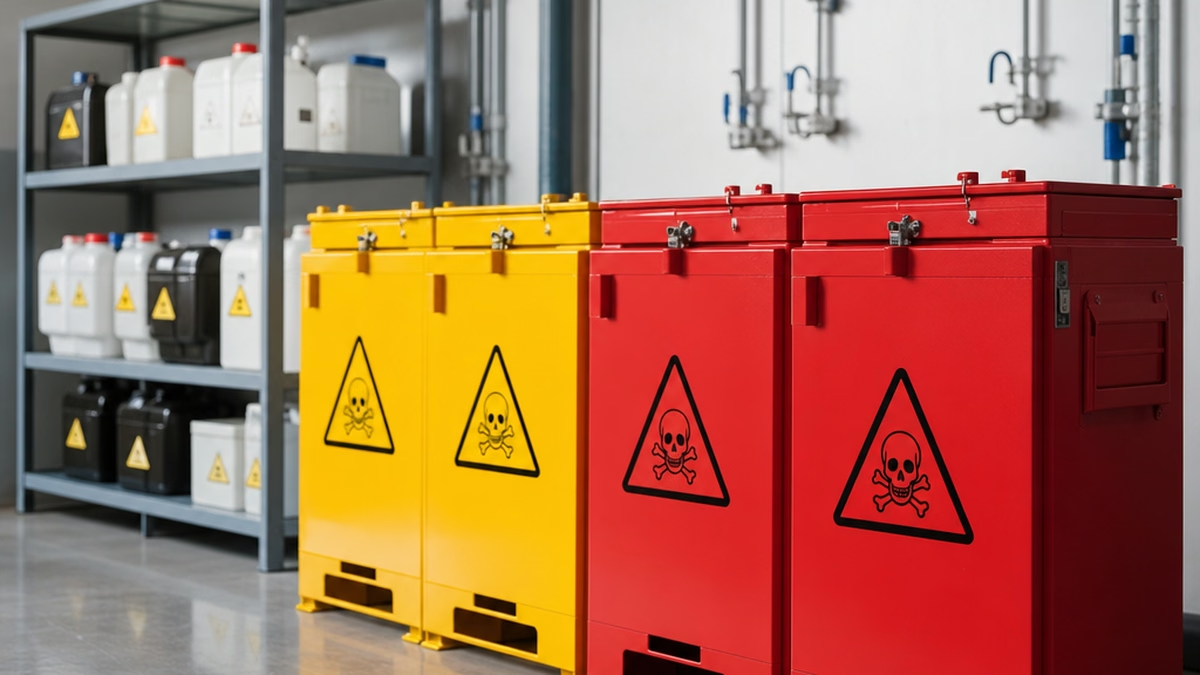
We’ve seen facilities try to get by with repurposed food-grade buckets for solvent waste. The lid seals fail within weeks, vapor accumulates, and the inspection finds it fast. The container has to match the chemistry from day one.
What Goes Into a Hazardous Waste Bin?
If a material is ignitable, corrosive, reactive, or toxic, it belongs in a labeled accumulation vessel — not the general waste stream.
The EPA’s four characteristics define the boundary under 40 CFR Part 261[4]:
- Ignitables — waste solvents (acetone, MEK, IPA), paint thinners, aerosol cans with residue, fuels
- Corrosives — spent acids (hydrochloric, sulfuric), caustic cleaning solutions, rust removers, battery acid
- Reactives — water-reactive chemicals, unstable oxidizers, cyanide or sulfide-bearing wastes
- Toxics — heavy-metal-containing wastes (lead paint chips, cadmium compounds), pesticide residues, chlorinated solvents like TCE
Common items that require careful evaluation include some waste toner cartridges, which may contain regulated substances, and spent fluorescent lamps containing mercury, which are often managed under the Universal Waste Rule rather than handled as typical hazardous waste. Bleach waste, depending on concentration and what it is mixed with, may also qualify as corrosive.
When waste classification is uncertain, facilities should perform a proper waste determination or consult applicable regulatory guidance before selecting a container. The cost of proper classification and management is usually far lower than dealing with incorrect disposal or compliance issues.
What you cannot put in a general waste bin includes materials that meet hazardous waste classification requirements. Cardboard, clean food packaging, and uncontaminated paper are generally acceptable for general waste — but packaging with chemical residue may require additional evaluation before disposal.
⚖️ Trade-off: Treating uncertain materials as hazardous waste may increase disposal costs, but incorrect waste classification can create greater compliance risks. Proper waste determination helps balance safety, regulatory requirements, and disposal expenses.
Hazardous Waste Bin Requirements and Safety Standards
Federal law gives you a specific, non-negotiable checklist; state rules often tighten it further.
The EPA’s 40 CFR Part 262[5] sets the core requirements for hazardous waste containers at Large Quantity Generators (LQGs), Small Quantity Generators (SQGs), and Very Small Quantity Generators (VSQGs). OSHA’s HazCom standard[6] layers on top, requiring GHS-compliant labels with hazard pictograms and signal words on any secondary container in a work area. The practical requirements break down as follows:
- Compatibility: the container material must not react with the waste. HDPE poly containers work for most aqueous corrosives; steel drums suit flammable solvents; fiber drums handle dry solids.
- Condition: no leaks, no corrosion through the wall, functional closure device.
- Closure: containers must remain closed except when adding or removing waste. Leaving containers open can create compliance and safety issues.
- Labeling: the words “Hazardous Waste” plus accumulation start date and a description of contents must appear immediately when you start filling the unit.
- Inspection: weekly visual inspection for LQGs; less frequent for SQGs.
- Compatibility of wastes: you cannot mix incompatible waste streams in one receptacle (acids + bases, oxidizers + flammables).
📌 Remember: State environmental agencies can require more. California’s DTSC imposes stricter accumulation time limits and specific secondary containment volumes under 22 CCR Division 4.5[7]. Always check your state program on top of federal minimums.
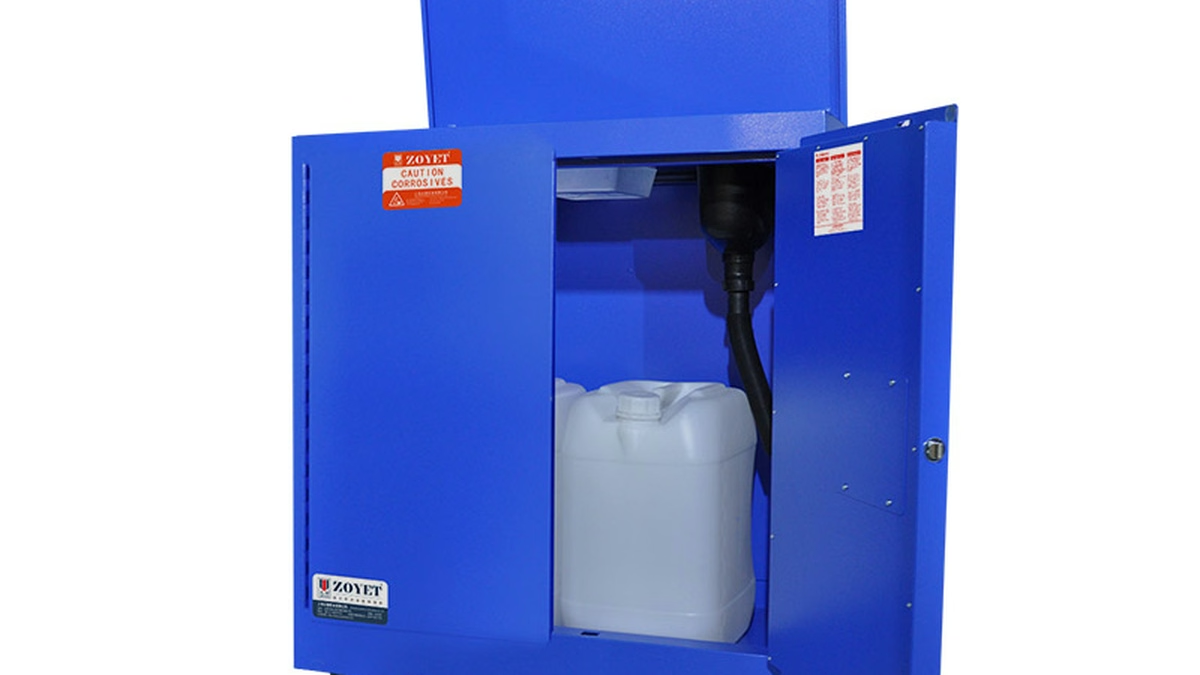
Common Types of Hazardous Waste Containers
The container type should match the waste volume, chemical properties, and handling requirements. Choosing an unsuitable container can create safety risks and compliance issues.
1-Gallon Poly Pail (Screw Top Lid)
This is a common option for bench-scale laboratory waste and small-volume chemical residues. A 1-gallon HDPE pail with a screw-top lid holds approximately 3.8 liters and fits under a lab hood or inside a secondary containment tray without disrupting workflow. The screw-top closure provides a more secure seal than many simple snap-lid designs and helps reduce the risk of leaks or vapor release.
HDPE provides good chemical resistance for many aqueous acids, bases, and industrial chemicals. However, compatibility should always be confirmed based on the specific waste composition and storage conditions. See the HDPE chemical resistance data for additional information.
If the container will be transported off-site, verify whether a UN-rated container is required based on the waste classification and applicable transport regulations. Container ratings depend on the manufacturer, design, and testing results.
Huanawell supplies these containers for chemical processing, pharmaceutical, and automotive applications. For specific UN-rated options, the flammable safety cabinet storage guide covers related storage and handling considerations. Pre-labeled units can help simplify waste identification and reduce labeling errors.
15-Gallon Poly Closed Top Drum (Natural)
The 15-gallon closed-top poly drum is a common option for moderate-volume liquid waste streams in production and maintenance environments. “Natural” (translucent) HDPE allows technicians to check fill level without opening the drum, helping reduce unnecessary lid openings.
Closed-top drums are suitable when the waste stream is consistent and additions are made through a bung opening or pump. The sealed design helps reduce exposure and prevents unnecessary contact with the waste between additions.
A full drum can become heavy to handle, so appropriate drum-handling equipment should be considered depending on the facility setup and waste characteristics. The standard bung size is commonly 2-inch NPS, which is compatible with many drum pumps and funnels used in industrial applications.
Natural HDPE is not always UV-stabilized in standard formulations. If containers are stored outdoors for extended periods, use a shaded area, protective cover, or a UV-stabilized container recommended by the supplier.
For flammable waste streams, container selection should follow applicable fire safety and hazardous waste regulations. Steel containers may be preferred for certain flammable liquids, while HDPE drums are commonly used for compatible aqueous corrosives, spent plating solutions, and other non-flammable liquid wastes.
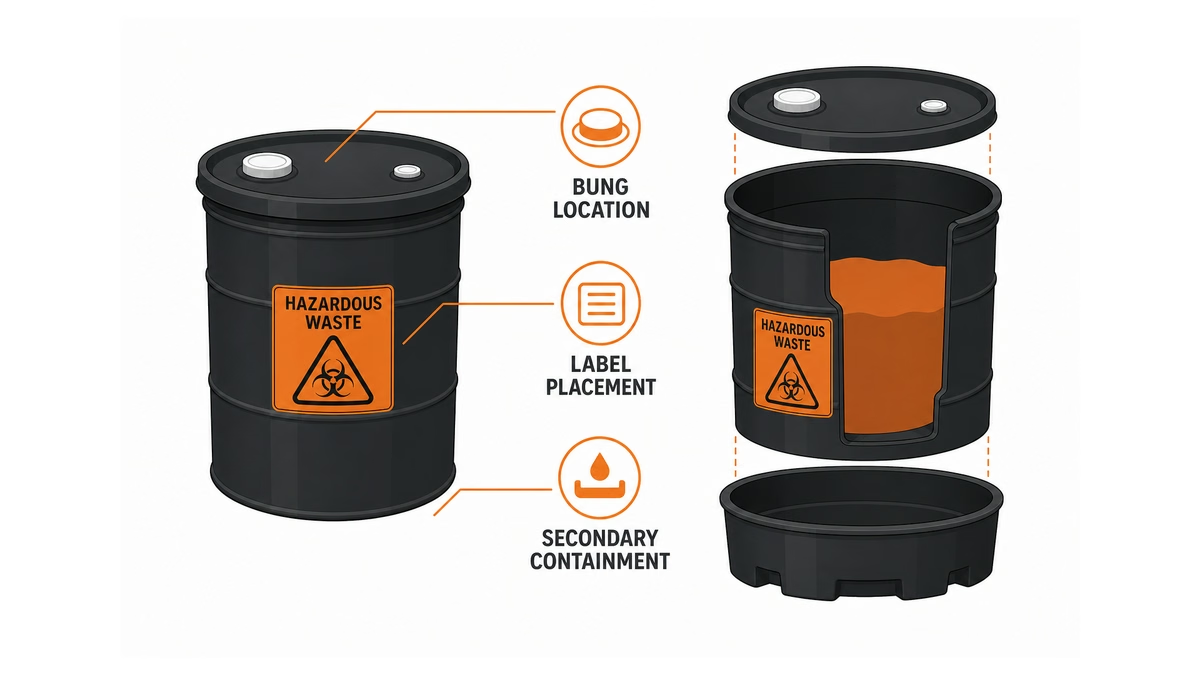
15-Gallon Poly Open Top Drum (With Lid)
The open-top poly drum uses a removable lid secured with a bolt ring, making it suitable for solid or semi-solid hazardous waste streams where wider access is needed. Common applications include contaminated absorbents, used PPE, laboratory debris, and certain sludge materials.
The removable lid design allows easier loading of bulk materials compared with closed-top drums. When properly secured, the closure helps meet hazardous waste container management requirements by keeping the container closed when waste is not being added or removed.
For waste streams with more aggressive chemical properties, a compatible liner may provide additional protection and reduce direct contact between the waste and the drum surface. Container compatibility should always be verified based on the specific waste characteristics and supplier recommendations.
When filled containers are transported off-site, confirm that the drum meets the applicable UN performance requirements for the intended shipment.
55-Gallon Drums
55-gallon steel or poly drums are widely used for larger-volume hazardous waste accumulation and industrial waste management applications.
Steel drums are commonly selected for certain flammable or solvent-based waste streams, while HDPE drums are often used for compatible corrosive liquids and other chemical waste streams. The appropriate material depends on waste chemistry, regulatory requirements, and transport conditions.
Container selection should consider factors such as waste compatibility, closure type, UN certification requirements, and handling needs. Pricing varies depending on material, drum specifications, certification, and market conditions.
Fiber Drums
Fiber drums are commonly used for dry hazardous waste materials such as powders, granules, and contaminated dry absorbents where liquid compatibility is not a primary concern.
Compared with steel or plastic drums, fiber drums are lightweight and can be suitable for certain single-use or limited-handling applications. However, they are not appropriate for liquid waste or materials that may damage the fiber structure.
Before selecting a fiber drum, verify that the container is compatible with the waste material and meets any applicable storage or transportation requirements.
Hazardous Waste Bin Color Coding and Labeling
Color coding can help workers identify waste streams quickly, but federal hazardous waste regulations focus on proper labeling and waste identification rather than a specific container color.
RCRA does not establish a universal color requirement for hazardous waste containers. Many facilities use internal color-coding systems to separate different waste streams, but these practices vary by industry, company policy, and state requirements.
Common examples include:
| Color | Common Use Convention |
|---|---|
| Red | Often used for hazardous chemical or regulated waste streams in facility color systems |
| Yellow | Commonly used for certain medical or pharmaceutical waste streams |
| White or clear | Often used for sharps containers in healthcare settings |
| Blue | Commonly used for recyclable materials |
| Black | Commonly used for general non-hazardous waste |
Color alone does not determine whether a container is compliant. A hazardous waste container must still be compatible with the waste, properly closed, and clearly labeled according to applicable regulations.
Labeling requirements are more important than container color. Hazardous waste containers generally need clear identification of:
• The words “Hazardous Waste” where required by applicable regulations
• The contents or waste description
• Relevant hazards (such as ignitable, corrosive, or toxic characteristics)
• Accumulation start date when required for the generator category
Additional shipping information, such as generator details and EPA identification numbers, may be required when hazardous waste is transported off-site.
Container selection should also match the waste characteristics:
| Container Type | Common Compatible Waste Applications |
|---|---|
| 1-gal HDPE pail | Small-volume chemical waste and compatible liquid waste streams |
| 15-gal closed-top poly drum | Compatible liquid hazardous waste and industrial chemical waste |
| 15-gal open-top poly drum | Solid or semi-solid waste such as contaminated absorbents |
| 55-gal steel drum | Larger-volume waste streams, including some flammable or solvent-based wastes |
| Fiber drum | Dry solids, powders, and granular materials |
Storage and Handling Practices
Correct storage and handling practices are essential for maintaining hazardous waste compliance. Requirements may vary depending on generator category, waste type, and state regulations.
How to properly manage hazardous waste starts before the waste leaves your facility. Accumulation areas should follow these basic practices:
- Secondary containment: Liquid hazardous waste containers should be stored in appropriate containment systems to help reduce spill risks. The required containment method depends on the waste characteristics, container type, and applicable regulations.
- Segregation: Incompatible wastes must be physically separated to prevent dangerous reactions. Examples include acids and bases, and oxidizers and flammable materials.
- Ventilation: Storage areas containing volatile or hazardous chemicals should have suitable ventilation to reduce the risk of vapor accumulation.
- Access control: Hazardous waste storage areas should be limited to trained personnel. Appropriate signs should be used to identify storage areas and potential hazards.
- Emergency equipment: Facilities should provide suitable emergency equipment, such as spill response materials, fire protection equipment, and other safety resources based on the hazards present.
Where to dispose of household hazardous waste is a separate question from industrial waste — residential generators aren’t subject to RCRA the same way. US households can take paint, batteries, pesticides, and solvents to local HHW collection events, which most counties run at least twice a year. The EPA’s waste management locator tool at epa.gov/recycle helps find the nearest permanent facility.
For industrial generators, waste leaves the facility via a licensed hazardous waste transporter with a uniform manifest. The EPA uniform manifest system tracks cradle-to-grave movement.
⏱️ Time saver: Set your accumulation start date label the moment the first drop of waste goes in — not at the end of the shift, not the next morning. That timestamp is what inspectors check first, and backdating is a violation.
A few recurring problems in practice:
- Storing overfilled containers (always leave headspace for thermal expansion)
- Mixing waste streams to “consolidate” without checking compatibility first
- Leaving containers open while unattended — hazardous waste containers must remain closed except when adding or removing waste.
- Using containers not rated for the waste (food-grade buckets for solvents, wrong UN rating for transport)
Establishing a weekly container inspection log — five minutes, same day each week — is the single highest-ROI compliance habit for hazardous waste storage. Huanawell serves chemical processing, oil and gas, automotive, and pharmaceutical facilities where this discipline is standard practice; the pattern holds across all of them.
It’s the single highest-ROI compliance habit.
For facilities sourcing compliant chemical storage cabinets and containment solutions, pairing the right accumulation vessel with a grounded, vented, OSHA-compliant cabinet closes the loop on both container and storage compliance.
Have a project or a spec sheet in hand? Talk to huanawell.com — real engineers answer.
Frequently asked questions
What are the 4 types of hazardous waste?
EPA classifies hazardous waste into four characteristics: ignitability, corrosivity, reactivity, and toxicity. Ignitable wastes catch fire easily, such as solvents. Corrosive wastes dissolve metals or skin, like battery acid. Reactive wastes are unstable and can explode or release toxic gases. Toxic wastes leach dangerous chemicals into groundwater. A hazardous waste bin must be chemically compatible with whichever characteristic applies to your specific waste stream.
What color is the bin for hazardous waste?
There is no single federally mandated color for hazardous waste bins under RCRA or OSHA regulations. In practice, some facilities use color-coding systems to distinguish different waste streams. Red containers are commonly associated with hazardous or chemical waste, while other colors may vary depending on facility procedures and state-specific requirements.
What are the requirements for hazardous waste containers?
Under RCRA, a hazardous waste bin must be in good condition, compatible with the waste it holds, kept closed except when adding or removing waste, and labeled with the words Hazardous Waste along with the accumulation start date.Satellite accumulation areas generally allow up to 55 gallons of hazardous waste (or 1 quart of acute hazardous waste) before the excess must be moved to a central accumulation area. Large-quantity generators must conduct weekly inspections and meet specific secondary containment standards. State programs may impose stricter rules beyond these federal baselines.
What goes in a hazardous waste bin?
A hazardous waste bin holds materials that are ignitable, corrosive, reactive, or toxic, including spent solvents, used oils that fail toxicity tests, paint waste, mercury-containing devices, pesticide residues, and lab chemicals. Never mix incompatible wastes, such as acids and bases or oxidizers and flammables, in the same container. Household hazardous waste, universal waste like batteries and fluorescent bulbs, and regulated medical waste each require their own designated containers.
Sources
[1] 40 CFR Part 262 — Standards Applicable to Generators of … — ecfr.gov
[2] 1910.1200 – Hazard Communication. | Occupational Safety … — osha.gov
[3] 40 CFR Part 261 — Identification and Listing of Hazardous … — ecfr.gov
[4] Resource Conservation and Recovery Act (RCRA) … — epa.gov
[5] Hazard Communication – Overview — osha.gov
[6] Official California Code of Regulations, Title 22, Division 4.5 — dtsc.ca.gov
[7] HDPE Chemical Resistance Guide — ineos.com


