

You must follow strict safety regulations when you store flammable liquids in your facility. Meeting OSHA and national fire protection association standards helps you prevent fire hazards and protect your team. A flammable safety cabinet with proper fire ratings lowers insurance costs, reduces legal risk, and supports compliance. If you move storage outdoors, many insurers offer better terms because the risk of fire hazard drops. The right cabinet and safety cabinet construction ensure protection and smooth operations. Complete Guide to Flammable Storage Cabinet Requirements: OSHA gives you the tools for prevention and reliable compliance.
Complete Guide to Flammable Storage Cabinet Requirements: OSHA, NFPA, and 2026 Standards
OSHA Flammable Cabinet Regulations
You must understand the complete guide to flammable storage cabinet requirements: osha to keep your facility safe. OSHA regulations set strict rules for storing flammable liquids. These rules help you prevent fire and protect your team. You need to know the limits for how much you can store in each cabinet and in your storage area.
Here is a table that shows the main OSHA flammable cabinet regulations for 2026:
| Regulation | Details |
|---|---|
| Maximum Storage | Not more than 60 gallons of Category 1, 2, and/or 3 flammable liquids or 120 gallons of Category 4 flammable liquids in one cabinet. |
| Cabinet Limit | No more than three cabinets in a single storage area. |
| Excess Quantities | Quantities exceeding limits must be stored in an inside storage room. |
You must also follow these important rules:
- Do not store more than 25 gallons of flammable or combustible liquids outside of an approved cabinet.
- Keep Category I, II, or III flammable liquids in closed containers when not in use.
- Use rated storage safety cabinets whenever possible.
- Store a maximum of 60 gallons of flammable liquids (flashpoint below 140°F) or 120 gallons of combustible liquids (flashpoint at or above 140°F) in a single container.
OSHA defines any chemical with a flash point below 199.4°F as flammable. If you ignore these standards, you risk heavy penalties. For example, Fox Valley Systems received 26 OSHA violations and paid $262,000 in fines for improper storage. You can see some common violations in the table below:
| Violation Description | Standard Reference |
|---|---|
| Storing liquids in improper containers | 1910.106(e)(2)(ii) |
| Storing liquids in containers that do not properly seal | 1910.106(e)(2)(ii) |
If you break these regulations, you may face a civil penalty of up to $70,000 for each violation. Willful violations have a minimum penalty of $5,000 each. Following the complete guide to flammable storage cabinet requirements: osha helps you avoid these risks.
NFPA Flammable Safety Cabinet Standards
The National Fire Protection Association (NFPA) sets standards that focus on fire protection and safe storage practices. You must know how NFPA standards compare to OSHA rules. The complete guide to flammable storage cabinet requirements: osha includes both sets of standards.
Here is a table that compares NFPA 30 and OSHA 1910.106:
| Aspect | NFPA 30 | OSHA 1910.106 |
|---|---|---|
| Focus | Fire protection and storage practices | Maximum allowable quantities and container types |
| Construction Standards | Must withstand fire for at least 10 minutes | Specific construction standards for fire resistance |
| Placement Guidelines | Away from exits and ignition sources | Similar placement requirements |
| Container Requirements | Compatible containers to prevent reactions | Approved containers like safety cans |
You must place cabinets away from exits and ignition sources. You need to use containers that prevent dangerous reactions. Both OSHA and NFPA require cabinets to resist fire for a set time. These standards work together to give you the best protection.
2026 Industry Updates and Best Practices
In 2026, you will see new trends and updates in flammable cabinet safety. The complete guide to flammable storage cabinet requirements: osha now includes advanced best practices. You must use cabinets designed for fire containment. These cabinets give you and your team more time to evacuate during a fire.
Follow these best practices for 2026:
- Keep cabinets sealed to stop oxygen from getting in.
- Place a clear label on each cabinet that says ‘FLAMMABLE – KEEP FIRE AWAY’.
- Never exceed the storage capacity limits.
You must use double-walled steel and self-latching doors for your cabinets. Proper labeling is now more important than ever. Cabinets should not have vents, because vents can let oxygen in and make a fire worse.
Tip: Smart safety cabinets with IoT technology can help you monitor conditions in real time. This technology improves safety and helps you meet all standards.
Manufacturers now focus on making cabinets that meet strict regulations. You will see more smart features in new cabinets. These features help you follow the complete guide to flammable storage cabinet requirements: osha and keep your facility safe.
By following these standards, you protect your team, your facility, and your business.
Flammable Safety Cabinet Construction and Design

Approved Materials and Double-Wall Construction
You need to choose the right materials for your flammable safety cabinet. According to NFPA standards, both metal and wood are acceptable. Metal is the preferred choice because it offers better fire protection. Double-wall construction improves fire resistance. The space between the walls acts as insulation and slows down heat transfer during a fire.
| Feature | Description |
|---|---|
| Double-wall construction | Enhances fire resistance with insulating air space |
| Insulating air space (38 mm) | Slows down heat transfer during a fire |
When you select a cabinet with double walls, you give your facility extra time to respond in an emergency.
Door Types and Closure Mechanisms
You must pay attention to the type of doors and how they close. Flammable cabinets come in single or two-door styles. Self-closing doors are the safest option. They close automatically and reduce the risk of human error. Many states require self-closing doors for compliance.
| Door Type | Closure Mechanism | Compliance Notes |
|---|---|---|
| Single Door | Manual | Requires user to close; may not meet all safety standards. |
| Single Door | Self-Closing | Automatically closes; preferred for safety compliance. |
| Two Door | Manual | User must ensure closure. |
| Two Door | Self-Closing | Provides automatic closure; essential for compliance with safety regulations. |
| Two Door | Sliding Self-Closing | Space-saving design; must meet specific safety codes. |
| No-Door | N/A | Not compliant with most safety regulations. |
- Self-closing doors eliminate the risk of forgetting to close the cabinet.
- They keep the cabinet shut during a fire, stopping flames and smoke from spreading.
- Reliable closure is crucial for safety.
Vents, Sumps, and Spill Containment
You must understand the requirements for vents and spill containment. NFPA does not require ventilation for flammable cabinets. Venting can increase fire risk. If you vent a cabinet, direct the vents outdoors. You can close unused vents to reduce hazards. Always check local regulations for special rules.
- Sumps collect spills and prevent leaks from spreading.
- Spill containment keeps your facility safe from flammable liquid accidents.
- Proper design protects your team and your property.
Tip: Always inspect your cabinet for leaks and keep vents closed unless local codes require ventilation.
Required Labels and Warnings
You must use clear labels and warnings on every flammable safety cabinet. OSHA and NFPA standards require you to display specific messages. These labels help everyone in your facility recognize hazards and respond quickly in emergencies.
You need to place labels where people can see them easily. The lettering must be bold and large enough to read from a distance. If you use cabinets from trusted brands like Justrite, you get labels that meet all safety requirements.
Tip: Always check your cabinets for missing or damaged labels. Replace them right away to stay compliant.
Here are the main labeling requirements for flammable safety cabinets:
- You must use a label that says: “Flammable – Keep Away from Open Flames“. This warning must be easy to see and read.
- Place the label on the cabinet door. Make sure it faces outward and is not blocked by other objects.
- Use durable materials for labels. They should resist fading, peeling, and damage from chemicals.
- Labels must use colors that stand out. Yellow backgrounds with red or black lettering work best.
- If you store other hazardous materials, add extra warning labels for those chemicals.
You help your team stay safe when you follow these rules. Labels remind everyone to handle flammable liquids with care. They also warn visitors and contractors who may not know your facility’s risks.
Some cabinets include pictograms or symbols. These images show fire hazards and help people who may not read English. You can add extra signs near cabinets to reinforce safety messages.
Note: Proper labeling is not just a rule. It is a key part of your fire prevention plan.
You protect your facility and avoid fines when you use the right labels and warnings. Make labeling a regular part of your safety checks.
Flammable Cabinet Capacity and Storage Limits
Maximum Storage Per Flammable Cabinet
You must know how much you can store in each flammable cabinet. Both OSHA and NFPA set clear limits for safety. If you go over these limits, you increase the risk of fire and chemical spills. You should always check the label on your cabinet before you add more chemicals.
- You can store up to 120 gallons of flammable and combustible liquids in one cabinet.
- This rule helps you control fire hazards and keeps your chemical storage safe.
- Never fill a cabinet past its rated capacity.
If you follow these rules, you protect your team and your facility from accidents.
Room and Facility Storage Limits
You must also pay attention to how much you store in a room or across your whole facility. The rules change based on where you keep your chemicals and the type of storage you use. Here is a table that shows the main limits for 2026:
| Storage Scenario | Maximum Quantity Allowed |
|---|---|
| Room (outside approved container) | 25 gallons |
| Approved hazmat warehouse (flashpoint < 140°F) | 60 gallons |
| Approved hazmat warehouse (flashpoint ≥ 140°F) | 120 gallons |
| Storage cabinets in a single area | 3 structures |
You must not keep more than three cabinets in one storage area. If you need to store more chemicals, you must use a special chemical storage room. These rules help you prevent large fires and make it easier to control spills.
Tip: Always keep an updated list of all chemicals in your storage areas. This helps you stay within safe limits.
Approved Container Types and Sizes
You must use the right containers for flammable chemicals. The type and size of the container matter for safety. Some chemicals need glass containers because they do not react with glass. Larger volumes need special safety cans or metal containers. Here is a table that shows the approved options:
| Container Size | Material Type | Safety Features |
|---|---|---|
| 100mL | Glass | Chemical inertness |
| Up to 4L | Glass | Chemical inertness |
| Larger volumes | Approved safety cans or metal containers | Filtration system for vapors |
| 20L carboys | Metal | Robust construction with double-walled steel |
You must always use containers that match the chemical and the amount you need to store. This keeps your flammable cabinet safe and helps you meet all chemical storage rules.
Flammable Cabinet Color Coding and Identification
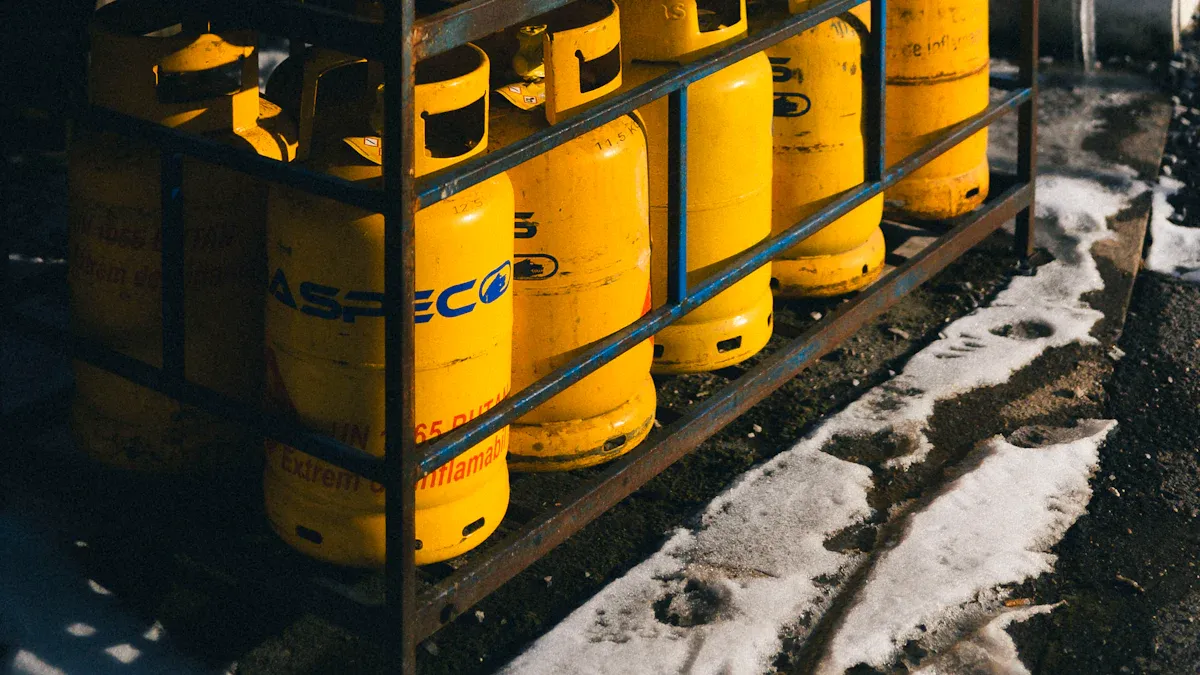
Standard Cabinet Colors
You can quickly spot a flammable storage cabinet by its bright yellow color. This color is not just for looks. Yellow signals that the cabinet holds flammable liquids like gasoline or acetone. When you use yellow for these cabinets, you help everyone in your facility find them fast. This quick identification can prevent chemical mix-ups and help during emergencies. Yellow cabinets follow best practices for chemical storage and meet industry standards. You keep your workplace safer when you use the right color for each type of chemical storage.
Here is a simple table to help you remember the standard colors for chemical storage:
| Color | Hazard Type |
|---|---|
| Yellow | Flammable liquids (gasoline, diethyl ether, acetone) |
| Red | Combustible liquids |
| Green | Corrosive chemicals |
Tip: Always check that your cabinet matches the correct color for its contents. This step helps you avoid dangerous mistakes.
Labeling for Contents and Hazards
You need clear labels on every storage cabinet. Labels tell you what is inside and warn you about hazards. Use color-coded fields and symbols to show if a chemical is flammable, corrosive, or reactive. The HMIS® system helps you mark health, flammability, and reactivity risks. If you store peroxidizable compounds, add special warning labels. If a chemical tests positive for peroxides, treat it, repackage it, and update the label with a new date.
- Place labels where you can see them easily.
- Use bold letters and bright colors for warnings.
- Update labels right away if you change the contents.
Proper labeling keeps your team safe and helps you follow safety rules. You make your facility safer when you use the right labels and colors for every cabinet.
Flammable Cabinet Placement and Installation
Indoor vs. Outdoor Placement
You must choose the right location for your flammable safety cabinet. Place cabinets away from panel boards and electrical outlets. Keep them far from welding or grinding areas. Smoking zones should not be near cabinets. Make sure cabinets do not block exit paths. You help everyone escape quickly during an emergency. Avoid placing cabinets under stairways. This keeps evacuation routes clear. Always set cabinets on a level surface. Do not use pallets. This lowers fire risk and keeps cabinets stable.
Tip: Check your cabinet’s location often. Move it if you see any hazards nearby.
Spacing and Accessibility
Proper spacing and accessibility make your facility safer. Cabinets must never block exit doors. You need to keep fire egress routes clear. Do not place cabinets in stairwells used for fire exits. Make sure cabinets do not block equipment or ventilation systems. Position cabinets so spills cannot reach drains or ignition sources. Place cabinets at least 5 feet from exits. This reduces explosion hazards.
| Requirement | Description |
|---|---|
| Obstruction of exit doors | Cabinets must not block any exit door or impede its opening. |
| Fire exit egress | Cabinets cannot narrow mandated fire egress routes. |
| Stairwell placement | Cabinets should not be placed in stairwells used for fire exits. |
| Equipment access | Cabinets must not block access to any equipment. |
| Ventilation | Cabinets should not block ventilation systems. |
| Spill management | Cabinets should prevent spills from reaching drains or ignition sources. |
| Distance from exits | Place cabinets at least 5 feet away from exits. |
Note: You improve safety when you keep cabinets accessible and away from hazards.
Venting and Grounding Requirements
You must follow venting and grounding rules for flammable cabinets. Cabinets under fume hoods need venting kits from the manufacturer. Vent these cabinets into the hood’s plenum. Free-standing cabinets in biomedical labs should not be vented. Seal vent openings tightly. In physical science labs, you may vent cabinets into the fume hood exhaust or a dedicated hazardous materials system.
Ground cabinets when you dispense Class 1 flammable liquids. For Class 2 combustible liquids, grounding is recommended if the temperature is near or above the flashpoint. Make sure you have good electrical continuity. Use metal-to-metal contact for internal grounding.
Alert: Always check local codes for extra venting or grounding requirements. You keep your team safe when you follow these rules.
What Can and Cannot Be Stored in Flammable Safety Cabinets
Approved Flammable Liquids
You must know which flammable and combustible liquids you can store in your safety cabinets. These cabinets are designed for chemicals, solvents, paints, lacquers, oils, and gasoline. You should always check the flammable liquids classifications before you place anything inside. Cabinets must keep the internal temperature below 325 °F during a fire test. Each cabinet should have a label that reads “Flammable – Keep Fire Away.”
Here is a table that shows the maximum allowable container size for each category:
| Category of Flammable Liquid | Maximum Allowable Container Size |
|---|---|
| Category 1, 2, or 3 | 60 gallons |
| Category 4 | 120 gallons |
You help prevent accidents when you store chemicals correctly. Always follow these limits to keep your team safe.
Prohibited Materials and Incompatibles
You cannot store every chemical in a flammable safety cabinet. Some hazardous chemicals react with flammable liquids and create dangerous situations. You must keep incompatible materials apart to avoid fires or explosions. For example, you should never put acids with flammable and combustible liquids. Mixing the wrong chemicals can cause toxic gases or violent reactions.
The table below lists some common chemicals and what they are incompatible with:
| Chemical | Incompatible With |
|---|---|
| Acetic acid | Chromic acid, nitric acid, hydroxyl compounds, ethylene glycol, perchloric acid, peroxides, permanganates |
| Acetylene | Chlorine, bromine, copper, fluorine, silver, mercury |
| Acetone | Concentrated nitric and sulfuric acid mixtures |
| Alkali and alkaline earth metals | Water, carbon tetrachloride or other chlorinated hydrocarbons, carbon dioxide, halogens |
| Ammonia (anhydrous) | Mercury, chlorine, calcium hypochlorite, iodine, bromine, hydrofluoric acid (anhydrous) |
| Ammonium nitrate | Acids, powdered metals, flammable liquids, chlorates, nitrates, sulfur, finely divided organic or combustible materials |
| Flammable liquids | Ammonium nitrate, chromic acid, hydrogen peroxide, nitric acid, sodium peroxide, halogens |
Alert: Always read the label and safety data sheet before you store any hazardous material. This step helps you avoid dangerous chemical reactions.
You protect your facility and your team when you separate incompatible chemicals. Safe storage starts with knowing what you can and cannot put in your flammable safety cabinets.
Employee Training and Inspection Protocols for Flammable Cabinets
Training Requirements for Staff
You must train your employees before they handle hazardous materials or use flammable safety cabinets. Training helps your team understand the risks of flammable liquids and teaches them how to use cabinets correctly. You cover emergency procedures and safe handling practices during these sessions. Workers learn how to respond to spills and use containment tools. Regular training improves safety knowledge and encourages safe work behaviors. Many reviews show that training leads to better safety outcomes and can reduce incidents near flammable cabinets. When you teach spill response protocols, you help your team minimize the impact of accidents and keep the workplace safe.
- Employees receive training on the hazards of flammable materials.
- Training covers proper use of safety cabinets.
- Emergency procedures and safe handling practices are included.
- Workers learn spill response and containment techniques.
Tip: Schedule refresher courses each year to keep safety skills sharp.
Inspection and Maintenance Schedules
You need a routine inspection schedule for your flammable safety cabinets. Inspections may happen monthly, quarterly, or annually, depending on your workplace and local rules. Regular checks help you spot problems before they become serious. You look for blocked fire exits, damaged cabinets, and improper storage of hazardous materials. Keeping cabinets in good condition lowers the risk of fire and protects your team.
| Statistic | Source |
|---|---|
| Blocked fire exits contribute to 25% of workplace fire-related fatalities | Occupational Safety and Health Administration – OSHA, 2022 |
| Workplaces with regular fire suppression system maintenance reduce fire-related damage by 50% | U.S. Fire Administration, 2023 |
| Flammable materials stored improperly increase the likelihood of fire by up to 80% in industrial settings | National Fire Protection Association – NFPA, 2021 |
You follow osha guidelines and local codes to set your inspection schedule. Regular maintenance keeps your cabinets ready for emergencies and ensures compliance with safety standards.
Note: Record each inspection and fix any issues right away. This step keeps your facility safe and prevents hazardous incidents.
You protect your facility when you follow flammable cabinet requirements. Review this compliance checklist to keep your safety standards high:
| Compliance Area | Key Requirements |
|---|---|
| Regulatory Requirements | Adhere to OSHA 1910.106 and NFPA 30 for storage limits and fire protection. |
| Placement and Installation | Cabinets must be away from exits and high-traffic areas; avoid high-risk locations. |
| Construction and Labeling | Must be made from 10-gauge steel, fire-resistant for at least 10 minutes, and labeled properly. |
| Inspection Requirements | Regular checks for damage, visibility of labels, compliance with storage limits, and proper grounding. |
Avoid these mistakes to maintain safety:
- Improper placement
- Inadequate signage
- Neglecting maintenance
- Lack of training
- Overloading
Stay alert and update your safety practices often. You reduce risks and avoid OSHA violations when you keep your cabinets compliant.
FAQ
What is the main purpose of a flammable storage cabinet?
You use a flammable storage cabinet to keep dangerous liquids safe. The cabinet protects your team from fire hazards and helps you follow safety rules.
How often should you inspect flammable cabinets?
You should inspect your cabinets every month. Regular checks help you find damage, leaks, or missing labels. Inspections keep your workplace safe.
Can you store acids in a flammable cabinet?
You must not store acids with flammable liquids. Acids can react and cause dangerous situations. Always keep acids in a separate cabinet.
What color should a flammable cabinet be?
Most flammable cabinets are yellow. This color helps you spot them quickly. Yellow signals that the cabinet holds flammable liquids.


