

You understand that safety is not just a rule; it is a responsibility. You follow best practices because you want to protect your team and your facility. Safety starts when you choose gas storage cabinets and continues every day. You use best practices to avoid accidents and keep your workplace secure. Comparing Gas Storage Cabinet Options: Regulatory Compliance and Best Practices helps you make smart decisions. You know that safety guides every step, and best practices keep your gas storage safe.
Why Safe Gas Storage Matters: Safety and Regulatory Compliance
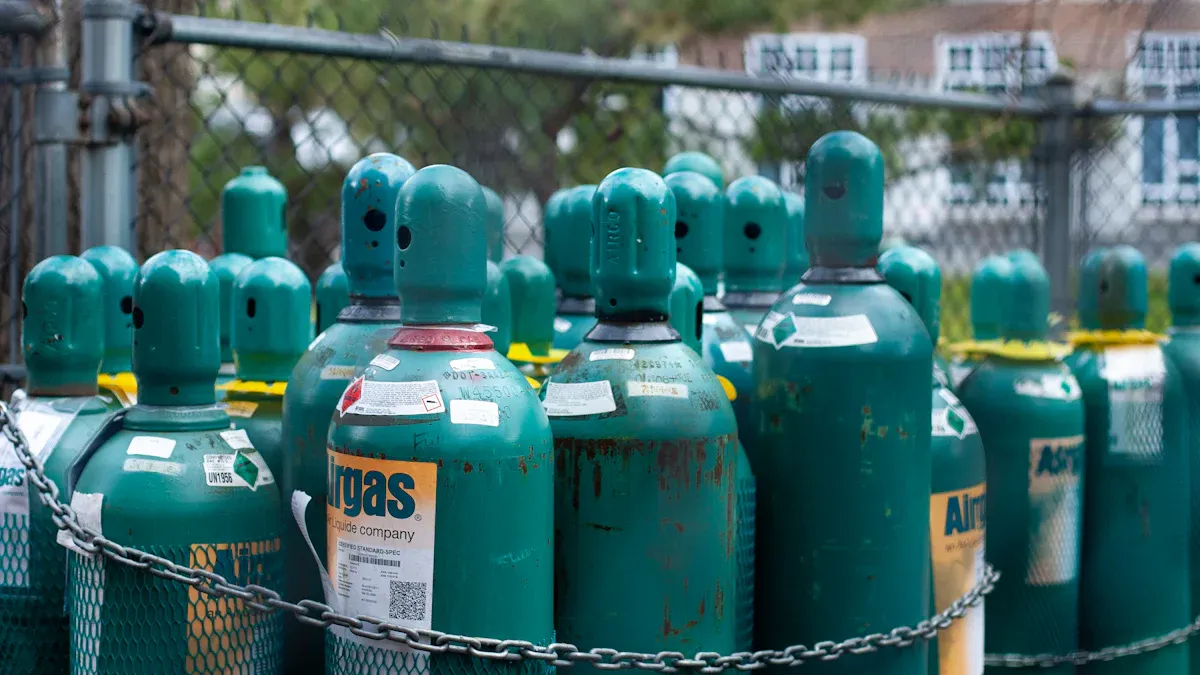
Risks of Improper Gas Storage
You face serious risks when you do not follow safety regulations for storing hazardous materials. Improper storage of hazardous chemicals can turn gas cylinders into dangerous projectiles. High-pressure cylinders can break loose and cause severe damage, even penetrating walls. Compressed gases can lead to fire, explosion, toxic exposure, and asphyxiation. You must understand these risks to protect your team and facility.
- Fire and explosion hazards threaten your workplace.
- Toxic exposure can harm your health.
- Asphyxiation happens when inert gases displace air.
- Cryogenic liquids can freeze tissue and cause burns.
- Oxidizers accelerate combustion and must stay away from flammable hazardous materials.
- Flammable gases ignite easily and can form explosive mixtures.
- Corrosive gases attack skin and eyes and may be toxic.
- Poison gases require special ventilation and trained personnel.
| Gas Type | Hazards |
|---|---|
| Inert Gases | Can cause asphyxiation by displacing air necessary for life. Examples: Helium, Argon, Nitrogen. |
| Cryogenic Liquids | Extremely cold, can freeze human tissue, cause burns, and create pressure in closed systems. |
| Oxidizers | Accelerate combustion; should be kept away from flammable materials. Examples: Oxygen, Chlorine. |
| Flammable Gases | Easily ignited, can form explosive mixtures with air. Examples: Methane, Propane, Hydrogen. |
| Corrosive Gases | Attack skin and eyes; some are toxic. Examples: Chlorine, Hydrogen Chloride. |
| Poison Gases | Extremely toxic, require special ventilation and trained personnel. Examples: Arsine, Phosphine. |
Gas leaks can cause fires and explosions, especially in older infrastructure. You may suffer injuries from shock waves, debris, or burns. Neglected maintenance, faulty valves, and improper installation increase these risks. You must keep hazardous chemicals and hazardous materials away from heat and ignition sources. Proper ventilation prevents dangerous buildup.
Overview of 2026 Regulatory Requirements
You must follow strict safety regulations for hazardous materials and hazardous chemicals in 2026. Regulatory compliance means you meet OSHA and NFPA standards. OSHA requires flammable storage cabinets to limit internal temperatures during fire tests. Cabinets must use No. 18 gauge sheet steel, be double-walled, and have tight joints. You need a three-point lock and a raised door sill.
- Medical gas storage cabinets must comply with NFPA Code 99, Code 101, and Code 30.
- Cabinets protect cylinders from theft, damage, and tampering.
- Only authorized personnel can access lockable cabinets.
- Securall oxygen gas cylinder storage cabinets meet NFPA and OSHA standards.
- Cabinets shield cylinders from heat, sparks, and flame.
In 2026, regulatory requirements have increased. You see more safety regulations and compliance checks for hazardous materials. The focus on workplace safety and environmental protection has intensified. You must keep traceable documentation and follow harmonized standards. Automation and remote monitoring help you manage hazardous chemicals and hazardous materials more efficiently.
Tip: Always review your facility’s regulatory compliance protocols to ensure you meet the latest safety regulations for hazardous materials.
Comparing Gas Storage Cabinet Options: Regulatory Compliance and Best Practices
Identifying Gas Types and Storage Needs
You need to start by identifying the gas types you use in your facility. This step helps you choose the right cabinets and ensures you follow comparing gas storage cabinet options: regulatory compliance and best practices. Each gas has unique storage needs. You must consider reservoir quality, effective seals, proximity to markets, and infrastructure suitability. These factors help you select cabinets that protect your gases and keep your workplace safe.
| Factor | Description |
|---|---|
| Reservoir Quality | Must have sufficient porosity and permeability for effective storage. |
| Effective Seals | Necessary to prevent gas loss and ensure recoverability. |
| Proximity to Markets | The reservoir should be close to gas markets for economic viability. |
| Infrastructure Suitability | Existing infrastructure must be adaptable for gas injection and production. |
You must review these factors before you select lab flammable cabinet or corrosive storage cabinets. This process ensures you meet regulatory compliance and best practices.
Flammable Gases
You handle flammables with care. You must store flammable gases in lab flammable cabinet units that meet comparing gas storage cabinet options: regulatory compliance and best practices. Cabinets must be secure and well-ventilated. You use chains or straps to prevent cylinders from falling. You check protective caps before moving cylinders. You transport cylinders in baskets to avoid accidents. You schedule regular maintenance to keep cabinets and equipment in good condition.
| Best Practice | Description |
|---|---|
| Proper Storage | Store flammable gas cylinders securely in well-ventilated areas, using chains or straps. |
| Handling Procedures | Verify that the protective cap is secure before moving cylinders; use a basket for transport. |
| Regular Maintenance | Schedule inspections to ensure equipment is functioning properly and cylinders are intact. |
You must follow these steps every day. You keep flammables away from heat and ignition sources. You choose lab flammable cabinet units that meet all safety standards.
Toxic and Corrosive Gases
You protect your team from toxic and corrosive gases by using cabinets designed for safety. You install proper ventilation to reduce airborne concentrations. You provide personal protective equipment to prevent skin and eye contact. You select specialized cabinets that contain corrosive materials. You set up emergency facilities like drenching or flushing stations. You use gas monitoring systems with automatic shut-offs and alarms.
- Proper ventilation reduces airborne concentrations of toxic and corrosive gases.
- Personal protective equipment prevents skin and eye contact.
- Specialized storage equipment contains corrosive materials safely.
- Emergency facilities provide immediate treatment for accidental exposure.
- Gas monitoring systems with automatic shut-offs and alarms enhance safety.
You must use cabinets that meet comparing gas storage cabinet options: regulatory compliance and best practices. You keep flammables and toxic gases in separate lab flammable cabinet units. You choose corrosive storage cabinets for corrosive gases. You follow best practices to protect your team and your facility.
Inert and Compressed Gases
You work with inert and compressed gases every day. These gases may seem harmless, but they can create serious hazards if you do not store them properly. Inert gases, like nitrogen and argon, do not burn or react easily. However, they can push oxygen out of the air and cause suffocation. Compressed gases are stored under high pressure. If a cylinder leaks or falls, it can become a dangerous projectile.
You must follow strict rules when storing these gases. Industry standards, such as ANSI/CGA P-18-2020, give you clear guidelines for handling bulk inert gas systems. OSHA sets safety standards for compressed gas cylinders. These standards cover labeling, storage, handling, transport, inspection, training, and emergency procedures. NFPA 55 focuses on fire and life safety. It tells you how to store cylinders, how far to keep them from buildings, and what kind of ventilation you need.
Tip: Always check the label on each cylinder. Make sure you know what gas is inside and what hazards it brings.
You should follow these best practices for safe storage:
- Store cylinders in well-ventilated areas, away from heat and direct sunlight.
- Keep cylinders upright and secure them with chains or straps.
- Inspect cylinders regularly for leaks, rust, or damage.
- Label every cylinder with the gas name and hazard warnings.
- Train all employees on the hazards and safe handling of compressed gases.
- Set up clear emergency procedures and make sure everyone knows them.
| Safety Feature | Why It Matters |
|---|---|
| Ventilation | Prevents gas buildup and reduces suffocation risk |
| Secure Storage | Stops cylinders from falling or rolling |
| Regular Inspection | Finds leaks or damage before accidents happen |
| Proper Labeling | Helps you identify hazards quickly |
You protect your team by following these rules. You keep your facility safe and meet all regulatory requirements. When you treat inert and compressed gases with respect, you avoid accidents and create a safer workplace.
Selecting the Right Gas Storage Cabinet for Compliance and Safety
Material and Construction Standards
You need to choose safety cabinets that meet strict material and construction standards. These standards help you protect your team and facility. Steel is the best material for chemical storage cabinets. You must use steel with a minimum thickness of 0.0478 inch. This thickness gives you strong containment and prevents leaks. Double-walled cabinets with a 1.5-inch airspace provide extra containment and insulation. Tight-fitting joints and self-closing doors keep hazardous gases inside. You must use cabinets with liquid-tight bottoms to a height of at least 2 inches. This feature stops spills and improves containment.
| Requirement | Details |
|---|---|
| Construction Material | Steel, minimum thickness 0.0478 inch (1.2 mm) |
| Cabinet Design | Double-walled, 1.5-inch airspace, tight joints, self-closing doors |
| Liquid Storage | Liquid-tight bottoms, minimum height 2 inches (51 mm) |
| Warning Markings | Red letters on contrasting background: HAZARDOUS—KEEP FIRE AWAY |
You must mark safety cabinets with clear warnings. Red letters on a contrasting background tell everyone about fire hazards. You protect your team by using proper storage practices. You also use gas cylinder storage buildings to shield cylinders from moisture and temperature extremes. When you store toxic gases, you install exhaust fans for ventilation. You keep gas cylinders upright in specialized racks. These practices help you meet compliance and improve safety.
Tip: Always check that your chemical storage cabinets have the right markings and construction features before you use them.
Capacity and Configuration
You must select safety cabinets with the right capacity and configuration. Overcrowding leads to safety violations and increases risks. You avoid this by choosing cabinets sized for your needs. You also consider future growth but do not oversize. Oversizing wastes space and reduces efficiency. You use proper storage practices to keep your workplace safe.
You follow standards from OSHA, NEC, and UL. These standards reduce risks of arc flash and component failure. Non-compliant cabinets cause more unplanned outages and cost manufacturers money. Properly grounded and insulated safety cabinets extend service life by up to 12 years. You avoid using indoor-rated cabinets outdoors. Moisture can get inside and cause short circuits. You choose the right IP rating for corrosive environments. The wrong rating speeds up equipment degradation. You know that 28% of industrial downtime comes from poor enclosure protection.
- Choose cabinets sized for your needs.
- Avoid overcrowding and safety violations.
- Consider future growth but avoid oversizing.
- Use proper storage practices for chemical storage.
- Follow standards for grounding and insulation.
- Select the right IP rating for your environment.
You keep your chemical storage cabinets organized. You use racks and shelves to separate gas types. You label each section for easy identification. You make sure every cabinet meets containment and compliance standards.
Fire Resistance and Containment Features
You must use safety cabinets with strong fire resistance and containment features. Fire protection is essential for chemical storage. Double-walled construction and airspace insulation slow down heat transfer. Self-closing doors keep fire out and contain hazardous gases. Liquid-tight bottoms stop spills from spreading. You use cabinets with fire-resistant coatings and seals. These features improve containment and protect your facility.
You place safety cabinets away from heat and ignition sources. You install cabinets in well-ventilated areas. You use exhaust fans to remove dangerous fumes. You check fire protection systems regularly. You keep emergency equipment nearby. You follow best practices for containment and fire safety.
- Double-walled construction slows heat transfer.
- Self-closing doors contain fire and hazardous gases.
- Liquid-tight bottoms prevent spills from spreading.
- Fire-resistant coatings and seals improve containment.
- Proper placement and ventilation increase safety.
You use chemical storage cabinets that meet all fire protection standards. You inspect cabinets often and repair any damage. You train your team to use safety cabinets correctly. You follow containment practices every day. You keep your facility safe and meet compliance requirements.
Note: Fire resistance and containment features are not optional. You must use them to protect your team and your workplace.
Meeting Regulatory Compliance: OSHA, NFPA, and Local Fire Codes
Key Standards and Codes (OSHA, NFPA, Local Fire Codes and Health Regulations)
You must follow strict rules to keep your gas storage cabinets safe. OSHA standards set the basic requirements for workplace safety. You need to use cabinets that meet OSHA standards for construction, labeling, and fire resistance. NFPA codes give you guidelines for fire protection and life safety. NFPA 55 tells you how to store compressed gases and how to keep them away from ignition sources. Local fire codes add extra rules based on your city or state. Health regulations protect workers from exposure to hazardous gases.
You should check these standards before you buy or install any cabinet. Each code covers different parts of safety. OSHA standards focus on worker protection. NFPA codes help you prevent fires and explosions. Local fire codes may require special ventilation or emergency equipment. Health regulations make sure you keep toxic gases away from people.
| Standard or Code | What It Covers | Why It Matters for Safety |
|---|---|---|
| OSHA Standards | Cabinet construction, labeling, fire resistance | Protects workers from hazards |
| NFPA Codes | Fire protection, storage, ventilation | Prevents fires and explosions |
| Local Fire Codes | Placement, emergency access, ventilation | Meets local safety needs |
| Health Regulations | Exposure limits, protective equipment | Keeps workers healthy |
Tip: Always check the latest version of each code. Rules change often, and you must stay up to date to keep your facility safe.
Certification and Labeling Requirements (FM, UL)
You need to use cabinets with proper certifications and labels. FM and UL are two groups that test and certify safety cabinets. FM stands for Factory Mutual. UL stands for Underwriters Laboratories. These groups check cabinets for fire resistance, construction quality, and safety features. You must look for FM or UL marks on every cabinet.
Labels help you identify hazards quickly. You should use clear warning signs on each cabinet. Labels must show the type of gas stored, the hazard level, and emergency instructions. You must keep labels clean and easy to read. If a label fades or gets damaged, you need to replace it right away.
- FM and UL marks show that your cabinet meets strict safety standards.
- Labels help you find hazards and follow emergency procedures.
- You must check labels during every inspection.
| Certification | What It Means | How It Helps Safety |
|---|---|---|
| FM | Cabinet passed fire tests | Reduces fire risk |
| UL | Cabinet meets construction standards | Improves durability and safety |
| Proper Labeling | Shows hazards and instructions | Guides safe handling |
Note: Cabinets without FM or UL certification may not protect you during a fire. Always choose certified products for maximum safety.
Documentation and Recordkeeping
You must keep detailed records to show compliance with safety rules. Regulators want to see calibration logs for gas detection systems. You need inspection reports for every cabinet. Training certifications prove that your team knows how to handle gases safely. You must keep these documents current and ready for audits.
Incident reports are important for safety improvement. You should record every near-miss, leak, or emergency drill. These reports help you find weak spots and fix them before accidents happen. Regulators may ask for these records during inspections.
You must keep records for at least five years. This rule applies to monitoring events and compliance options at bulk gasoline terminals and pipeline breakout stations. Good recordkeeping helps you meet regulatory standards and keeps your facility safe.
Callout: Keep all records organized and easy to find. You can use folders, binders, or digital files. If you lose a record, you may fail an audit and risk fines.
- Calibration logs for detection systems
- Inspection reports for cabinets
- Training certifications for staff
- Incident reports for leaks, near-misses, and drills
- Records kept for at least five years
You protect your team and your facility by keeping accurate records. You show regulators that you follow all safety rules. You improve your safety practices by reviewing your records often.
Installation and Placement Best Practices for Safety and Compliance

Location and Accessibility
You need to choose a location for your gas storage cabinets that supports safety and easy access. Place cabinets in areas where you can reach them quickly during an emergency. Avoid blocking exits or emergency equipment. Keep cabinets away from high-traffic zones to reduce the risk of accidental bumps or damage. Store cabinets on a flat, stable surface to prevent tipping. Make sure you have enough space around each cabinet for inspections and maintenance. Good placement helps you respond fast and keeps your team safe.
Tip: Always keep a clear path to your gas storage cabinets. Quick access can make a big difference during an emergency.
Ventilation and Environmental Controls
Proper ventilation is a key part of safety for gas storage cabinets. Install a ventilation system that draws air from outside through the top of the cabinet. This setup lets heavy vapors exit through the bottom vent, which connects to an exhaust system. Use rigid metal pipes because they can handle high temperatures. Choose blowers that shut down automatically if there is a fire. Follow standards like NFPA 91 and NFPA 70 when you design your ventilation. These steps help remove dangerous vapors and keep the air safe for everyone.
A good ventilation system also controls temperature and humidity. Keep cabinets away from direct sunlight and heat sources. This protects the gases and the cabinet itself. Regularly check that your ventilation works well and meets all safety standards.
Securing Cabinets and Emergency Access
You must secure your gas storage cabinets to prevent accidents. Use a noncombustible, two-point restraint system, such as chains at the top and bottom, to hold cylinders in place. You can also use racks or approved strapping devices. Always store cylinders upright and lock the cabinet doors to stop unauthorized access. Choose cabinets made from fire-resistant and chemically resistant materials, like steel. Limit the number of cylinders in each cabinet to three for better safety.
- Inspect cabinets and cylinders often.
- Check pressure gauges and valves.
- Train your team on emergency routes and equipment.
Make sure you can open cabinets quickly in an emergency. Automatic locking doors help keep your facility secure but should allow fast access when needed. Regular inspections and training keep your safety procedures strong.
Maintenance and Inspection Routines for Regulatory Compliance
Regular Inspection Checklist
You need to inspect your gas storage cabinets often to maintain safety and compliance. A flammable cabinet inspection checklist helps you spot problems before they become hazards. You check that storage containers hold flammable materials and have clear labels. You look at the cabinet itself to make sure it stays in good condition and stays organized. You examine the storage location to see if the area reduces fire risks. You also review spill containment solutions to prevent leaks from spreading.
- Storage containers: Confirm proper containment and labeling.
- Storage cabinet: Inspect for damage and correct organization.
- Storage location: Check for fire hazards and clear access.
- Spill containment: Make sure trays and barriers are in place.
Tip: Use your flammable cabinet inspection checklist every month to keep your facility safe.
Cleaning and Upkeep Procedures
You keep your cabinets clean to support safety and prevent accidents. You schedule deep cleaning of tanks to remove buildup that affects fuel performance. You use fuel recirculation systems and proper venting to keep fuel stable. You change fuel filters and inspect dispensing systems to stop blockages. You set up water separators and drain water regularly to protect fuel integrity. You follow permit requirements for tank cleaning and wear personal protective equipment for safety. You remove sludge and residue from the outside and clean the inside of tanks. You focus on spill containment during every cleaning step.
- Deep cleaning removes buildup and supports safety.
- Recirculation and venting maintain fuel stability.
- Filter changes and system checks prevent blockages.
- Water separators and drainage protect fuel quality.
- PPE and permits keep cleaning safe.
- Spill containment stops leaks from spreading.
Handling Repairs and Replacements
You repair or replace damaged cabinets right away to maintain safety. You check for broken doors, faulty locks, or worn seals. You fix problems quickly to avoid risks. You use spill containment trays when you work on cabinets to catch leaks. You keep extra parts ready for fast repairs. You train your team to spot issues and report them. You follow flammable cabinet safety points to guide every repair. You document all repairs and replacements for compliance.
| Repair Task | Action Needed | Safety Focus |
|---|---|---|
| Broken doors | Replace or fix immediately | Prevent accidents |
| Faulty locks | Repair for secure storage | Stop unauthorized access |
| Worn seals | Replace to stop leaks | Improve spill containment |
Callout: Quick repairs and spill containment keep your facility safe and compliant.
Staff Training and Safety Protocols for Compliance
Training Requirements for Personnel
You must train your team before anyone handles gas storage cabinets. Training helps everyone understand the risks and follow safety rules. All personnel need workplace gas safety training. This training covers compressed gas safety protocols and fire prevention measures. You learn how to follow storage OSHA guidelines. You also get instruction on gas cylinder maintenance and storage improvement strategies. These steps help you minimize risks and keep your facility safe.
- Complete workplace gas safety training.
- Learn compressed gas safety protocols.
- Study fire prevention measures for gas cylinders.
- Follow storage OSHA guidelines.
- Practice gas cylinder maintenance and storage improvement.
Remember: Training is not a one-time event. You need regular refresher sessions to keep your skills sharp.
Emergency Response Procedures
You must prepare for emergencies before they happen. Clear procedures help you respond quickly and protect your team. Follow these steps if you face an incident with gas storage cabinets:
- Assess the situation from a safe location.
- Alert all personnel and evacuate if hazards are severe. Activate fire alarms and call DPS.
- Turn off the gas supply if safe. If not, evacuate and call for help.
- Evacuate and activate fire alarms for fires near gas cylinders.
- Leave immediately if low oxygen or high CO2 alarms sound.
- For gas leaks, evacuate and call DPS for toxic gases. For flammable gases, turn off the cylinder valve if safe, or evacuate.
- Evacuate and call DPS for catastrophic failures.
- Inform first responders about the gas type and actions taken. Stay on-site until the situation is controlled.
Tip: Practice evacuation drills often so everyone knows what to do during an emergency.
Ongoing Safety Culture
You build a strong safety culture by making safety part of every day. Communication, training, and inspections help you keep your workplace safe. Weekly safety briefings raise awareness among employees. You showcase best practices in occupational and process safety. Seminars, evacuation drills, and health checks engage your team.
| Strategy | Description |
|---|---|
| Effective Communication | Enable constant communication with lone workers to foster a culture of safety and transparency. |
| Worker Training | Train employees on fuel hazards, handling, and emergency procedures, with ongoing refresher sessions. |
| Regular Inspections | Conduct routine checks on fuel systems to detect issues early and ensure compliance with safety regulations. |
Callout: When you focus on safety every day, you protect your team and your facility.
You improve safety by integrating smart features and advanced fire suppression in your gas storage cabinets. Digital monitoring and IoT systems help you detect incidents faster and keep gas levels safe. Modular designs make storage safer for each gas type. You build supply-chain resilience by qualifying secondary suppliers. You must review and update your protocols often. Safety depends on ongoing compliance and proactive measures.
Stay alert and make safety your top priority every day.
Actionable Best Practices:
- Use real-time monitoring for gas levels and leaks.
- Choose modular cabinets for specific gas types.
- Secure alternative material sources for supply-chain safety.
FAQ
What is the most important safety feature for gas storage cabinets?
You need cabinets with double-walled steel construction. This feature protects against fire and keeps gases contained. Look for self-closing doors and liquid-tight bottoms. These features help you prevent accidents and meet safety standards.
How often should you inspect gas storage cabinets?
You should inspect cabinets every month. Use a checklist to look for damage, leaks, or missing labels. Regular inspections help you spot problems early and keep your facility safe.
Can you store different gas types in the same cabinet?
You must keep incompatible gases separate. Flammable, toxic, and corrosive gases need their own cabinets. Use clear labels and organize storage to avoid mixing hazards.
What certifications should your gas storage cabinets have?
You need cabinets with FM or UL certification. These marks show that your cabinets meet fire resistance and construction standards. Always check for certification labels before you buy.
How do you respond to a gas leak emergency?
Alert everyone and evacuate the area.
Turn off the gas supply if it is safe.
Call emergency services.
Inform responders about the gas type and actions taken.


