
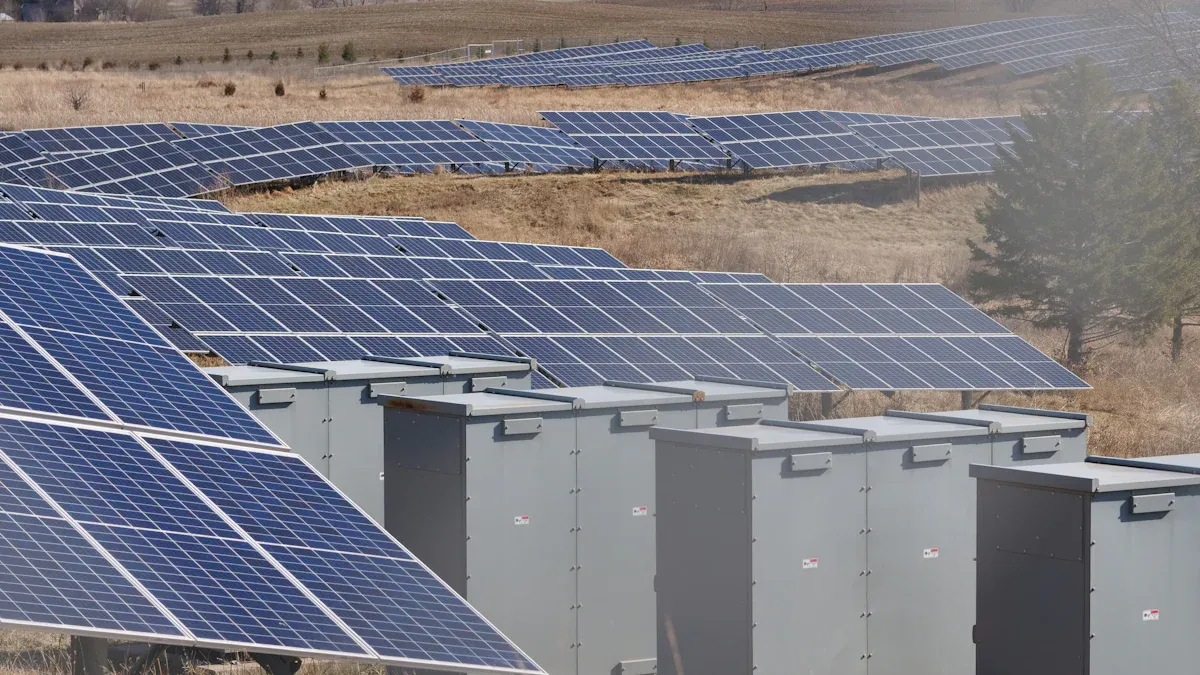
You want to match your power needs with the right battery cabinet to keep your system safe and reliable. Accurate power assessment helps you avoid wasted energy and high costs. If you misjudge your power demands, you may face battery failures or lose critical energy backup. Battery Cabinet Systems: How to Select the Right Storage Solution for Power Management guides you to choose a cabinet that meets your power requirements and keeps your energy secure.
Battery Cabinet Systems: How to Select the Right Storage Solution for Power Management

Identifying Your Power and Energy Storage Needs
You need to start by understanding your power requirements before choosing battery cabinet systems: how to select the right storage solution for power management. This step helps you avoid buying a battery cabinet that is too small or too large for your needs. When you look at commercial battery storage, you should focus on several important factors:
- Load profile and peak characteristics show you when your power use is highest.
- Project objectives help you decide what problem you want to solve with battery storage.
- Electricity tariff structure, such as time-of-use rates and demand charges, affects your costs.
- Existing renewable generation, like solar energy storage, can change how much battery storage you need.
- Technical design constraints limit your choices for battery cabinet systems: how to select the right storage solution for power management.
- Grid rules and interconnection conditions set the standards for connecting battery storage systems.
- Cost–benefit optimization lets you balance price and performance.
Tip: You should work with local fire officials and policymakers to make sure your battery cabinet systems: how to select the right storage solution for power management meet safety standards. Real-time testing and simulation help you see how battery management systems work. These tests show you how much energy you have left and help you plan for maintenance.
Calculating Daily Energy Consumption and Peak Loads
You must know how much energy you use each day and when your power demand is highest. This information helps you size your battery cabinet systems: how to select the right storage solution for power management. You can follow these steps:
- Gather data on daily energy use, peak usage hours, and seasonal changes.
- Calculate daily energy needs in kilowatt-hours (kWh) and maximum power demand in kilowatts (kW).
- Use this formula for battery capacity:
Battery capacity (kWh) = Daily energy needs (kWh) × Days of autonomy - Find the power rating with:
Power rating (kW) = Max demand (kW) + Safety margin - Consider battery efficiency and depth of discharge (DoD) for accurate sizing.
- Make sure your battery cabinet systems: how to select the right storage solution for power management work with your current electrical setup and follow local rules.
You can use energy monitoring tools to track your energy habits. Add a safety margin of 10-20% for unexpected spikes in power demand. Most lithium-ion batteries have an efficiency between 80-95%. Keep the depth of discharge at 80% or less to make your battery last longer.
| Study | Strategy | Key Findings |
|---|---|---|
| Zheng et al. | Constant and seasonal peak shaving | Charging right after each peak at a dynamic rate. |
| Oudalov et al. | Dynamic programming | Best for large users with predictable demand. |
| Chua et al. | Experimental peak-shaving | Adaptive control for surprise peaks. |
| Lange et al. | Real-control operation | Used 1-minute load data for lab tests. |
| Zhu et al. | Predictive control | Charged during low demand; tested in simulations. |
| Ebrahimi and Hamzeiyan | Control algorithm | Cut peak demand by up to 28.12%. |
| Lucas and Chondrogiannis | Simulation at medium voltage | Charged below a 100 kW threshold. |
| Reihani et al. | Load forecasting | Charged with extra renewable energy in the morning. |
| Rahimi et al. | Sliding thresholds | Used a 24-hour load forecast. |
| Hosseina and Bathaee | Dual purpose | Focused on peak shaving and load leveling. |
| Agamah and Ekonomou | Bin packing and subset sum algorithms | Studied battery storage in UK networks. |
You should list all appliances and their use during outages to get a realistic daily energy number. This step helps you understand usable capacity and depth of discharge, which are key for battery longevity.
Determining Backup Duration and Critical Loads
You need to know how long your battery cabinet systems: how to select the right storage solution for power management must provide backup power. Start by adding up the power use of all critical loads. Multiply this number by the hours you want backup. This calculation gives you the total battery storage needed.
- Backup duration (hours) = Battery capacity (kWh) / Power consumption (kW)
- Backup time (hours) = (Battery capacity (Ah) × Voltage (V) × Efficiency) / Load power (W)
- Required capacity = (Daily energy Wh × Desired backup days) / Battery efficiency
You should focus on critical loads like emergency lights, computers, and medical equipment. These loads need reliable battery storage systems. If you want your battery cabinet systems: how to select the right storage solution for power management to last through long outages, you must plan for enough storage. You should also think about future needs and possible growth in energy use.
Note: Good energy management systems help you track backup needs and adjust battery storage over time. This approach keeps your commercial battery storage reliable and ready for emergencies.
You can now see how battery cabinet systems: how to select the right storage solution for power management help you match your power needs with the right solution. By following these steps, you make sure your battery storage systems provide safe, reliable, and cost-effective energy storage for your facility.
Translating Power Requirements into Battery Energy Storage System Specifications
Sizing Your Battery Energy Storage System (kWh and kW)
You need to size your battery energy storage system correctly to match your power needs. Start by looking at your daily energy use and your highest power demand. If you choose a battery that is too small, you may run out of backup power during an outage or when your power use spikes. If you pick a battery that is too large, you may spend more money than needed and take up extra space.
You can use simple formulas to help with battery sizing. These formulas show you how much battery storage you need for your solution:
| Formula | Description |
|---|---|
| Energy Capacity (kWh) = Average Power Demand (kW) × Duration of Supply (h) | Calculates the total energy capacity required in kWh. |
| Number of Batteries = Total Energy Capacity (kWh) ÷ (Battery Capacity (kWh) × DoD) | Determines the number of battery units needed based on capacity and depth of discharge. |
| Power Output (kW) = Peak Load Demand (kW) | Indicates the required power output based on peak load demand. |
| Effective Capacity = Energy Capacity × Efficiency | Accounts for efficiency losses during charging and discharging. |
| Battery Capacity (kWh) = Daily Energy Need (kWh) × Days of Backup × Safety Factor (1.2-1.5) ÷ Usable Capacity (%) | A basic formula for battery sizing considering backup needs and safety factors. |
When you size your battery storage, always include a safety factor. This helps you prepare for unexpected changes in power use. You should also check the efficiency of your battery system. Most batteries lose some energy during charging and discharging. If you want your battery storage to last longer, keep the depth of discharge within safe limits.
If you undersize your battery, you may not have enough energy for your critical loads. If you oversize your battery, you may pay more and wait longer to see savings. You should balance cost, space, and performance for the best solution.
- An undersized battery can lead to power shortages during outages or high demand.
- Oversizing a battery may increase costs and take up more space without big benefits.
- The main drawback of oversizing is a higher upfront cost, which can delay your payback.
- Undersizing risks leaving you without power during long grid failures.
Assessing Scalability and Future Expansion
You should think about scalability when you choose a battery storage solution. Scalability means you can add more battery storage as your energy needs grow. A modular battery solution lets you expand your system without replacing everything. This saves you money and reduces downtime.
Here are some factors to consider for future expansion:
- You can expand capacity step by step without a full system overhaul.
- You get faster installation and less downtime.
- You pay lower replacement costs over time.
- Modular systems, like racks, adapt better to changing energy needs and improve scalability.
- Some cabinets may need full replacement if your energy needs grow, which increases costs and complexity.
Leading battery cabinet manufacturers now design their products for easy expansion. They use advanced battery management systems and support integration with renewable energy sources. Many companies also offer custom solutions for special needs. These trends show a move toward sustainability and digital integration, including AI and IoT.
You should choose a battery storage system that supports easy integration with new technologies. This helps you keep your energy storage up to date and ready for future growth.
Evaluating Safety Features and Certifications
Safety is very important when you select a battery storage system. You should look for safety features that meet international standards. These features protect your battery, your facility, and the people who use the system.
Here are some key safety features and the standards that cover them:
| Safety Feature | Relevant Standard |
|---|---|
| Safe operation of battery systems | IEC 62485-2 |
| Guidelines for lithium-ion batteries | Emerging Technologies Standards |
| Standards for lead-acid batteries | UPS and Emergency Systems |
| Fire safety management | N/A |
| Gas detection systems | N/A |
| Containment systems | N/A |
| Thermal management | N/A |
You should also check for certifications that show your battery storage meets safety rules. These certifications are widely recognized:
| Certification | Description |
|---|---|
| UL 1973 | Safety Standard for Battery Energy Storage Systems in the U.S. |
| UL 9540 & UL 9540A | Certification for entire energy storage systems, ensuring safe integration and operation. |
| IEC 62619 | International safety standard for lithium-ion batteries used in energy storage. |
| IEC 62133 | Safety requirements for rechargeable batteries in various applications. |
| UN 38.3 | Mandatory transportation safety certification for lithium batteries. |
| CE | Confirms compliance with EU safety, health, and environmental protection requirements. |
| RoHS | Ensures electrical products do not contain harmful substances. |
You should always ask your vendor about these safety features and certifications. This helps you make sure your battery storage solution is safe, reliable, and ready for integration with your power system. Good safety features also improve performance and protect your investment.
Ensuring Compatibility with Existing Energy Storage Systems
You need to make sure your new battery cabinet works well with your current energy setup. This step helps you avoid problems and keeps your power running smoothly. You should check how your battery cabinet connects to your electrical system. You must look at the wires, voltage, and safety devices. These parts help your energy storage system work with the grid and your building.
You should follow important steps to match your battery cabinet with your existing storage and infrastructure. The table below shows what you need to check:
| Requirement | Description |
|---|---|
| Integration with Electrical Infrastructure | You must connect your battery cabinet to the grid and your building. This step makes sure your system works with your current setup. |
| Site Requirements | You may need extra space for new wires or equipment. Plan for enough room to add or upgrade your storage. |
| Balancing Generation and Demand | Your battery cabinet helps balance how much electricity you use and produce. This keeps your power stable and reliable. |
You should also follow rules for connecting your battery cabinet to the grid. These rules tell you what voltage to use, how to protect your system, and how to send information between devices. You may find these rules different in each region. You need to check local standards before you install your storage.
- You must follow interconnection standards for your battery cabinet.
- These standards tell you what voltage, protection, and communication systems to use.
- You may find it hard to meet these standards because they change from place to place.
You should talk to your installer or vendor about your current energy storage system. Ask if your new battery cabinet will work with your old storage. You may need to upgrade some parts or add new devices. You should plan for future changes in your energy use. This helps you keep your storage working well as your needs grow.
Tip: Always test your battery cabinet with your current system before you use it every day. This step helps you find problems early and keeps your storage safe.
You can use monitoring tools to check how your battery cabinet and storage work together. These tools show you if your system is running well or if you need to fix something. You should keep records of your tests and upgrades. This helps you track changes and plan for future improvements.
Evaluating Vendors and Energy Storage System Support
Checking Vendor Reputation and Reliability
You should always check the reputation and reliability of vendors before you choose a battery storage solution. Reliable vendors help you avoid problems with your power system and keep your backup running when you need it most. You can use several criteria to compare vendors in the battery cabinet market.
| Criteria | Description |
|---|---|
| Scalability | Can the solution grow with your power and energy needs? |
| Compliance | Does it meet current and future regulations? |
| Innovation | Is the technology ready for future battery storage trends? |
| Long-term ROI | What are the lifecycle costs and benefits for your storage? |
| Vendor Support | What level of technical and after-sales support is available? |
You should look for vendors who offer scalable battery storage solutions and follow all safety rules. Innovative technology helps you keep your energy system up to date. Good vendor support makes sure your power stays reliable.
Understanding Warranties and Service Agreements
You need to understand warranty terms before you buy a battery storage system. Warranties protect your investment and give you peace of mind about your backup power. Most battery warranties last from 5 to 15 years. Longer warranties show that manufacturers trust their battery technology.
- Standard warranty terms for battery cabinet systems usually cover 10 to 20 years.
- Warranties may include clauses about cycles or throughput, which means the warranty could end sooner if you use the battery more often.
- Manufacturers often guarantee a certain percentage of battery capacity at the end of the warranty.
- Many warranties list the number of cycles a battery can handle before losing capacity.
- Some warranties cover a Depth of Discharge of 70%, so you can use most of your battery storage without losing coverage.
Service agreements help you keep your battery storage solution working well. Long-term service agreements manage risks in energy storage systems. However, many agreements only check battery performance once a year. You should use data analytics to track battery storage every day. This helps you find problems early and keep your power system reliable.
Assessing Technical Support and After-Sales Service
You should check what technical support and after-sales service vendors offer for battery storage solutions. Good support helps you fix problems fast and keeps your energy storage running smoothly. Leading vendors provide many support options.
| Vendor | Support Options |
|---|---|
| Charles Industries | Support, Technical & Emergency Support, Resources |
| Global Power Supply | Phone support, Contact Us |
| C&D Technologies | Customized design support, Request a Cabinet Quote |
| Unified Power | 24/7 Emergency Support, Request Service |
You should choose vendors who offer emergency support and easy access to help. Fast service keeps your backup power ready and your battery storage safe. Good technical support helps you solve problems and plan for future energy needs.
Installation and Maintenance of Battery Cabinet Systems

Site Preparation, Space, and Environmental Considerations
You need to prepare your site carefully before installing a battery cabinet. Start by making sure the area has proper ventilation. This step helps control temperature and keeps your power system safe. Always follow the National Electric Code for battery storage, especially for ventilation and temperature control. Check the battery manufacturer’s manual for specific storage needs. Use protective cabinets for lithium-ion batteries to lower fire risks. Work with a qualified electrician to meet grounding and safety requirements.
Proper storage conditions matter for battery performance. Temperature and humidity control systems in cabinets prevent overheating and moisture buildup. Too much moisture can damage insulation and cause short circuits. Both high and low temperatures can reduce battery performance. Good thermal management keeps your power system running at its best.
Installation Best Practices for Power and Energy Storage
You should follow best practices during installation to keep your power system safe and efficient.
| Best Practice | Description |
|---|---|
| Compartmentalization | Place batteries in strong cabinets, separated to stop fire from spreading. |
| Fire-resistant Enclosures | Use fire-resistant cabinets to control fires and save energy. |
| Fire Suppression Systems | Add fire suppression to stop small fires from growing. |
| Deflagration Panels | Install panels to direct blasts upward and protect people. |
| Emergency Stop Function | Make sure you have a manual stop for emergencies. |
| Compliance with Standards | Meet IEC and UL standards to prevent short circuits. |
Avoid common mistakes like sizing the battery system incorrectly or picking the wrong battery type. Match all components well and plan for future power needs. Always ensure proper grounding and overcurrent protection.
Maintenance Scheduling and Safety Protocols
Regular maintenance keeps your battery cabinet system reliable and ready to deliver backup power. Set a charging schedule to keep batteries healthy. Replace batteries on time to avoid sudden failures. Inspect and clean the system every month to prevent corrosion and poor conductivity.
| Test | Frequency |
|---|---|
| Overall float voltage at battery terminals | Monthly, Quarterly, Yearly |
| Charger output current and voltage | Monthly, Quarterly, Yearly |
| Ambient Temperature | Monthly, Quarterly, Yearly |
| Cell/unit internal ohmic values | Quarterly, Yearly |
| AC ripple current and/or voltage | Yearly |
Follow safety protocols during maintenance. Always wear personal protective equipment like face shields and gloves. Train everyone in safe handling. Separate and label batteries by type to avoid chemical reactions. Keep eyewash stations and showers nearby for emergencies.
Tip: Good maintenance and safety habits help your power system last longer and work better.
You can match your power needs with the right battery cabinet by following these steps:
- Identify your critical loads.
- Estimate backup duration.
- Consider solar production.
- Design battery sizing.
- Design inverter sizing.
Accurate assessment helps you optimize performance and adapt to future changes. Safety features and certifications protect your system. You should choose a solution that allows easy expansion. Start by listing your essential devices and checking your energy use. This approach helps you select the best battery cabinet for your needs.
FAQ
How do you know which battery cabinet size fits your needs?
You should check your daily energy use and peak power demand. Use a calculator or ask your installer for help.
Tip: Add a safety margin to avoid running out of power.
What safety features should you look for in a battery cabinet?
Look for fire-resistant enclosures, emergency stop buttons, and certifications like UL 9540 or IEC 62619.
| Feature | Why It Matters |
|---|---|
| Fire-resistant | Prevents fire risk |
| Certification | Ensures safety |
Can you expand your battery cabinet system later?
Yes, many battery cabinets allow you to add more batteries. Choose a modular system for easy upgrades.
- Modular racks
- Stackable units
- Flexible wiring
How often should you maintain your battery cabinet?
You should inspect and clean your battery cabinet every month. Test voltage and check for corrosion.
Regular checks help your system last longer and work better.


