
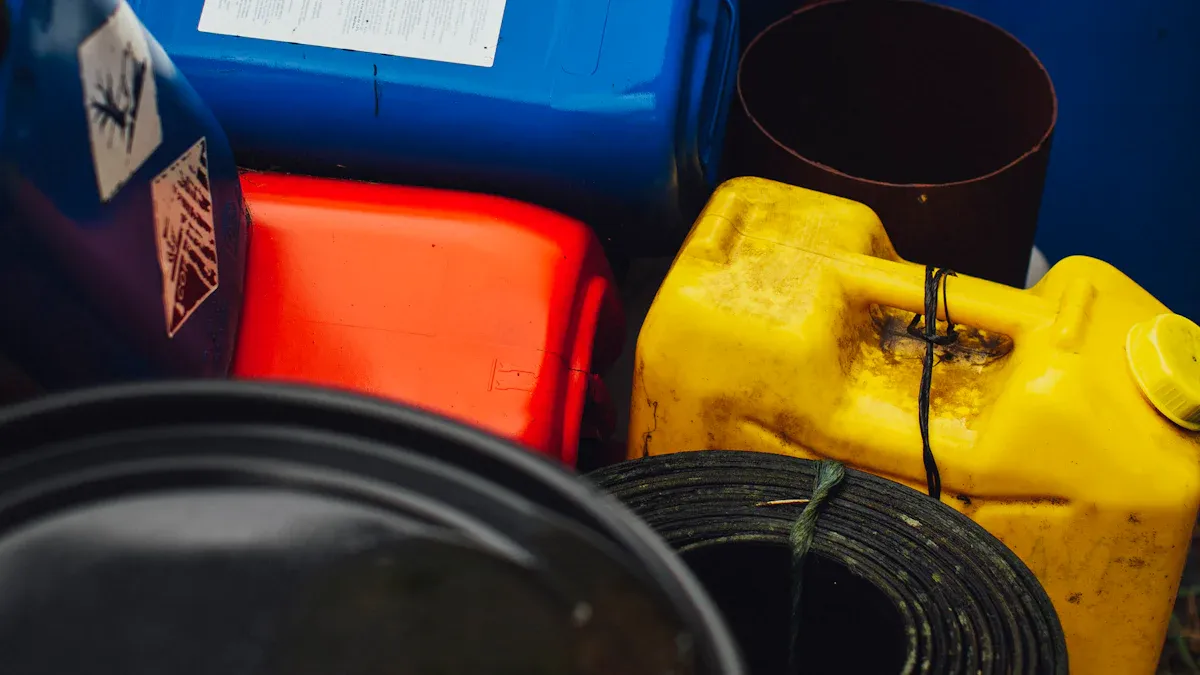
You face real risks if you do not use proper storage for flammable liquids. Many catastrophic accidents in industry happen because of poor storage and handling of these chemicals. Each year, over 4,500 workplace fires start due to flammable liquid storage issues. When selecting the right cabinet for flammable liquids: material, size, and certification play a key role in keeping your workplace safe.
Identifying Flammable Liquids and Storage Needs

Types of Flammable Liquids
You need to know what kinds of flammable liquids you use in your workplace. Many industrial and laboratory settings contain common flammable liquids. These include:
- Gasoline
- Acetone
- Alcohol
Each of these liquids can catch fire easily. You must check the Safety Data Sheets (SDS) for every chemical you store. The SDS will tell you if a liquid is flammable and what its storage needs are. Understanding the hazard class of each liquid helps you choose the right chemical storage cabinet.
You can see how different systems classify flammable liquids by their flash points and boiling points. The table below shows some common classification systems:
| System | Sub-divisions | Core flash-point split* | Extra twist |
|---|---|---|---|
| GHS / CLP | Cat 1–4 | Cat 1 < 23 °C + BP ≤ 35 °C; Cat 4 up to 93 °C | Includes diesel (Cat 3) |
| OSHA 29 CFR 1910.106 | Class I–III | Class I < 100 °F (37.8 °C) | Combustible > 60 °C grouped in Class III |
| NFPA 30 | IA, IB, IC; II, III | Splits Class I by both flash & boiling point | Drives US storage cabinet design |
| ADR/IMDG/IATA | Packing Group I–III | PG I: FP < 23 °C & BP ≤ 35 °C | Same placard for all PGs |
Quantities and Usage Patterns
You must also think about how much of each flammable liquid you store and how often you use it. The amount and frequency of use affect your choice of storage cabinet. Review your chemical inventory to find out which flammable liquids you have and the size of their containers. This step is important for safe chemical storage.
The table below shows the maximum storage quantities for different types of flammable and combustible liquids:
| Type of Liquid | Maximum Storage Quantity |
|---|---|
| Flammable | 25 gallons (outside approved container) |
| Flammable | 60 gallons (flashpoint < 140°F) |
| Combustible | 120 gallons (flashpoint ≥ 140°F) |
You should always follow these limits to reduce risk. If you store large amounts, you need cabinets made from fire-resistant materials. Look for features like self-closing doors and raised sills to help contain spills. These features make storing flammable materials safer and help you meet fire codes.
Tip: Always match your cabinet size and features to your actual usage patterns. This keeps your workplace safe and compliant.
Hazard Classes and Flammable Safety Cabinet Types
Understanding Hazard Classifications
You need to understand how organizations classify flammable liquids. Both OSHA and NFPA use different systems to group these liquids by their risk level. These systems help you know which liquids pose the greatest fire hazard. The table below shows how OSHA and NFPA define their classes and categories:
| Classification | Details |
|---|---|
| NFPA Classes | Class IA, Class IB, Class IC, Class II, Class IIIA, Class IIIB based on flash point and boiling point. |
| OSHA Categories | Category 1, Category 2, Category 3, Category 4, all considered flammable liquids with flash points below 200°F (93°C). |
You can see that both systems use flash point and boiling point to decide the hazard level. Lower flash points mean higher risk. You must check the Safety Data Sheet for each chemical to find its classification. This step helps you choose the right safety cabinet and avoid a fire.
Note: Always treat unknown chemicals as high hazard until you confirm their class.
Matching Flammable Safety Cabinets to Hazard Classes
You must match your safety cabinet to the hazard class of your flammable liquids. Cabinets come in different types to handle different levels of risk. For example, you need a cabinet with extra fire resistance for Class IA or OSHA Category 1 liquids. These liquids ignite easily and create a serious fire hazard.
Look for cabinets with double-wall steel construction and self-closing doors. These features protect you from fire and contain spills. You should also check for clear hazard labels on each cabinet. Labels help everyone in your workplace recognize the danger and store chemicals safely.
If you store less hazardous liquids, you can use cabinets with basic fire protection. Always follow local codes and manufacturer guidelines. This practice keeps you safe and helps you meet regulations.
Tip: Review your chemical inventory often. Update your cabinets if you change the types or amounts of flammable liquids you store.
Selecting the Right Cabinet for Flammable Liquids: Material and Spill Containment
Steel vs. Polyethylene Safety Cabinets
Selecting the right cabinet for flammable liquids: material is one of the most important steps you can take for safety. You need to know how different materials perform. Steel and polyethylene are the two main choices for safety cabinets. Each has unique strengths.
- Steel cabinets give you strong fire protection. They are fire-rated and help keep your chemicals safe during a fire.
- Polyethylene cabinets resist corrosion. You can use them for aggressive chemicals like acids and solvents.
- Steel works best for flammable liquids. Polyethylene helps prevent chemical reactions with harsh substances.
You should always match the cabinet material to the chemicals you store. If you store mostly flammable liquids, steel is the better choice for fire protection purposes. If you handle acids or other aggressive chemicals, polyethylene will last longer and keep you safe.
Here is a table to help you compare the main features of each material:
| Material Type | Key Features | Best For |
|---|---|---|
| High-Density Polyethylene | – Superior corrosion resistance – Seamless construction – Lightweight design | Highly aggressive chemicals (e.g., sulfuric, nitric, hydrochloric acids) |
| Poly-Coated Steel | – Strong steel body – Durable polymer lining – Fire resistance | Storing both corrosives and flammables in separate cabinets |
Tip: Always check the chemical compatibility chart before selecting the right cabinet for flammable liquids: material. This step helps you avoid dangerous reactions.
Spill Containment and Double-Wall Construction
When you choose a cabinet, you must think about how it will contain liquid spills. Selecting the right cabinet for flammable liquids: material also means looking at how the cabinet is built. Double-wall construction and spill containment features keep you safe.
Double-wall cabinets use two layers of steel with a 1.5-inch air space between them. This design gives you extra protection if a fire breaks out. The air space slows down heat transfer, which helps protect the chemicals inside. You also get a leak-proof sill at the bottom of the cabinet. This sill is at least 2 inches high and helps contain liquid spills.
Here is a table that shows the main features of double-wall construction:
| Feature | Description |
|---|---|
| Double Wall Construction | 18-Gauge Double Wall All Welded Construction throughout. |
| Air Space | 1 ½” Air Space throughout the cabinet design. |
| Leak Proof Sill | 2″ Deep leak proof sill to prevent leakage from spills. |
NFPA standards set clear rules for cabinet construction. You must use cabinets made from at least 18-gauge sheet steel. The cabinet must have double walls with a 1.5-inch air space. All joints must be tight, either welded or riveted. The door needs a three-point latch and a raised sill to contain at least 2 inches of liquid. These features help you meet safety codes and keep your workplace safe.
| Requirement Type | Specification |
|---|---|
| Metal Cabinets | Bottom, top, door, and sides must be at least No. 18 gauge sheet steel, double-walled with 1.5 in. air space. |
| Joints must be riveted, welded, or made tight by effective means. | |
| Door must have a three-point latch and a raised sill at least 2 in. high to retain spills. | |
| Wooden Cabinets | Constructed of exterior grade plywood at least 1 in. thick, resistant to fire conditions. |
| Joints must be rabbetted and fastened with wood screws. | |
| Doors must have a latching mechanism and raised sill capable of containing 2 in. of liquid. |
Selecting the right cabinet for flammable liquids: material and construction helps you meet regulations and protect your team. You lower the risk of leaks and fire. You also make sure your cabinet will last for years.
Note: Always inspect your cabinet for damage. Replace any cabinet that cannot contain liquid spills or has lost its fire protection features.
Certification and Compliance for Flammable Liquids Safety Cabinets
OSHA, NFPA, and UL Standards
You must follow strict rules when you store flammable liquids. OSHA, NFPA, and UL set these rules to keep you safe. Each group has its own focus. OSHA gives you legal requirements. NFPA provides best practices for fire safety. UL tests and certifies products for safety.
Here is a table that shows some important OSHA rules for flammable liquids safety cabinets:
| Requirement Type | Details |
|---|---|
| Container Capacity | A container must not exceed 60 U.S. gallons; safety cans can be up to 5 gallons. |
| Storage Limits | No more than 10 gallons of Categories 1, 2, or 3 flammable liquids outside a cabinet; 25 gallons in safety cans. |
| Cabinet Limits | Up to 120 gallons of Categories 1, 2, 3, and 4 in a cabinet; max 60 gallons of Categories 1, 2, and 3. |
| Number of Cabinets | No more than three cabinets in a single fire area. |
NFPA 30 tells you how to build and use cabinets. It requires self-closing doors and strong construction. UL tests cabinets under certain conditions. UL certification means the cabinet passed safety tests, but NFPA covers more details. You should always check that your cabinet meets all compliance requirements.
| Standard | Key Requirements |
|---|---|
| NFPA 30 | Requires specific cabinet construction and self-closing features for flammable liquid storage cabinets. |
| UL Listed | May be tested under limited hazardous conditions, focusing on general safety but not necessarily all specific requirements of NFPA. |
Tip: Always look for both UL and NFPA markings to make sure your cabinet meets the highest safety standards.
Labeling and Approval Ratings
You must label your safety cabinets clearly. Every cabinet should have a sign that says, “Flammable-Keep Fire Away.” This label warns everyone about the danger inside.
| Labeling Requirement |
|---|
| Cabinets shall be marked “Flammable-Keep Fire Away”. |
Approval ratings show that your cabinet meets important safety standards. These ratings help you prove compliance during inspections. They also show that your cabinet is safe for flammable liquids. You should check for approval ratings before you buy a cabinet.
| Feature | Importance |
|---|---|
| Approval Ratings | Ensure compliance with safety regulations for flammable materials storage. |
| Safety Standards Compliance | Necessary for the safe storage of flammable materials. |
- Safety cabinets must meet NFPA and OSHA requirements.
- Approval ratings indicate compliance with safety standards.
- You should also think about size and door type when you choose a cabinet.
Note: Always check the label and approval rating before you use a new cabinet. This step helps you meet all rules and keeps your workplace safe.
Safety Features and Durability in Flammable Safety Cabinets

Self-Closing Doors and Fire Code Compliance
You need self-closing doors in your flammable safety cabinet to meet fire codes and boost safety. These doors close automatically when temperatures rise, thanks to fusible links that melt at 165°F. The self-latching system locks the doors at several points, keeping the cabinet secure. Many states require self-closing doors for flammable liquid storage. This feature stops oxygen from feeding flames and protects the contents inside. You lower the risk of fire spreading or explosions when you use cabinets with this safety feature.
| Feature | Description |
|---|---|
| Self-Closing Doors | Automatically shut and latch during fire, activated by fusible links. |
| Double-Walled Steel Construction | Heavy-gauge steel slows heat transfer, offering extra protection. |
| Spill Containment Sump | Leakproof sump captures spills, preventing hazards. |
Tip: Always check that your safety cabinet doors close and latch properly. This step ensures maximum protection.
Vapor Control and Ventilation
You must control vapors in your safety cabinet to prevent dangerous buildup. Ventilation systems help remove flammable vapors and keep the cabinet safe. Air should enter from the top and exit through the bottom to stop vapor accumulation. Use steel or stainless steel pipes with threaded connections for safe venting. Limit ductwork to 25 feet for best performance. Inspect dampers and pipes often for corrosion or blockages. If local rules do not require venting, seal vents with manufacturer-supplied caps to maintain fire protection.
- Ventilation systems prevent vapor buildup and reduce explosion risks.
- Proper venting lets harmful vapors escape and keeps temperatures stable.
- The Justrite Safe-T-Vent™ damper seals vents during fire, preserving cabinet integrity.
Note: Never connect multiple cabinets to one vent system. This practice increases emergency risks.
Quality, Longevity, and Maintenance
You need high-quality flammable safety cabinets for long-term safety and compliance. Durable materials like steel or stainless steel keep your cabinet strong and resistant to leaks. Steel gives you high strength and load capacity. Stainless steel resists corrosion, which is important for flammable liquid storage. The best flammable safety cabinets last longer and offer reliable protection.
- Perform regular safety inspections to check for damage or leaks.
- Look for worn parts, expired chemicals, or damaged labels.
- Maintain your safety cabinet, ventilation, and fire suppression equipment as recommended.
- Document inspections and fix small issues early to avoid costly replacements.
Tip: A risk-based inspection program helps you spot problems before they threaten safety.
You protect your team and workplace when you choose and maintain high-quality flammable safety cabinets. Regular care ensures your cabinet meets safety standards and provides lasting protection.
You must choose your flammable liquids cabinet with care. Check the material, size, and safety features. Make sure the cabinet meets NFPA and OSHA standards.
Construction criteria must conform to specifications set forth by NFPA and OSHA. In some areas, it is required that the doors of a flammable liquid cabinet shall be well fitted and self-closing.
Proper cabinet selection protects people and property. Use this checklist to guide your decision:
- Identify your liquids and their hazards.
- Check approval ratings.
- Ensure spill containment.
- Choose self-closing doors.
Regular inspections and training keep your workplace safe.
FAQ
What is the main reason to use a flammable safety cabinet?
You use a flammable safety cabinet to protect people and property from fire. The cabinet keeps flammable liquids away from heat and sparks. It also helps you follow safety rules set by OSHA and NFPA.
How do you know if your cabinet meets safety standards?
Check the labels on your cabinet. Look for markings like “Flammable—Keep Fire Away,” UL listing, and NFPA compliance. You can also review the manufacturer’s documentation for proof of certification.
Can you store acids and flammable liquids in the same cabinet?
You should not store acids with flammable liquids. Acids can react with flammable chemicals and cause dangerous situations. Use separate cabinets for acids and flammable liquids to keep your workplace safe.
How often should you inspect your flammable safety cabinet?
You should inspect your cabinet at least once a month. Look for damage, leaks, or missing labels. Regular checks help you find problems early and keep your cabinet in good condition.


