

You protect your workplace safety when you follow OSHA flammable cabinet guidelines. Each year, flammable liquids cause hundreds of deaths and thousands of injuries.
- Estimated 454 people lose their lives each year in flammable or combustible liquid fires.
- Around 3,910 people suffer injuries.
- Property losses reach $1.5 billion.
If you ignore flammable storage rules, you can face penalties. Businesses have paid over $60,000 for improper flammable storage. Some fires force companies to close forever.
| Evidence Type | Details |
|---|---|
| Financial Penalties | Maximum penalties can reach $16,131 for serious violations and $161,323 for willful violations. |
| Increased Insurance Premiums | Noncompliance can lead to higher premiums due to perceived risk. |
| Civil Lawsuits | Potential for lawsuits from injured employees due to unsafe conditions. |
Proper flammable storage keeps your workplace safety strong. You lower risk, avoid penalties, and build a culture of safety. When you follow the 7 Critical OSHA Regulations for Flammable Storage Cabinets: Ensuring Workplace Compliance, you help everyone stay safe and protect your business.
Understanding Flammable Storage Cabinets and Materials
What Are Flammable Storage Cabinets?
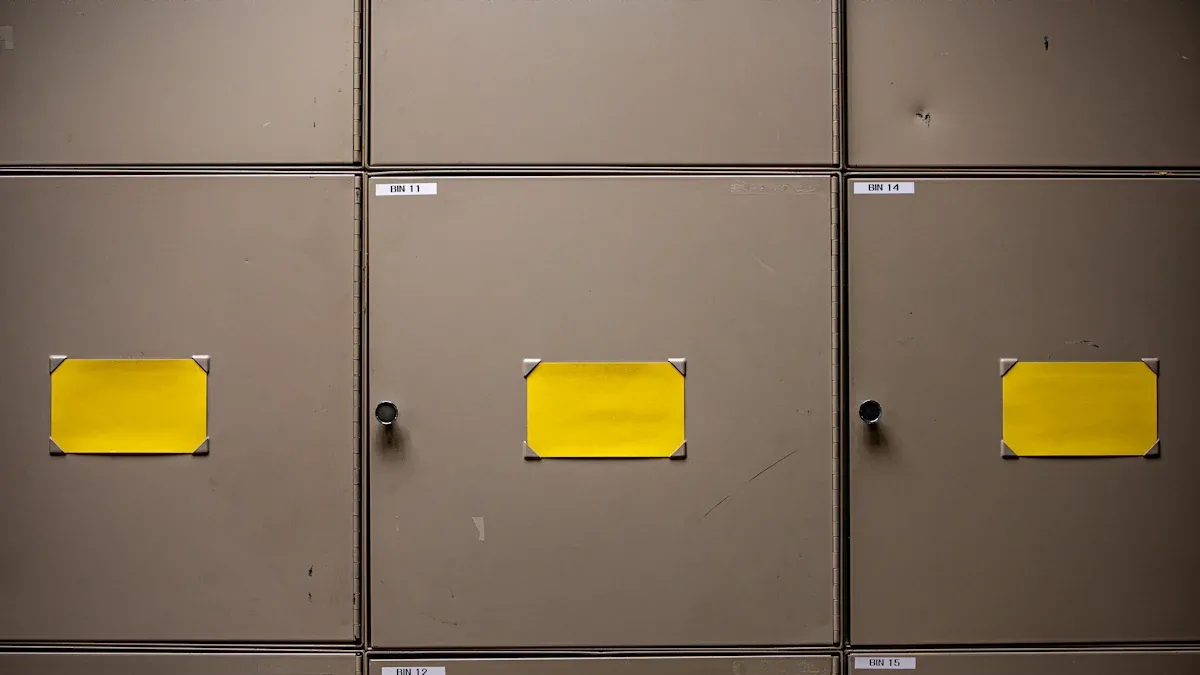
You use a flammable storage cabinet to keep flammable liquids and chemicals safe. This cabinet protects your workplace from fire hazards. You find these cabinets in factories, labs, and workshops. Each cabinet has special features that help you store hazardous materials safely. Most cabinets have double-walled steel or high-density polyethylene construction. The doors close by themselves during a fire. You see clear warning labels on every cabinet. Some cabinets have vents to remove dangerous fumes.
Here is a table showing the most common types of flammable storage cabinets and their key features:
| Feature | Steel Cabinets | Polyethylene Cabinets |
|---|---|---|
| Primary Use | Flammable liquids like solvents and alcohols. | Corrosive chemicals like acids and bases. |
| Construction | 18-gauge, double-walled steel. | High-density polyethylene (HDPE). |
| Fire Resistance | Excellent, meets NFPA and OSHA standards. | Good, mainly for corrosion protection. |
| Corrosion Resistance | Poor, susceptible to corrosive vapors. | Excellent, will not rust or corrode. |
You also find cabinets made for explosives or refrigerated chemicals. Each cabinet type helps you control different risks.
Which Materials Require Flammable Cabinet Storage?
You must store many flammable liquids in a flammable storage cabinet. OSHA sorts these liquids into four categories based on flash point and boiling point. The lower the flash point, the more dangerous the liquid.
| Category | Flash Point | Boiling Point |
|---|---|---|
| 1 | < 73.4 F (23 C) | ≤ 95 F (35 C) |
| 2 | < 73.4 F (23 C) | > 95 F (35 C) |
| 3 | ≥ 73.4 F (23 C) – ≤ 140 F (60 C) | N/A |
| 4 | > 140 F (60 C) – ≤ 199.4 F (93 C) | N/A |

You must not store more than 60 gallons of Category 1, 2, or 3 flammable liquids in one cabinet. For Category 4, the limit is 120 gallons. You keep only what you need for daily work in your cabinet.
How Flammable Cabinets Minimize Fire Hazards
A flammable storage cabinet keeps your workplace safe by reducing fire hazards. You protect your team and your property when you use the right cabinet. The cabinet stops flames from spreading and keeps hazardous chemicals away from sparks. You lower the risk of explosions and injuries. You also improve your safety culture by using cabinets and following rules. Regular inspections and training help you keep your cabinet in top shape.
Tip: Always use approved cabinets and never overload them. Train your team to handle flammable liquids safely.
7 Critical OSHA Regulations for Flammable Storage Cabinets: Ensuring Workplace Compliance
Construction and Fire Resistance Standards
You must follow strict regulations when you select a flammable cabinet for your workplace. OSHA and NFPA set standards that protect you from fire hazards. These standards require you to use approved materials and construction methods. You see steel cabinets with double walls and self-closing doors. You also find wooden cabinets made from plywood at least one inch thick. The joints must be rabbetted and fastened tightly. Each cabinet needs a three-point lock and a raised door sill. These features help you keep flammable liquids safe during a fire.
You must comply with both OSHA and NFPA standards. OSHA 1910.106 and NFPA 30 work together to reduce risks. You protect your team and your property when you follow these safety regulations.
- OSHA 1910.106 sets maximum allowable quantities for flammable liquids per cabinet.
- You must use approved containers, such as safety cans.
- NFPA 30 gives guidelines based on flashpoints and cabinet construction.
- Compliance with both standards lowers fire hazards and improves workplace safety.
Note: You must check federal, state, and local regulations before you buy or install a cabinet. You avoid penalties and keep your workplace safe when you follow all safety regulations.
Maximum Storage Limits and Capacity Requirements
You must know the storage limits for each flammable cabinet. OSHA regulations set clear rules for how much you can store. You protect your workplace when you follow these limits. The rules depend on the category of liquid.
| Category of Liquid | Maximum Storage in Cabinet |
|---|---|
| Category 1, 2, 3 | 60 gallons |
| Category 4 | 120 gallons |
You must not store more than 60 gallons of Category 1, 2, or 3 liquids in a cabinet. You must not store more than 120 gallons of Category 4 liquids in a cabinet. These regulations help you prevent fire hazards and keep your workplace safe. You see different guidelines for industrial plants and service stations. You must check the rules for your facility type.
- You must use approved containers for flammable liquids.
- You must keep only what you need for daily operations in your cabinet.
- You must follow OSHA 29 CFR 1910.106 to avoid penalties and ensure compliance.
Tip: You must never overload your cabinet. You protect your team and your business when you follow storage limits.
Labeling and Signage for Flammable Cabinets
You must label every flammable cabinet clearly. OSHA regulations require you to show the chemical name, hazard category, and handling precautions. You prevent accidents and keep everyone safe when you use proper signage. You must make sure labels are visible and easy to read.
| Best Practice | Description |
|---|---|
| Regular Inspections | Conduct regular checks to identify potential issues and ensure labels are visible and legible. |
| Document Maintenance Activities | Keep records of inspections to demonstrate compliance during safety audits. |
You must use high-contrast colors and legible fonts. You must make sure information is readable from a distance. You must check labels often and replace them if they fade or peel.
- Select legible fonts for labels.
- Apply high-contrast colors to draw attention.
- Ensure information is easily readable from a distance.
Alert: You must keep records of inspections and maintenance. You show compliance during audits and protect your workplace from penalties.
You build a safer workplace when you follow the 7 critical osha regulations for flammable storage cabinets: ensuring workplace compliance. You meet safety regulations, follow standards, and keep your cabinet in top condition. You protect your team and your business every day.
Placement and Location Rules
You protect your workplace when you place each flammable cabinet in the right spot. OSHA rules help you avoid accidents and keep your team safe. You must never put a flammable cabinet near ignition sources. You keep cabinets away from electrical outlets, panel boards, and heat-producing equipment. You also avoid placing cabinets under stairways or in stairwells. This keeps escape routes clear during a fire.
You must follow these rules for cabinet placement:
- Flammable cabinets must not block exit doors or fire egress routes.
- You must not place cabinets in stairwells that are part of fire exits.
- Cabinets should not block access to equipment or ventilation systems.
- You must locate cabinets away from potential ignition sources and in well-ventilated areas.
You place each flammable cabinet on a level surface to prevent tipping. You keep cabinets out of exit paths so emergency routes stay open. Improper placement increases fire risk and violates compliance standards. Witness accounts show that cabinets in hazardous locations can lead to catastrophic outcomes.
Tip: Always check your facility for safe cabinet placement. You protect your team and meet compliance standards when you follow these rules.
Ventilation, Bonding, and Grounding Guidelines
You reduce hazards when you follow proper ventilation, bonding, and grounding guidelines for each flammable cabinet. OSHA requires grounding and bonding during the transfer of Class I flammable liquids. Static charges can build up when flammable liquids move through pipes or air. You must ground cabinets when dispensing Class 1 flammable liquids. You also ground cabinets for Class 2 combustible liquids if they are near or above their flashpoint temperature.
You use grounding straps when transferring liquids between metal containers. You make sure metal containers touch grounded surfaces during transfers. Proper grounding prevents static discharge that could ignite hazardous materials.
| Key Consideration | Description |
|---|---|
| Proper Grounding | All explosion-proof equipment should be properly grounded to prevent static discharge that could ignite hazardous materials. Grounding minimizes the risk of electrical sparks that might otherwise cause dangerous explosions in sensitive environments. |
You install explosion-proof ventilation, lighting, and equipment in work areas. The ventilation system lowers vapor concentration to a safe level. You keep the environment safe and reduce the risk of fire.
Note: You must check your cabinet for proper grounding and ventilation. You improve compliance and protect your workplace from fire hazards.
Access Control and Security Measures
You keep flammable materials secure when you use access control and security measures. You restrict access to trained individuals who need to use flammable materials. You use identification badges and electronic access controls to screen people entering the facility. Access control systems log the transaction history of authorized individuals. You track who accesses each cabinet and when.
You use biometric verification technology to ensure only authorized personnel can access sensitive areas. Intrusion alarms and closed-circuit television cameras monitor access points. You add multiple security layers to deter and delay potential breaches. These measures give responders more time to act in case of a security incident.
- Access is restricted to trained individuals.
- Identification badges and electronic controls screen entry.
- Transaction logs track cabinet access.
- Biometric verification and cameras enhance security.
- Multiple security layers deter unauthorized use.
Alert: You protect your workplace and meet compliance standards when you use strong access control for each flammable cabinet.
Flammable Cabinet Inspections and Maintenance Protocols
You protect your workplace when you follow strict flammable cabinet inspections and maintenance protocols. Regular flammable cabinet inspections help you spot hazards before they cause harm. You keep your team safe and your business compliant with OSHA rules. Every flammable cabinet needs careful attention to prevent fire and chemical accidents.
You start by learning the regulations and standards for flammable cabinet inspections. You must know what OSHA expects. You set up a regular flammable cabinet inspection schedule. Most workplaces choose monthly or quarterly flammable cabinet inspections. Consistency helps you catch problems early.
Here is a step-by-step guide for flammable cabinet inspections:
- Learn the rules for flammable cabinet inspections and storage.
- Create a schedule for regular flammable cabinet inspections.
- Check the outside of each cabinet for dents, rust, or damage.
- Inspect door seals and latches to make sure they close tightly.
- Look at ventilation openings. Make sure they are not blocked.
- Open the cabinet and check the inside for leaks or spills.
- Test the grounding connection to prevent static electricity.
- Record every flammable cabinet inspection in a logbook.
- Train your team on flammable cabinet inspections and safety.
You must check every cabinet for damage. Look for dents, rust, or broken parts. You make sure the cabinet doors close and lock. Door seals must fit tight. Latches must work every time. You check ventilation ports. Blocked vents can trap dangerous fumes. You open the cabinet and look for leaks or spills. Clean up any mess right away.
You test the grounding connection during flammable cabinet inspections. Grounding stops static electricity from causing a fire. You check that the cabinet sits on a level surface. You make sure the cabinet does not tip or wobble.
You must keep records of all flammable cabinet inspections. Write down the date, time, and results of each inspection. Use a table like the one below to track your flammable cabinet inspections:
| Date | Cabinet Location | Inspector Name | Issues Found | Actions Taken |
|---|---|---|---|---|
| 2024-06-01 | Lab A | J. Smith | None | N/A |
| 2024-07-01 | Shop Floor | A. Lee | Rust on door | Repaired |
You store these records in a safe place. Auditors may ask for proof of flammable cabinet inspections. Good records show you care about safety.
You train your team on flammable cabinet inspections. Everyone who uses a flammable cabinet must know how to check it. You teach them to spot damage, leaks, or blocked vents. You show them how to record each flammable cabinet inspection. Training keeps your team alert and ready.
You use hazmat placards on each cabinet. Placards show what is inside and warn others about dangers. You check placards during flammable cabinet inspections. Replace faded or missing placards right away.
You must store only approved flammable materials in each cabinet. You never overload a cabinet. You keep the area around each cabinet clean and clear. You do not block access to the cabinet.
Tip: Set reminders for flammable cabinet inspections. You never miss a check when you use a calendar or app.
You keep your workplace safe when you follow these flammable cabinet inspections and maintenance protocols. You lower the risk of fire and protect your team every day.
Implementing OSHA Flammable Cabinet Guidelines

Step-by-Step Compliance Checklist
You can achieve compliance with OSHA flammable cabinet guidelines by following a clear checklist. Start by confirming that each cabinet has a label from a recognized testing lab. Inspect the construction to make sure the cabinet has double-wall steel and no rust. Check that doors close by themselves and have a three-point latch. Always keep the amount of flammable liquid below 60 gallons per cabinet. Make sure each cabinet displays a clear “FLAMMABLE—KEEP FIRE AWAY” label. If you handle conductive liquids, attach grounding wires. Place cabinets at least three feet from ignition sources. Use secondary containment trays for large amounts. Keep a log of what you store in each cabinet. Test that cabinets can withstand fire for at least ten minutes.
- Confirm cabinet approval
- Inspect construction integrity
- Check door mechanisms
- Validate capacity limits
- Ensure proper labeling
- Assess grounding and bonding
- Evaluate location and spacing
- Review spill containment and segregation
- Audit quantity documentation
- Test fire resistance
Tip: Use this flammable cabinet inspection checklist to keep your compliance strong.
Routine Flammable Cabinet Inspections and Documentation
You must perform regular flammable cabinet inspections to maintain compliance. Check each cabinet for dents, rust, or leaks. Make sure doors and latches work every time. Inspect labels and replace them if they fade. Test grounding wires and check that vents are clear. Keep a record of every inspection. Use a table to log the date, location, inspector, and any issues found. Regular flammable cabinet inspections help you spot problems early and keep your workplace safe.
| Date | Cabinet Location | Inspector | Issues Found | Actions Taken |
|---|---|---|---|---|
| 2024-06-01 | Warehouse A | M. Jones | None | N/A |
Note: Regular flammable cabinet inspections and good documentation show your commitment to safety and compliance.
Employee Training and Safety Awareness
You build a strong fire prevention program when you train your team on flammable cabinet safety. Teach everyone how to evacuate in an emergency and use fire extinguishers. Show them how to respond to spills and handle flammable liquids safely. Remind your team about no-smoking and open-flame rules near cabinets. Discuss Safety Data Sheets during meetings and review emergency protocols. Good training helps everyone recognize hazards and follow safe practices. Studies show that safety training programs and a strong safety culture reduce flammable storage incidents.
| Evidence Type | Description |
|---|---|
| Safety Training Programs | These programs teach hazard recognition and safe practices for flammable storage. |
| Safety Culture Initiatives | These efforts improve employee behavior and accountability. |
Alert: Make training part of your regular flammable cabinet inspections and safety meetings.
Maintaining Compliance and Avoiding Common Mistakes
Tips for Ongoing OSHA Compliance
You keep your workplace safe when you follow best practices for flammable cabinet compliance. Start by placing each flammable cabinet away from sources of ignition. Electrical outlets and hot work activities can cause fires if they are too close to flammable materials. You must choose the right location for every cabinet. Never put a flammable cabinet in an exit path or under a stairway. This helps everyone evacuate quickly during an emergency. You improve safety when you use cabinets with self-closing doors. These doors protect flammable liquids from flames if a fire starts.
You must schedule regular inspection of each flammable cabinet. Check for dents, rust, or leaks. Make sure the doors close tightly and the labels stay clear. You record every inspection in a logbook. You train your team to spot hazards and follow safety rules. You keep the area around each cabinet clean and free of clutter. You use secondary containment trays for spills. You update your inspection checklist often to match OSHA standards.
Tip: Set reminders for inspection so you never miss a check. You build a strong safety culture when you make inspection part of your routine.
Common Errors and How to Prevent Them
You avoid costly mistakes when you know the most frequent OSHA violations. Many workplaces forget to train employees on OSHA standard 1910.106. You must teach your team how to handle flammable liquids and use each cabinet safely. Some facilities skip regular inspection. You prevent hazards by checking every cabinet often. Warehouses and distribution centers sometimes ignore practical fixes. You must repair dents, replace broken latches, and clear blocked vents right away.
- Train employees on flammable cabinet safety.
- Perform regular inspection and keep records.
- Fix cabinet issues quickly.
- Audit your flammable cabinet storage to ensure compliance.
You protect your business when you stay alert and follow these steps. You lower the risk of fire and keep your team safe every day.
You protect your workplace when you follow OSHA flammable cabinet guidelines. Start with these steps:
- Segregate flammable chemicals in each cabinet.
- Label every cabinet and container with flammable warnings.
- Train your team on flammable cabinet safety.
- Keep records of cabinet inspections and training.
- Inspect each cabinet regularly.
Compliance with flammable cabinet regulations keeps your team safe and protects the environment.
You gain long-term benefits by using a flammable cabinet. You improve safety, reduce fire hazards, and avoid fines. You save money on insurance and keep your business running. Store each flammable cabinet on a level surface. Keep cabinets away from ignition sources. Never perform welding near a flammable cabinet.
You must review flammable cabinet storage at least every quarter. In busy areas, check cabinets more often. Inspect cabinet doors, labeling, and spill containment. Use OSHA Standard 1910.106 and NFPA 30 to stay current with flammable cabinet rules.
| Review Frequency | Cabinet Inspection Focus |
|---|---|
| Quarterly | Flammable cabinet integrity |
| Monthly | Flammable cabinet labeling |
| Weekly | Flammable cabinet spill control |
You build a strong safety culture when you update flammable cabinet practices often.
FAQ
What types of liquids must you store in a flammable cabinet?
You must store liquids like gasoline, acetone, and alcohol in a flammable cabinet. These liquids catch fire easily. You protect your workplace when you keep these materials in the right cabinet.
How often should you inspect your flammable cabinet?
You should inspect your flammable cabinet every month. Look for dents, leaks, or broken latches. Regular checks help you spot problems early and keep your flammable materials safe.
Can you store other chemicals with flammable liquids?
You should not mix other chemicals with flammable liquids. Some chemicals react and cause fires. Always keep flammable materials separate from acids, bases, or oxidizers.
Where should you place your flammable cabinet?
You must place your flammable cabinet away from heat sources. Keep it out of exit paths and stairways. Choose a spot that stays cool and dry. This helps you lower the risk of fire.
What labels must you use on a flammable cabinet?
You must use clear labels that say “FLAMMABLE—KEEP FIRE AWAY.” The label should show the hazard and handling instructions. Good labels help everyone spot flammable materials and stay safe.
Tip: Always check labels during inspections. Replace faded or missing labels right away.
| Cabinet Feature | Why It Matters |
|---|---|
| Flammable Label | Warns about fire risk |
| Secure Latch | Keeps flammable liquids locked |
| Ventilation | Reduces flammable vapor buildup |


