

With an average of 1,900 fatal residential fires occurring annually in the U.S., protecting your valuables is a serious matter of fire safety. When you buy a fireproof cabinet, you expect reliable performance. You can verify a manufacturer’s claim by checking for specific fire ratings and standards. True fire resistance is not just a promise; it is proven through rigorous testing.
Your verification process has two simple requirements:
- Find the official certification label from a recognized third-party testing agency.
- Understand the fire ratings, which specify the duration and temperature resistance the cabinet offers.
This guide will help you understand How to Verify Your Cabinet is Genuinely Fireproof: Testing Methods and Industry Standards.
Step 1: Find and Decode the Fireproof Certification Label

The single most important feature of a fire-resistant cabinet is its certification label. This label is your guarantee that the product has passed independent testing. It provides clear evidence of the cabinet’s performance during a fire. Without this label, a manufacturer’s claim is just an empty promise.
Where to Find the Label
You can usually find the official certification label in a few common places. You should look for a metal plate or a durable, tamper-proof sticker. Check these locations first:
- On the inside of the cabinet door.
- On the door jamb or frame.
- On the side of a locking drawer.
- On the back wall of the cabinet.
If you cannot find a label, you should be very skeptical of the product’s fire resistance claims.
Understanding the Fire Rating: Time and Temperature
The label contains the cabinet’s fire ratings. These ratings tell you two critical things: the maximum internal temperature and the duration the cabinet can withstand a fire. For example, a UL “Class 350 – 1 Hr” fire safe rating means the internal temperature will not exceed 350°F for at least one hour. This protection holds even when the cabinet is exposed to external fire temperatures reaching 1700°F.
Testing agencies follow strict standards to assign these fire ratings. The UL 72 standards are a benchmark for this process. The table below shows how different UL Class 350 ratings correspond to specific fire exposure times and temperatures.
| UL Class | Internal Temperature | Fire Rated Time | External Temperature Up To |
|---|---|---|---|
| Class 350 – 4 hr | < 350°F | 4 Hours | 2000°F |
| Class 350 – 2 hr | < 350°F | 2 Hours | 1850°F |
| Class 350 – 1 hr | < 350°F | 1 Hour | 1700°F |
| Class 350 – 1/2 hr | < 350°F | 30 Minutes | 1550°F |
The testing process is intense. It ensures a cabinet with a valid fire safe rating can survive conditions far worse than an average house fire. While most home fires burn around 1,100°F, these tests expose cabinets to much higher heat. This rigorous testing gives you confidence in the product’s fire resistance. As the rated time increases, so does the external temperature the cabinet can endure.

Matching the Rating to Your Valuables
Different items have different protection requirements. You must match the cabinet’s fire safe rating to the valuables you plan to store. Paper and digital media have very different heat sensitivities.
⚠️ Critical Temperature Thresholds
- Paper: Paper documents begin to char and become unreadable above 350°F (177°C). A UL Class 350 rating is designed specifically to protect paper.
- Digital Media: Items like hard drives, USBs, and backup tapes are far more sensitive. They can be damaged or destroyed if the internal temperature exceeds 125°F (52°C).
A cabinet with a Class 350 fire safe rating is excellent for storing birth certificates, deeds, and passports. However, it will not protect your digital backups. The internal temperature will get too hot. For electronics and digital media, you need a cabinet with a Class 125 rating. These specialized cabinets also have humidity requirements to prevent moisture damage. Understanding these standards helps you choose the right level of protection.
Step 2: How to Verify Your Cabinet is Genuinely Fireproof: Testing Methods and Industry Standards
Once you find the certification label, your next step is to understand the agency behind it. Not all certifications offer the same level of assurance. Knowing the difference between independent third-party testing and a manufacturer’s self-proclaimed rating is crucial. This section explains how to verify your cabinet is genuinely fireproof: testing methods and industry standards are your best tools for this assessment.
The Gold Standard: UL Certification
When it comes to fire safety, Underwriters Laboratories (UL) is the most recognized name in the industry. A UL certification label is more than just a sticker; it is proof that the cabinet passed a series of demanding tests. These tests are designed to simulate real-world fire conditions. UL sets strict performance criteria that a product must meet to earn its mark.
An official UL label provides specific details about the cabinet’s performance. It states the maximum internal temperature and the duration it can maintain that temperature. For example, a Class 350 rating keeps paper safe below 350°F. However, more sensitive items require different standards. Tapes and microfilm need a Class 150 rating (below 150°F with an 85% humidity limit), while diskettes need a Class 125 rating (below 125°F with an 80% humidity limit). This detailed assessment ensures you choose the right protection.
You can easily check the authenticity of a UL mark.
Tip: Verify a UL Certification Online
You can use UL’s free Product iQ® database to confirm a product’s certification. This powerful search engine gives you access to information on thousands of certified products.
Here is how you can confirm a UL certification online:
- Find the UL trademark symbol on the product label.
- Locate the file number (often looks like E#####) near the symbol.
- Visit the UL Product iQ® online database.
- Enter the file number or company name to search for and verify the listing.
This simple verification process is a key part of how to verify your cabinet is genuinely fireproof: testing methods and industry standards provide the framework for your safety.
Other Reputable Testing Agencies
While UL is a leader, other independent agencies also provide trustworthy fire-resistance testing and certification. Their labels confirm that a cabinet meets established fire safety standards.
ETL-Intertek is a globally respected laboratory. ETL uses testing methods similar to UL’s, ensuring a high level of product safety and performance. During an ETL fire endurance test, a cabinet is heated in a furnace to temperatures often reaching 1200°F. To pass, its internal temperature must stay below a specific limit (e.g., 350°F) for the rated time. Intertek conducts testing according to a wide range of protocols, including:
- ANSI/UL
- ASTM
- CAN/ULC
- NFPA
Other international bodies also offer reliable certification. Look for marks from these organizations for an added layer of confidence:
- FM (Factory Mutual): An FM approval is recognized worldwide as a symbol of high-quality fire safety products.
- TÜV: This German agency has a long history of certification and is widely accepted in Europe and across the globe.
Relying on these agencies’ standards ensures your cabinet’s fire resistance claims are backed by proper testing and objective performance requirements.
Red Flags: Unverified “In-House” Testing Claims
You should be extremely cautious of cabinets that claim to be “factory certified” or “in-house tested.” These claims lack the independent oversight that makes UL, ETL, and FM certifications reliable. Without a third-party witness, there is no guarantee that the testing was fair or accurate. This is a major red flag when learning how to verify your cabinet is genuinely fireproof: testing methods and industry standards from third parties are essential.
Manufacturers’ in-house testing methods can be misleading. The performance requirements are often not disclosed, and the assessment may not be rigorous. Here are some reasons why these claims are unreliable:
- No Independent Oversight: The manufacturer conducts and grades its own tests, creating a clear conflict of interest.
- Manipulated Conditions: A company might place temperature sensors in cooler spots or alter the furnace heating time to achieve a passing result.
- Lack of Proof: Manufacturers rarely provide detailed reports, charts, or videos of their in-house testing. The claim is often just a marketing tactic.
⚠️ Buyer Beware
An “in-house tested” claim offers no real guarantee of safety or performance. Always prioritize products with a certification label from a recognized, independent testing agency. Your fire safety depends on it.
Understanding how to verify your cabinet is genuinely fireproof: testing methods and industry standards is your best defense. The final part of how to verify your cabinet is genuinely fireproof: testing methods and industry standards is trusting the experts.
Step 3: What Do Fire Rating Tests Actually Involve?
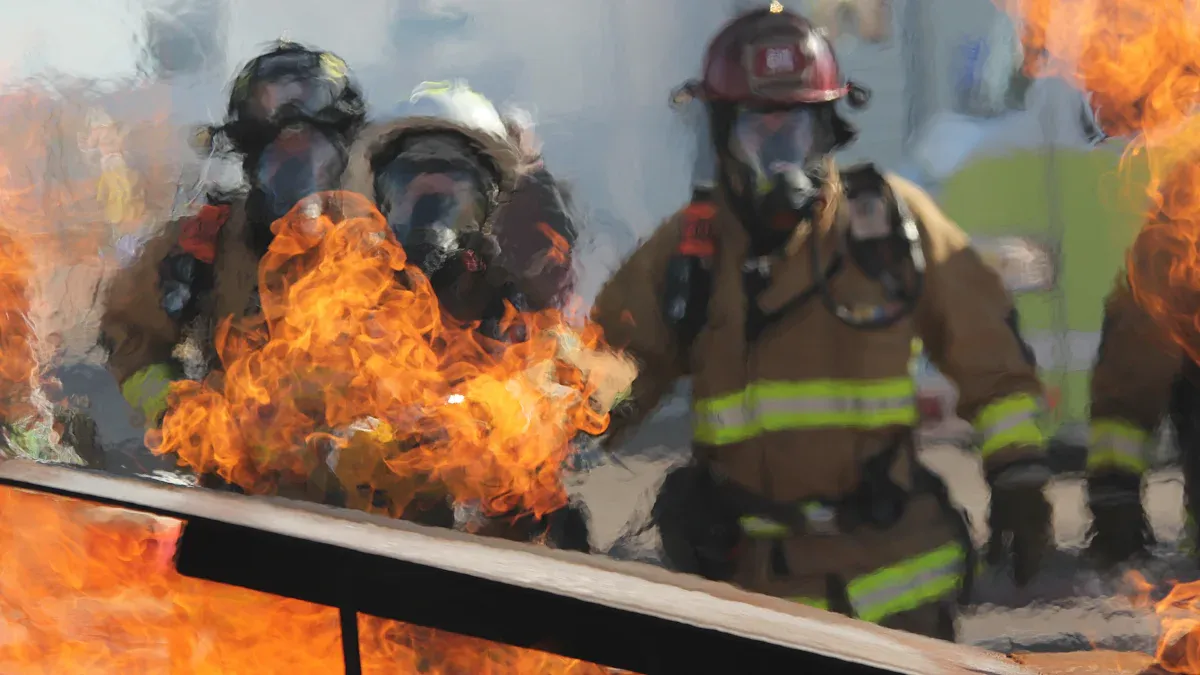
Recognized fire ratings are not just arbitrary labels. They are earned through a series of intense fire rating tests designed to simulate the worst-case scenarios of a real fire. These standardized testing procedures ensure a cabinet’s performance meets strict safety requirements. Understanding these tests helps you appreciate the value of a certified product.
The Fire Endurance Test
The fire endurance test is the most fundamental assessment. It measures how long a cabinet can keep its internal temperature below a specific limit while being cooked in a furnace. For a paper-rated cabinet, this limit is 350°F.
The testing process is rigorous:
- Technicians place papers inside the cabinet and position heat sensors.
- They lock the cabinet and place it inside a furnace.
- The furnace is heated to extreme temperatures over a set time.
- After the time expires, the furnace is turned off, but the cabinet remains inside to cool. The internal temperature can continue to rise during this “soak-out” period.
- To pass, the internal temperature must never exceed the specified limit. The contents must also remain usable.
The external temperatures reached during the fire endurance test show the extreme conditions a cabinet must survive.
| Duration | Maximum Furnace Temperature |
|---|---|
| 1 Hour | 1700°F (927°C) |
| 2 Hours | 1850°F (1010°C) |
The Fire and Impact Test
Fires can weaken buildings, causing floors to collapse. The fire and impact test simulates this danger. It checks if a cabinet can withstand a fall and remain intact to continue protecting its contents.
The Impact Test Procedure
The cabinet is first heated in a furnace. Then, while still hot, it is hoisted 30 feet into the air and dropped onto a pile of rubble. After the impact, it is reheated in the furnace to check if the door and seals held up.
A successful assessment means the cabinet did not break open and its contents remained protected from the fire. This test is a critical part of the overall performance criteria.
The Explosion Hazard Test
A cabinet thrown into an already raging fire faces a sudden, violent temperature shock. The explosion hazard test simulates this scenario. Testers place the cabinet into a furnace preheated to 2000°F. The goal is to see if the cabinet will explode. Trapped moisture inside the insulation can turn to steam and create immense pressure. This testing ensures the cabinet’s design can handle this rapid heat change without bursting open, which would instantly destroy its fire ratings and expose your valuables. Passing these standards proves the cabinet’s structural integrity under extreme stress.
Step 4: Understanding Different Fireproof Protection Levels
Not all fireproof cabinets offer the same level of protection. Different valuables have different heat sensitivities. You must choose a cabinet with fire ratings that match the items you plan to store. The UL standards provide clear performance benchmarks for protecting specific types of materials. Understanding these classes helps you make an informed decision.
UL Class 350: Protecting Paper
The UL Class 350 fire safe rating is specifically designed to protect paper documents. Paper begins to char and become unreadable at temperatures above 350°F. This rating ensures the cabinet’s interior will not exceed this critical temperature. The performance requirements for this class are straightforward. For any time duration, whether 1-hour or 2-hour, the internal temperature must remain below 350°F.
This level of protection is ideal for storing important paper records.
- Birth certificates and passports
- Property deeds and titles
- Wills and legal contracts
- Stock and bond certificates
These standards give you confidence that your essential documents will survive a fire.
UL Class 125: Protecting Digital Media
Digital media items are far more fragile than paper. They can be destroyed by both heat and humidity. A standard Class 350 cabinet will not protect them. You need a cabinet that meets the much stricter UL Class 125 standards. This rating guarantees a higher level of performance.
⚠️ Sensitive Media Requirements
To earn a UL Class 125 fire safe rating, a cabinet must keep its internal temperature below 125°F and its relative humidity below 80%.
This specialized protection is necessary for a wide range of electronic items. The performance criteria for these fire ratings are very demanding. Your cabinet must meet these requirements to keep your digital data safe. Examples of items needing this protection include:
- Hard drives and USB drives
- CDs, DVDs, and optical disks
- Backup tapes (LTO and DLT)
- Microfiche and computer disks
Choosing a cabinet with the correct fire ratings ensures your most sensitive valuables get the protection they need.
Step 5: Beyond Fire: Evaluating Other Cabinet Protections
A cabinet’s fire ratings are essential, but a fire often brings other threats like water damage and security risks. A comprehensive safety assessment looks beyond just fire resistance. You should evaluate a cabinet’s ability to protect against water and theft to ensure your valuables have complete protection.
Water Resistance Ratings
Fires often trigger sprinkler systems or require fire hoses. The resulting water can be just as destructive as the fire itself. Many modern cabinets now include water resistance to protect your documents and media.
💧 Water Protection Features
Look for cabinets with water-resistant gaskets, drip seals, and moisture barriers. These features are often built into the door frames and drawer seals to keep water out.
Some manufacturers seek independent testing for their water resistance claims. For example, Intertek has tested certain cabinets to specific water resistance standards. This independent assessment confirms the cabinet’s performance against water from sprinklers and hoses, giving you greater peace of mind.
Burglary and Theft Protection Standards
Your fireproof cabinet should also secure your valuables from theft. Burglary protection is measured by its own set of standards, often certified by UL. These ratings tell you how much resistance a cabinet offers against a physical attack. The most common rating for home use is the Residential Security Container (RSC) rating. An RSC-rated cabinet can withstand a 5-minute attack from an expert using common tools.
Higher security requirements call for more advanced testing and tougher standards. The UL TL-ratings signify resistance to more powerful tools for longer periods. This detailed assessment helps you match the security level to your safety needs.
| Rating | Time Limit | Tools Used |
|---|---|---|
| UL RSC | 5 minutes | Common hand tools, pry bars, and hammers |
| UL TL-15 | 15 minutes | Hand tools, power drills, and picking tools |
| UL TL-30 | 30 minutes | All of the above, plus cutting wheels and saws |
The time and tools used in testing determine the cabinet’s final rating. A higher rating means better performance and greater security.

Choosing a cabinet with the right fire ratings and security features provides a complete safety solution.
Your verification checklist is simple. You must find the label, confirm a recognized agency, and match the class rating to what you are storing.
🛡️ Trust the Experts
Independent, third-party certification is the only way to ensure true fire resistance. This process confirms a cabinet meets strict safety standards and performance requirements. It gives you confidence in the product’s safety.
Always be skeptical of cabinets that lack a formal certification label. “In-house tested” claims offer no guarantee of performance and cannot prove they meet established standards or your protection requirements.
FAQ
What if my cabinet has no certification label?
You should be very skeptical of its fireproof claims. A missing label usually means the cabinet has not passed independent testing. For guaranteed protection, you should always choose a product with a visible certification mark from a recognized agency like UL or ETL.
Is “fireproof” the same as “fire-resistant”?
The term “fireproof” is often used in marketing, but no consumer product is truly immune to fire. “Fire-resistant” is the correct term. It means the cabinet has passed tests to resist fire for a specific time and temperature, as shown by its official rating.
Can I put a media cooler inside a larger fireproof cabinet?
Yes, you can. Placing a UL Class 125 rated media cooler inside a larger UL Class 350 cabinet creates an excellent layered defense. This strategy gives your sensitive digital media extra protection from both heat and the intense steam created inside a paper-rated cabinet.
Do fireproof cabinet seals wear out?
Yes, the door seals that keep out heat and water can degrade over time. You should inspect the seals annually for any cracks or damage. A damaged seal compromises the cabinet’s fire resistance, so you must replace it to ensure continued protection.


