A bigger oil absorbent sock always soaks up more oil. That sounds obvious, and it’s mostly wrong. Diameter and length set how far a sock reaches and how it seals against a floor — but actual oil uptake depends on the fill material and its loft, which two socks of identical size can wildly differ on. The honest version: size tells you coverage, not capacity.
That gap is exactly where buyers waste money. This guide keeps the two specs separate on purpose, the same way our team separates them on every spec sheet we send out.
At a Glance
| Item | Detail |
|---|---|
| Fill type | Hydrophobic polypropylene-based meltblown material (oil-selective) |
| Standard diameter | 3 in (common size for routine leak containment) |
| Larger diameters | 4–5 in for taller barriers and higher-volume leaks |
| Common lengths | 4 ft and 8 ft for standard socks; 8 ft and 10 ft for larger formats; connectable options for longer perimeters |
| Capacity basis | Rated absorption per sock and per case; verify the datasheet rather than estimating from dimensions |
| Best uses | Machinery oil leaks, drain and perimeter protection, and small, contained water-surface oil spills |
| Not for | Aggressive chemical spills or large open-water oil releases |
| Reuse | Partially used socks may continue absorbing oil; generally single-use once saturated. Verify any wringable or reusable product claims |
| Replacement signal | Sagging from absorbed oil, oil leaking back out, or loss of wicking at the contact edge |
| Workplace safety | Select absorbents according to the spilled material and site conditions. Follow applicable spill-control procedures and workplace safety requirements |
What Oil Only Absorbent Socks Are and How They Work
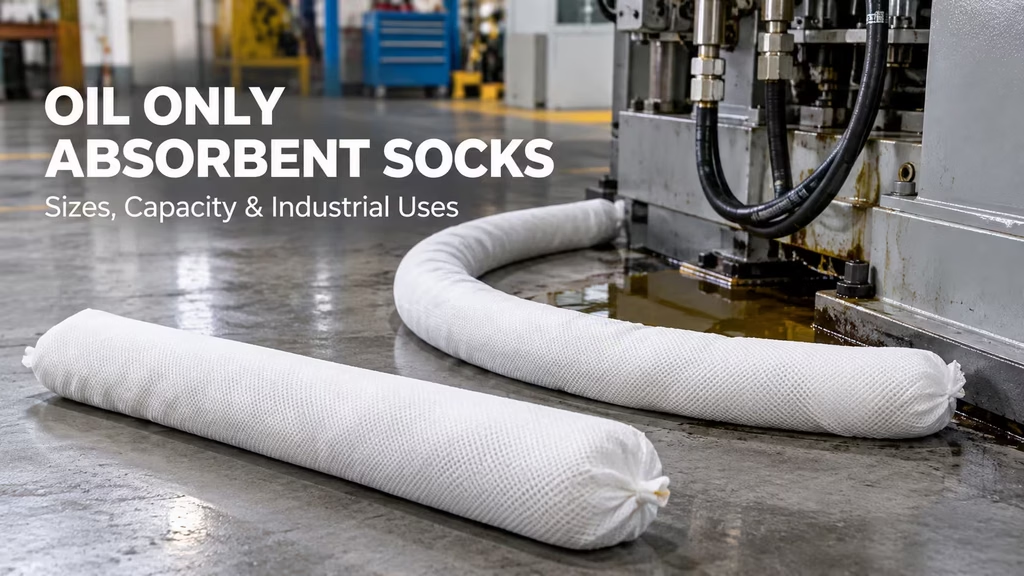
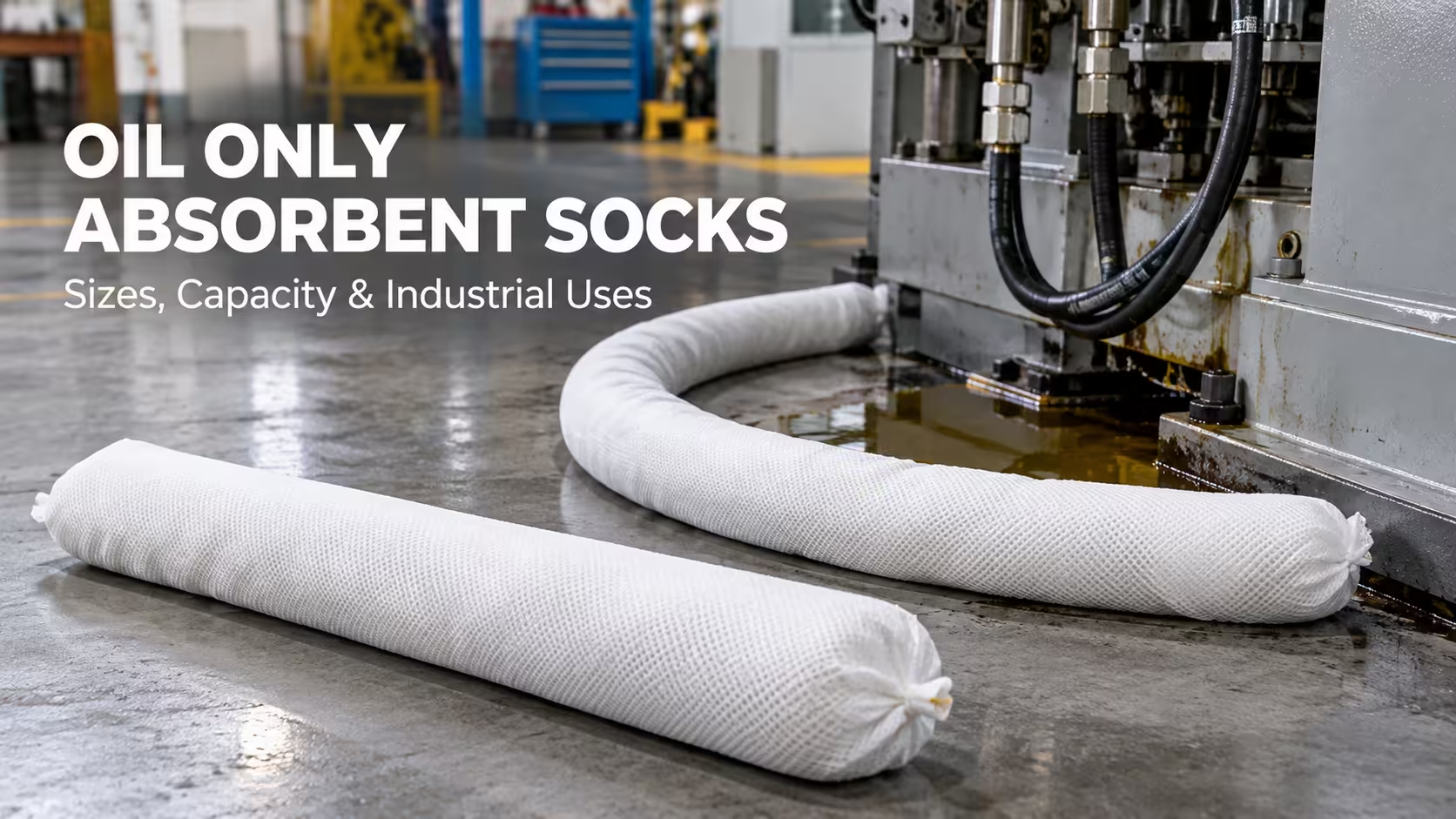
Oil Only Absorbent Socks are tube-shaped fabric sleeves packed with a fill that grabs petroleum-based liquids and rejects water. You lay them around a leak, a machine base, or a drain, and they wick oil off the surface while floating on any water underneath. That water-shedding behavior is the single feature that defines the category.
An oil sock, in plain terms, is a contained snake of absorbent you can drop in place and pick up saturated — no loose mess, no sweeping. If you’re sorting out which absorbent format belongs in which spot, our spill containment basics breaks down where socks earn their keep versus flat pads.
The hydrophobic fill that targets oil only
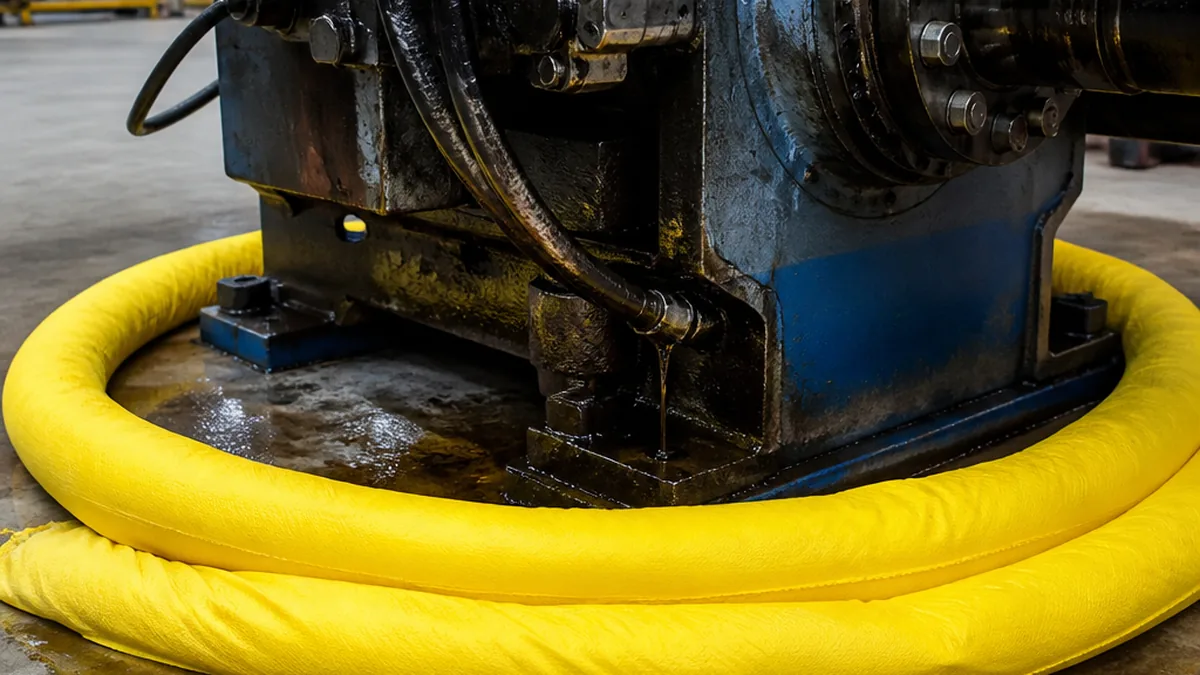
The fill is almost always a polypropylene-based meltblown material. Polypropylene is naturally hydrophobic — it beads water and pulls in hydrocarbons, which is why oil-only socks stay afloat on a puddle and keep absorbing the diesel, hydraulic fluid, or lube oil riding on top.
This selectivity is the whole point. Among the many industrial uses[1] for synthetic absorbents, oil-only grades matter on wet sites — rain-exposed yards, washdown areas, coolant-flooded machine bays — where a universal absorbent would just load up with water and quit.
📌 Remember: Oil-only means petroleum-selective. These socks are not rated for aggressive chemical spills like concentrated acids; those need a dedicated chemical-grade absorbent.
How a sock differs from pads and loose absorbents
A sock contains the absorbent inside a tough mesh skin, so it holds its shape, resists tearing as you drag it, and lets you lift the whole saturated unit at once. A pad lies flat to blot a wide area; loose granules fill awkward gaps but have to be swept and bagged.
The sock’s job is the perimeter and the contour — wrapping a drum, ringing a drain, hugging the foot of a leaking pump. That’s the difference that makes the format worth stocking.
Available Sizes and Length Options
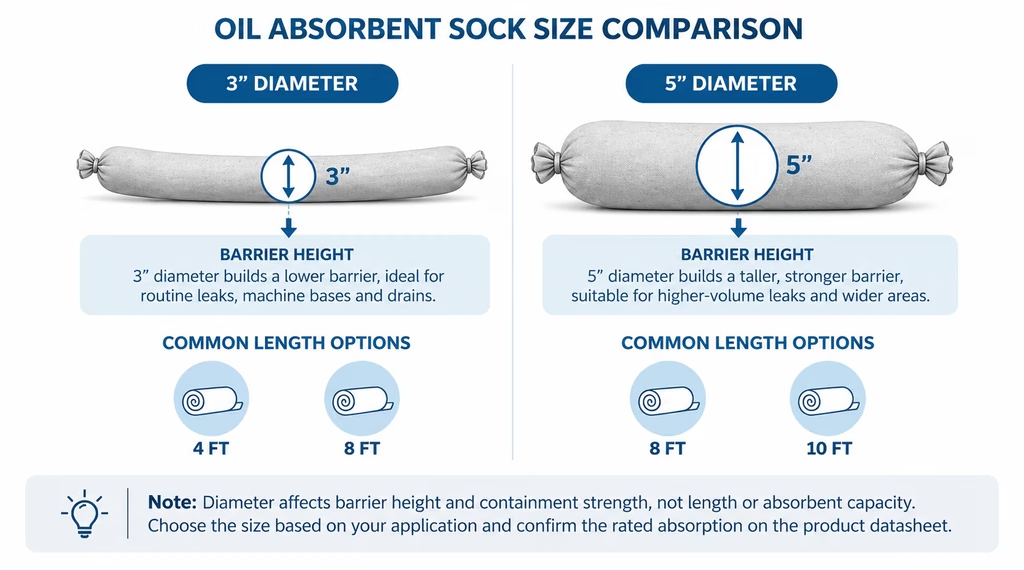
Physical dimensions come down to two numbers: outside diameter and length. Both are manufacturing specs you can confirm from a product sheet — do not infer one from the other.
| Format | Typical diameter | Common lengths | Best fit |
|---|---|---|---|
| Standard sock | 3 in | 4 ft, 8 ft | Machine bases, drains, tight runs |
| Large-diameter sock | 4–5 in | 8 ft, 10 ft | Higher-volume leaks, wider barriers |
| Extended / connectable | 3–5 in | 8 ft+ linked | Long perimeters, outdoor runs |
Standard 3-inch diameter lengths
The 3-inch diameter is the workhorse.[4] It’s flexible enough to curl into a tight corner yet thick enough to form a usable dam. Lengths of 4 feet and 8 feet cover most shop and bench situations, and the 8-foot size — think of the familiar 8-ft sock part number many suppliers list — handles longer machine runs without a joint.[5]
Shorter socks start fast around small point leaks. Longer ones save setup time when you’re ringing a big footprint.
Larger-diameter and extended socks for big spills
When the leak outruns a 3-inch sock, step up to a 4- or 5-inch diameter.[6] The larger tube holds more fill per foot, so it builds a taller barrier and resists being pushed aside by a moving pool of oil. These larger formats commonly run in 8-foot and 10-foot lengths for wider barriers and higher-volume leaks.
Extended and connectable socks link end to end for long perimeters — a loading-dock edge, a generator pad, a stretch of shoreline. The key spec to confirm is how the ends couple, since a weak joint is where oil escapes first.
Absorbent Capacity by Size
Capacity is a separate number, and it’s the one buyers misread most. Oil absorption is usually quoted two ways: per individual sock and per case. A manufacturer might rate a single sock in fluid ounces or quarts absorbed, then multiply by the sock count for the carton total.
Here’s the catch — you cannot calculate capacity from dimensions. Two 3-inch, 8-foot socks can hold different volumes depending on fill density and meltblown loft. A loosely packed sock has more void space to flood with oil; a dense one builds a stiffer barrier but may hold less.
That trade-off is real, and it’s why we never let a customer assume “bigger diameter equals more absorption” without checking the rated figure.
⚖️ Trade-off: Denser fill makes a firmer dam that holds its shape under a moving spill — but it can absorb less total oil per foot than a lofty, lower-density sock rated for maximum uptake.
So read the datasheet. Match the per-sock capacity to the volume you realistically need to contain, then confirm the case count so you’re not reordering mid-cleanup. On a bulk order, the per-case absorbed volume is the number that actually drives your cost-per-quart-absorbed — a far better comparison than price per sock.
Industrial Uses and Where They Fit Best
Oil-only socks fit anywhere petroleum fluids leak onto a surface that may also be wet. They’re a containment tool, not a cure-all — the trick is knowing the three places they outperform other formats.
Machine shops and equipment leaks
This is the heaviest-use setting. Hydraulic presses, CNC machines, compressors, and gearboxes all weep oil, and coolant on the floor means a universal absorbent would drown. An oil-only sock rings the machine foot, catches the drip, and keeps the pool from spreading onto a walkway.
If you’ve ever wondered what industry uses the most of a given consumable, metalworking and automotive service shops run through oil-only absorbents the fastest — constant small leaks, every shift.
Outdoor and water-surface oil spills
Because the fill floats and sheds water, these socks work on puddles, retention ponds, and sheen on standing water after a rain event. Linked socks form a floating boom-style barrier to corral a thin oil film.
Be honest about scale, though. Oil-only socks suit contained, small-area surface spills — not large open-water releases, which demand purpose-built marine response gear and crews.
Perimeter barriers and drain protection
The classic preventive use: ring a storm drain, a floor drain, or a transformer pad so any release is intercepted before it reaches a water line. A sock laid across a doorway threshold or dock edge becomes a low dam.
📌 Remember: A drain-protection sock is a barrier, not a plug — stage it before the leak happens, not after oil is already running down the grate.
Saturation Limits and Replacement Frequency
A sock keeps absorbing until the fill is loaded with oil, then it’s spent. Saturation shows as sagging weight, visible oil weeping back out, and no more wicking at the contact edge. That’s your replacement signal — not a date on a calendar.
Can you reuse absorbent socks? A sock that’s only seen light use can stay in service and keep absorbing, but once it’s saturated with petroleum fluid, treat it as single-use — the fill doesn’t release oil cleanly for practical reuse, and we don’t advise squeezing-and-reusing a saturated sock in service. Some wringable grades exist, but treat any reuse claim as something to verify on the spec sheet, not a default.
How often you swap depends entirely on service conditions. A steady machine leak eats socks faster than an occasional drip; outdoor runs load up with every rain. There’s no fixed interval worth quoting — inspect on a schedule that matches your leak rate, and keep spares on hand so you’re never running a saturated barrier.
Matching the Right Sock to Your Spill
Pull the three confirmed specs together before you order: physical size (coverage), rated oil capacity (volume), and the application (where it sits). Size the diameter to the barrier height you need, the length to the perimeter you’re wrapping, and the per-sock capacity to the oil volume you expect to catch — then check the case quantity so your reorder cadence matches your consumption.
For a shop with steady equipment leaks, a 3-inch, 8-foot sock in case quantities is the sensible default. For wide outdoor perimeters or higher-volume pools, step to a larger diameter or connectable lengths. For bulk buyers, compare on cost-per-quart-absorbed and confirmed case counts, not sticker price per sock.
As a maker of industrial safety storage and spill containment products built to relevant workplace safety and fire codes — the exact requirements vary by jurisdiction, so confirm which standards apply with your local authority — our team’s advice is simple: confirm both the size and the rated capacity on paper before you commit to a bulk run.
If you want a spec sheet matched to your leak profile and order volume, that’s the right next step — tell us the fluid, the footprint, and the volume, and we’ll quote the format that fits.
Have a project or a spec sheet in hand? Talk to huanawell.com — real engineers answer.
Frequently asked questions
Can oil-only absorbent socks absorb diesel and hydraulic oil?
Yes. Oil-only absorbent socks are designed to absorb petroleum-based liquids such as diesel, hydraulic oil, motor oil, and lubricants while repelling water. Actual absorption performance varies with the liquid and the sock’s filling material. For gasoline or other flammable liquids, confirm product compatibility and follow appropriate fire-safety precautions.
How do you position absorbent socks around leaking equipment?
Place the sock along the floor around the leaking machine or at the edge of the spill, keeping it in contact with the surface. Curve it around equipment bases and overlap the ends when multiple socks are needed to form a continuous barrier. Inspect for gaps where oil could escape, especially on uneven flooring.
How should used oil absorbent socks be disposed of?
Used oil absorbent socks should be collected in suitable leak-resistant containers and handled according to the liquid they absorbed. Oil or fuel contamination may require special waste handling, depending on local regulations. Keep saturated socks away from ignition sources and confirm disposal requirements before sending them for treatment or collection.
Sources
[1] 1910.120 App C – Compliance Guidelines — osha.gov
[2] Hazardous Materials Compliance: OSHA Standards and… — mancomm.com
[3] Top 5 HAZMAT Spill Kit Picks | TRADESAFE — trdsf.com
[4] Choosing an Absorbent Sock – Expert Advice — newpig.com
[5] Absorbent Socks: Oil-Only, Universal, Hazmat | Mogul America — mogulsbus.com
[6] When to Replace Absorbent Socks in Spill Response — absorbentsonline.com